
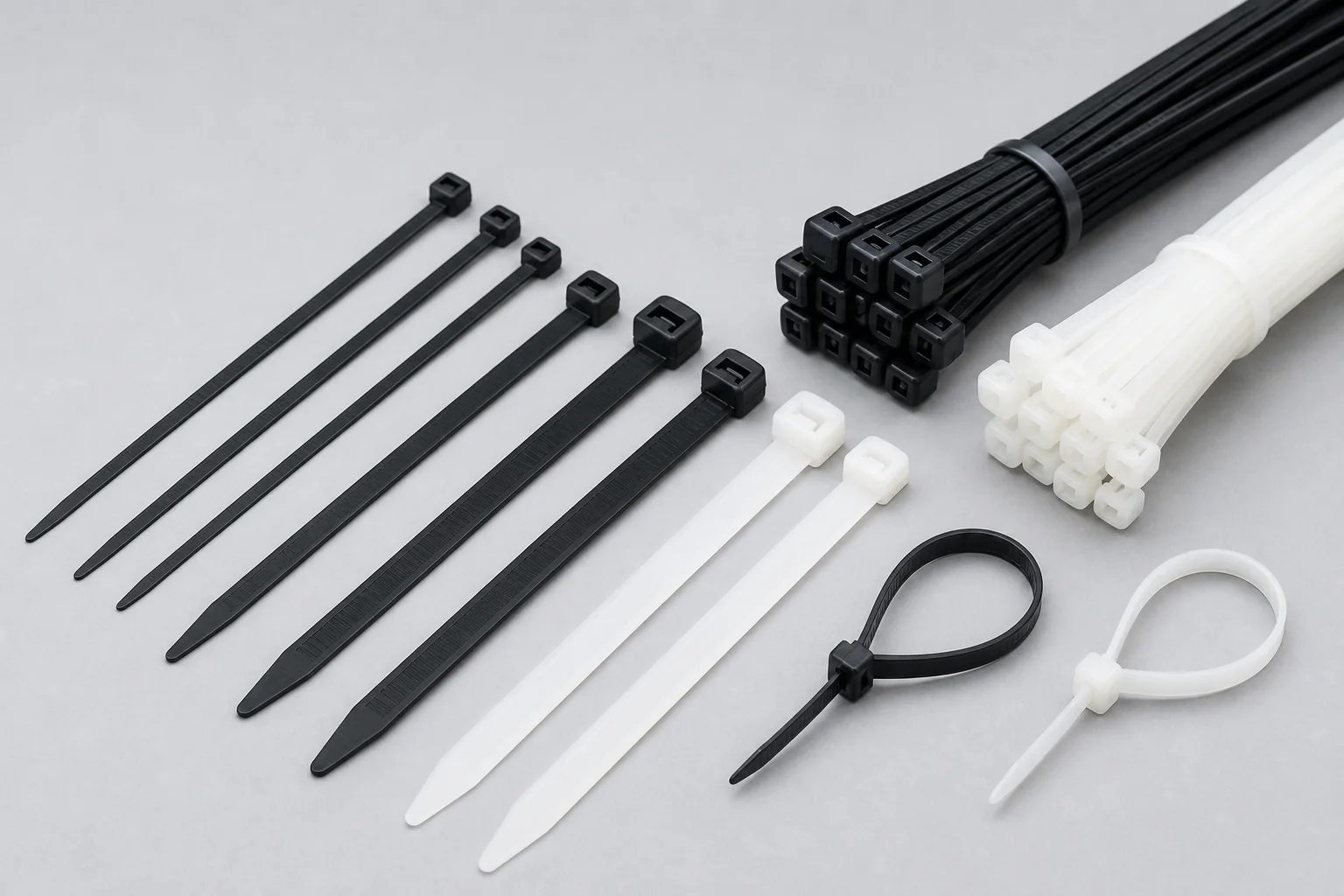
Selecting cable ties by size is one of the first decisions for importers, distributors, contractors, and project buyers. A cable tie may look simple, but length, width, material, and tensile strength all affect installation speed, bundle security, and final project reliability. This guide gives a practical cable tie size chart and explains how professional buyers can compare specifications before requesting samples or a factory quotation.
How cable tie size is measured
Cable tie length is normally measured from the head to the end of the tail. Width is the band width, and it is closely related to strength. The maximum bundle diameter is the largest cable bundle the tie can wrap with enough tail length for tightening. When comparing a nylon cable ties supplier, always check whether the supplier lists length, width, bundle diameter, and tensile strength together. A low price without complete specification can create problems during installation.
Understanding tensile strength
Tensile strength describes the pulling force a cable tie can withstand before failure under test conditions. It does not mean every project should use the highest strength tie. Light electronic wiring may only need a narrow tie, while machinery, HVAC, and pipe fixing often require wide heavy duty cable ties. For industrial users, tensile strength should be matched with vibration, bundle weight, installation direction, and service environment.
Common size groups and applications
Small cable ties are used for electronics, retail packs, temporary bundling, and light wiring. Medium cable ties are common in electrical installation, control panels, telecom, and construction. Heavy duty cable ties are used when the bundle is large, exposed to movement, or installed in industrial equipment. Outdoor projects may need UV resistant cable ties, while harsh environments may need stainless steel cable ties instead of nylon.
How B2B buyers should use a size chart
A cable tie size chart is not only a technical document. It also helps buyers plan stock keeping units, packaging, carton quantities, and quotation comparison. Importers and wholesalers can use the chart to decide which core sizes should be stocked first. Contractors can use it to standardize project purchasing and reduce incorrect on-site selection.
Sample approval before bulk order
Before ordering wholesale cable ties, request samples in the actual sizes you plan to buy. Check locking performance, flexibility, appearance, color, packaging, and whether the tie can be installed easily with hand tools or tensioning tools. For repeat orders, keep approved samples and specification sheets as reference documents.
Specification Table
| Size Group | Typical Width | Typical Use | Buyer Note |
|---|---|---|---|
| Mini / light duty | 2.5 mm to 3.6 mm | Electronics, small wires, packaging | Good for high-volume low-load applications |
| Standard duty | 4.8 mm | Electrical installation, control panels, general cable fixing | Common stock size for distributors |
| Heavy duty | 7.6 mm to 9.0 mm | Machinery, HVAC, pipe fixing, large cable bundles | Confirm tensile strength and bundle diameter |
| Outdoor / UV | 3.6 mm to 9.0 mm | Solar, telecom, outdoor wiring | Ask for UV stabilized black material |
| Stainless steel | 4.6 mm to 12 mm | Marine, oil, railway, harsh outdoor use | Select SS304 or SS316 by environment |
Application Suggestions
- Electrical installation and panel wiring
- Construction and maintenance projects
- Telecom and solar cable routing
- Machinery, HVAC, and industrial equipment
- Distributor stock programs for wholesale cable ties
Buying Tips
- Confirm complete dimensions, not only product length.
- Ask the cable ties manufacturer for material, tensile strength, and packing information.
- Select core stock sizes based on your customer market.
- Approve samples before private label or bulk orders.
- For outdoor use, compare UV resistant cable ties instead of normal natural nylon ties.
B2B Procurement Checklist
Prepare a model schedule that lists exact length, width, maximum bundle diameter, minimum tensile strength, material, color, and quantity for every required size. Ask the supplier to confirm dimensional tolerances, test method, units, bag quantity, carton quantity, and model labels. Approve physical samples for the core sizes and keep the approved size chart with the purchase order so repeat shipments can be checked against the same specification.
Build a controlled model list
Importers should convert the size chart into a controlled purchasing list with one model code for each combination of length, width, material, color, and tensile-strength class. Record the maximum bundle diameter separately because two products with a similar nominal length may use different head designs and usable tail lengths. Ask the supplier to state dimensional tolerances and the tensile test basis so quotations from different sources can be compared on the same terms.
Approve labels and packing data
Each bag and carton should identify the model, dimensions, color, quantity, and batch or production reference used by the supplier. For mixed-size orders, request a packing list that separates every SKU and prevents similar black ties from being confused during receiving. Keep one approved sample and the final size chart for each core model. When repeat orders arrive, warehouse staff can check dimensions, labels, bag quantity, and carton quantity against that reference before products enter stock.
Use real bundles during sample testing
A size chart narrows the selection, but the final check should use the actual wire, hose, pipe, or component bundle. Confirm that enough tail remains for safe tightening, the head fits the available space, and the selected width does not create unnecessary pressure on cable insulation. Where a tensioning tool is used, test the tool setting and cut-off result. Record any accepted substitution in writing rather than allowing an unapproved nearby size to replace the specified model.
FAQ
What is a cable tie size chart used for?
It helps buyers compare length, width, bundle diameter, tensile strength, and suitable applications before choosing products.
Which cable tie size is most common?
150 mm to 300 mm lengths with medium widths are common for general electrical and industrial use.
Does wider mean stronger?
Usually a wider tie has higher tensile strength, but material and locking design also matter.
Should I buy many sizes at once?
Distributors usually start with core high-demand sizes, then add special sizes based on customer needs.
Can SMK provide samples and size charts?
Yes. SMK can support samples, size information, and factory quotation for suitable cable management products.
Related Products
Products for This Guide
Review specifications or request pricing for the products most relevant to this article.
Standard Nylon Cable Ties
The most widely used cable fastening solution for electrical, factory, construction, electronics, and wholesale markets.
Heavy Duty Cable Ties
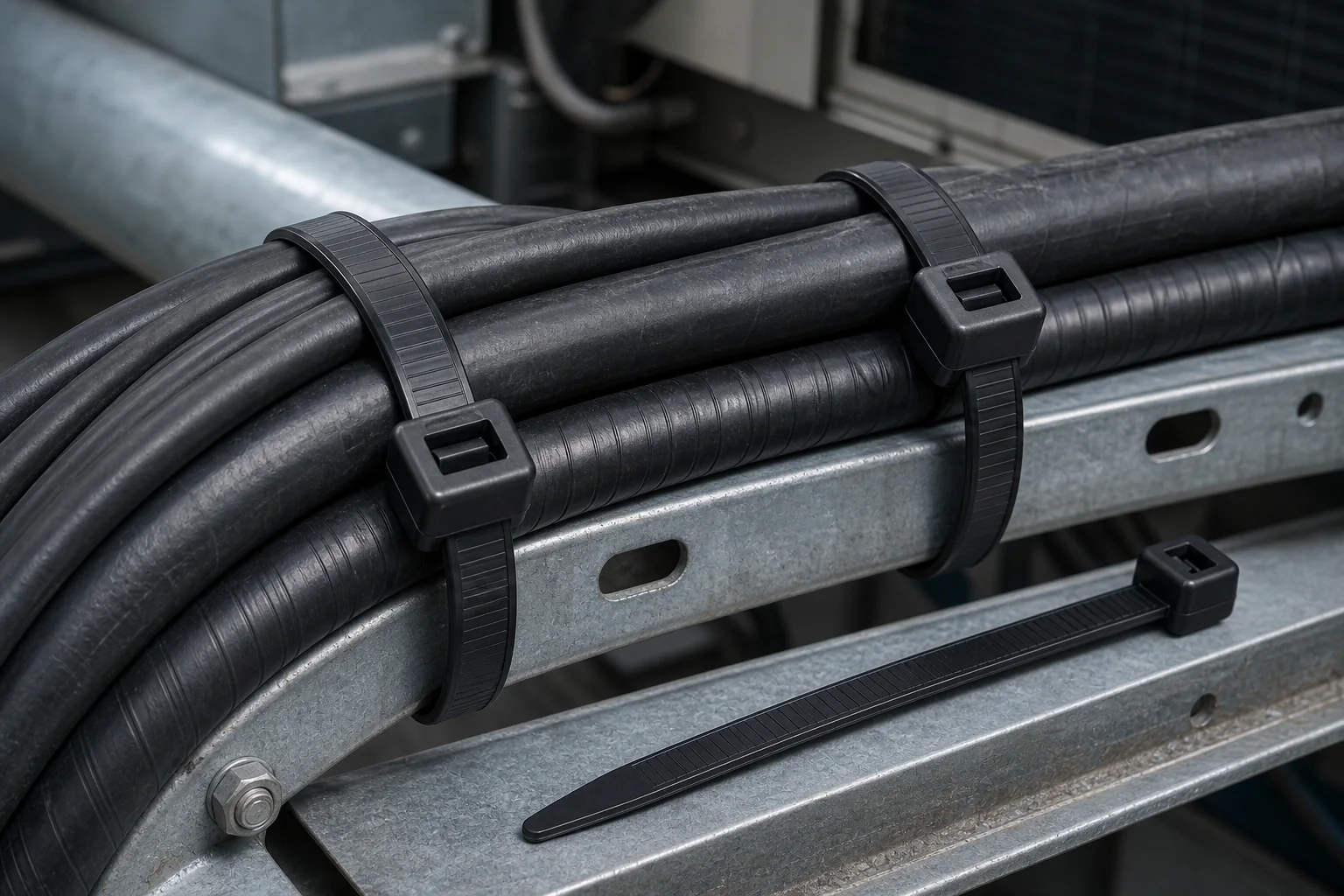
Wide, high-strength cable ties for engineering, pipelines, automotive, machinery, and HVAC applications.