
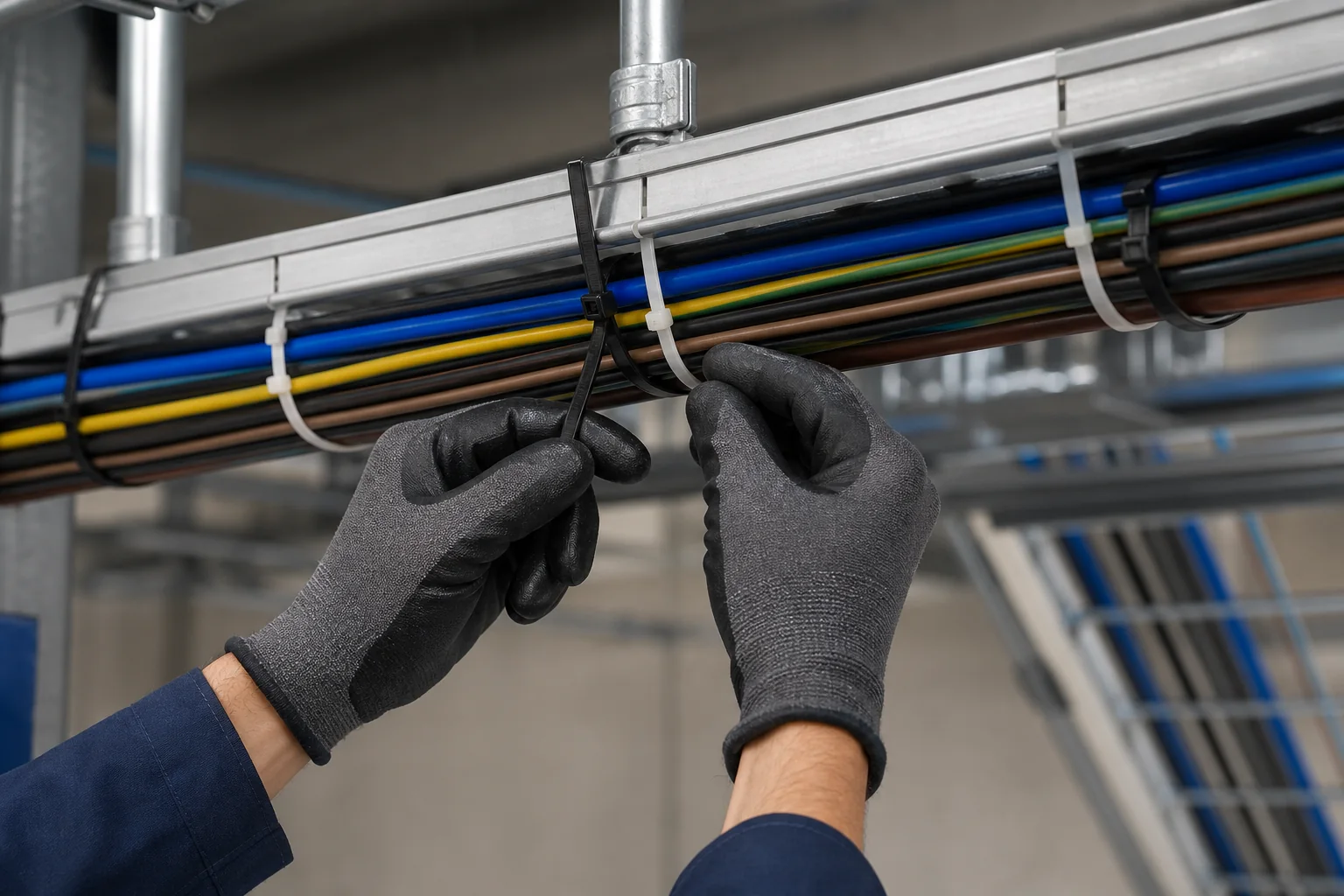
Learn how cable ties are used in electrical wiring, cable organization, control panels, and installation projects. This article explains the topic in a practical B2B way, with focus on product selection, sourcing risk, and clear communication with a cable ties manufacturer.
Role in electrical installation
Cable ties for electrical installation help organize wires, reduce messy routing, support cable bundles, and improve maintenance visibility. They are used in buildings, distribution systems, low-voltage wiring, control panels, and equipment installation.
Choosing the right type
Standard nylon cable ties cover many indoor electrical jobs. Releasable ties are useful for maintenance and temporary routing. Heavy duty ties are used for larger cable bundles. Wiring duct is often used together with cable ties inside control panels and cabinets.
Safety and installation quality
Cable ties should not damage insulation or over-compress cables. Installers should avoid sharp edges, excessive tension, and unsuitable materials. For professional projects, product selection should match electrical codes, project specifications, and environmental conditions.
Related cable management products
A complete electrical installation may use nylon cable ties, wiring ducts, mounting bases, cable clips, PVC marking tubes, and cable wrapping bands. Buyers can reduce sourcing work by choosing a supplier with a broad cable management products range.
Procurement for contractors and distributors
Contractors need stable availability and practical sizes. Distributors need sellable packaging, clear labels, and consistent quality. Importers should confirm carton quantity, product model, color, and repeat order lead time.
Specification Table
| Electrical Use | Recommended Product | Selection Note |
|---|---|---|
| Panel wiring | Standard ties and wiring duct | Keep routing clean and accessible |
| Maintenance | Releasable cable ties | Allows adjustment and reuse |
| Large cable bundle | Heavy duty cable ties | Check tensile strength |
| Outdoor electrical | UV resistant cable ties | Use black UV stabilized material |
| Wire identification | PVC blank casing | Supports marking and organization |
Application Suggestions
- Building electrical wiring
- Low-voltage cable fixing
- Control panel and cabinet wiring
- Machine wiring and equipment assembly
- Electrical maintenance and repair work
Buying Tips
- Stock common sizes for daily installation work.
- Use wiring duct for clean cabinet routing.
- Avoid low-quality ties that break during tightening.
- Confirm flame-retardant material options when required.
- Ask for samples and specification sheets for project approval.
B2B Procurement Checklist
Provide the cable or wire bundle diameter, installation location, expected temperature, indoor or outdoor exposure, required color, and whether hand installation or a tensioning tool will be used. Confirm tie length, width, tensile strength, material option, pack quantity, carton labels, and any project documentation before ordering. Electrical contractors should test samples on the actual cable bundle and avoid specifications that could damage insulation through excessive tension.
Prepare installation data before quotation
Tell the supplier whether the ties will be used inside a distribution board, control cabinet, cable tray, ceiling space, machine, temporary construction circuit, or outdoor electrical system. Provide the cable type, bundle diameter, support spacing, temperature, sunlight exposure, movement, required color coding, installation tool, and expected order quantity. Where a project drawing or specification controls material or flame behavior, send the exact wording and ask what documented material option can be offered. Do not treat a general product description as project approval.
Check samples with the actual cable
Install samples on the real conductor or cable jacket and verify that the tie locks consistently without cracking, excessive stretching, sharp cut-off edges, or damage to insulation. Check whether the head fits beside terminals and inside wiring ducts, and whether maintenance staff can remove or replace the tie safely. For repetitive panel work, test the tensioning tool setting and cut-off result. Record the approved model, tool setting, and installation method for production teams and subcontractors.
Plan site packing and identification
Contractors may need small bags by work area, while panel builders may prefer bulk bags by production batch. Confirm quantity per bag, carton labels, size marking, color identification, delivery sequence, and whether different models must be separated by panel, floor, or project phase. For export orders, review carton dimensions, gross weight, labels, and available documentation before shipment. Keep the approved sample, purchase specification, and packing standard together so future orders do not gradually change width, material, color, or bag quantity.
FAQ
Which cable tie is suitable for a control cabinet?
The correct model depends on bundle diameter, available space, temperature, wiring method, required strength, and any material requirements in the cabinet specification.
Can cable ties be tightened as much as possible?
No. Excessive tension can mark or damage cable insulation. Use controlled hand tension or an approved tool setting for repetitive work.
Should outdoor electrical work use standard nylon ties?
Standard indoor ties may not be suitable. Confirm UV exposure and choose a documented outdoor material option or stainless steel where required.
What information should contractors send for quotation?
Provide cable type, bundle diameter, installation location, environment, size, color, quantity, packing, tool method, and project documentation needs.
Are samples recommended for panel builders?
Yes. Samples help confirm head clearance, locking consistency, cut-off quality, cable contact, and compatibility with the intended tensioning tool.
Related Products
Products for This Guide
Review specifications or request pricing for the products most relevant to this article.
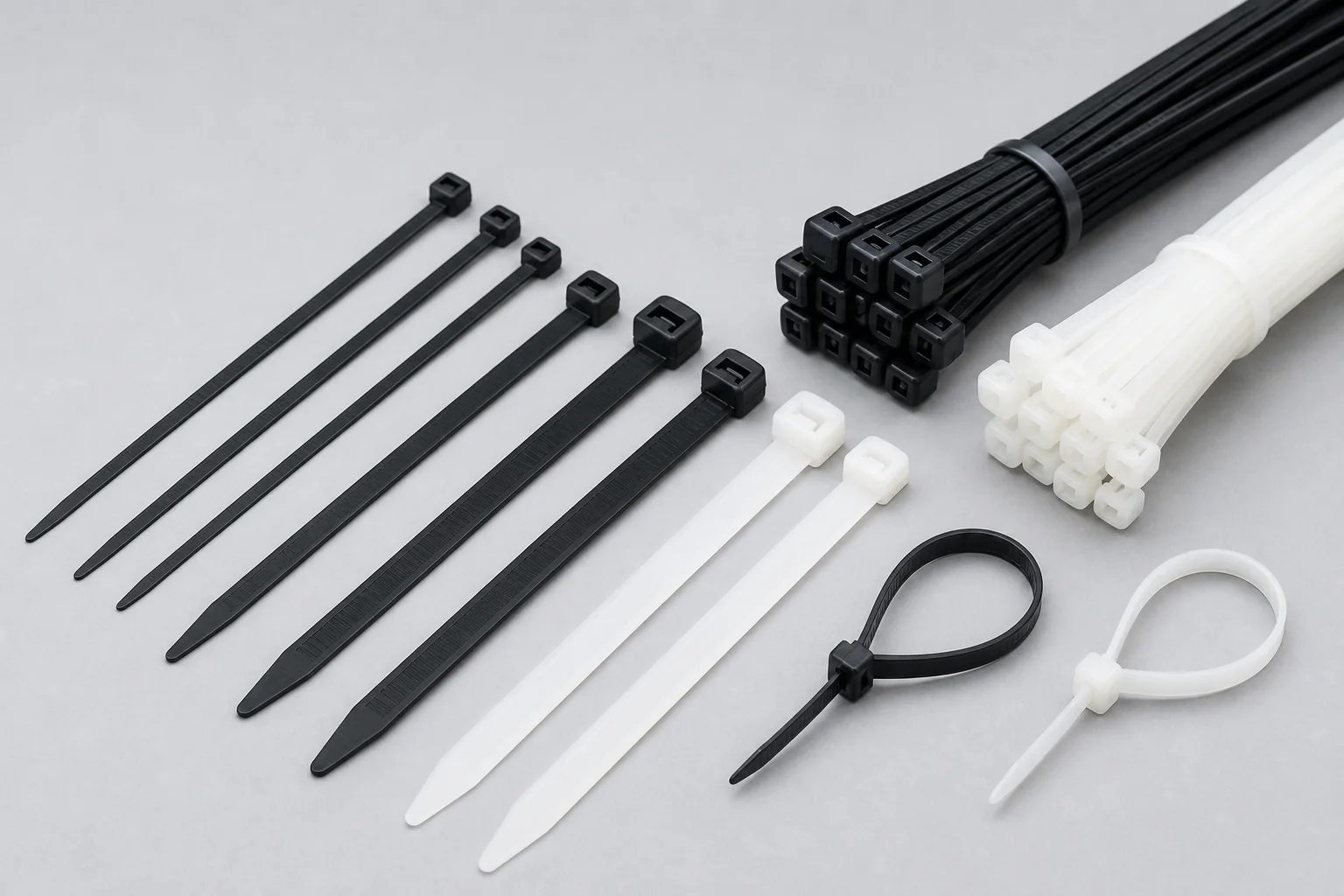
Standard Nylon Cable Ties
The most widely used cable fastening solution for electrical, factory, construction, electronics, and wholesale markets.
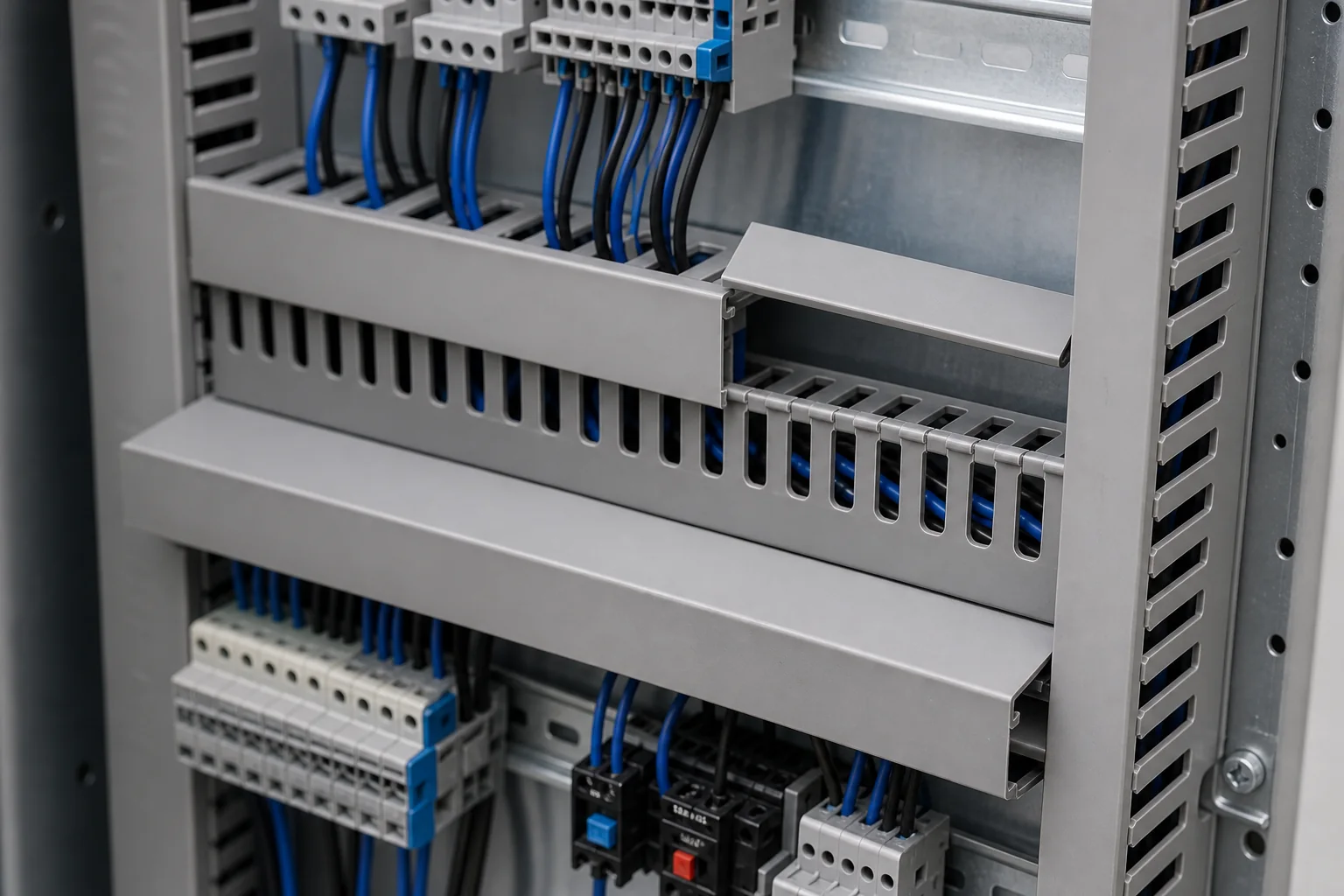
Insulated Wiring Duct
Standard slotted PVC wiring duct for organized routing inside control panels and electrical cabinets.
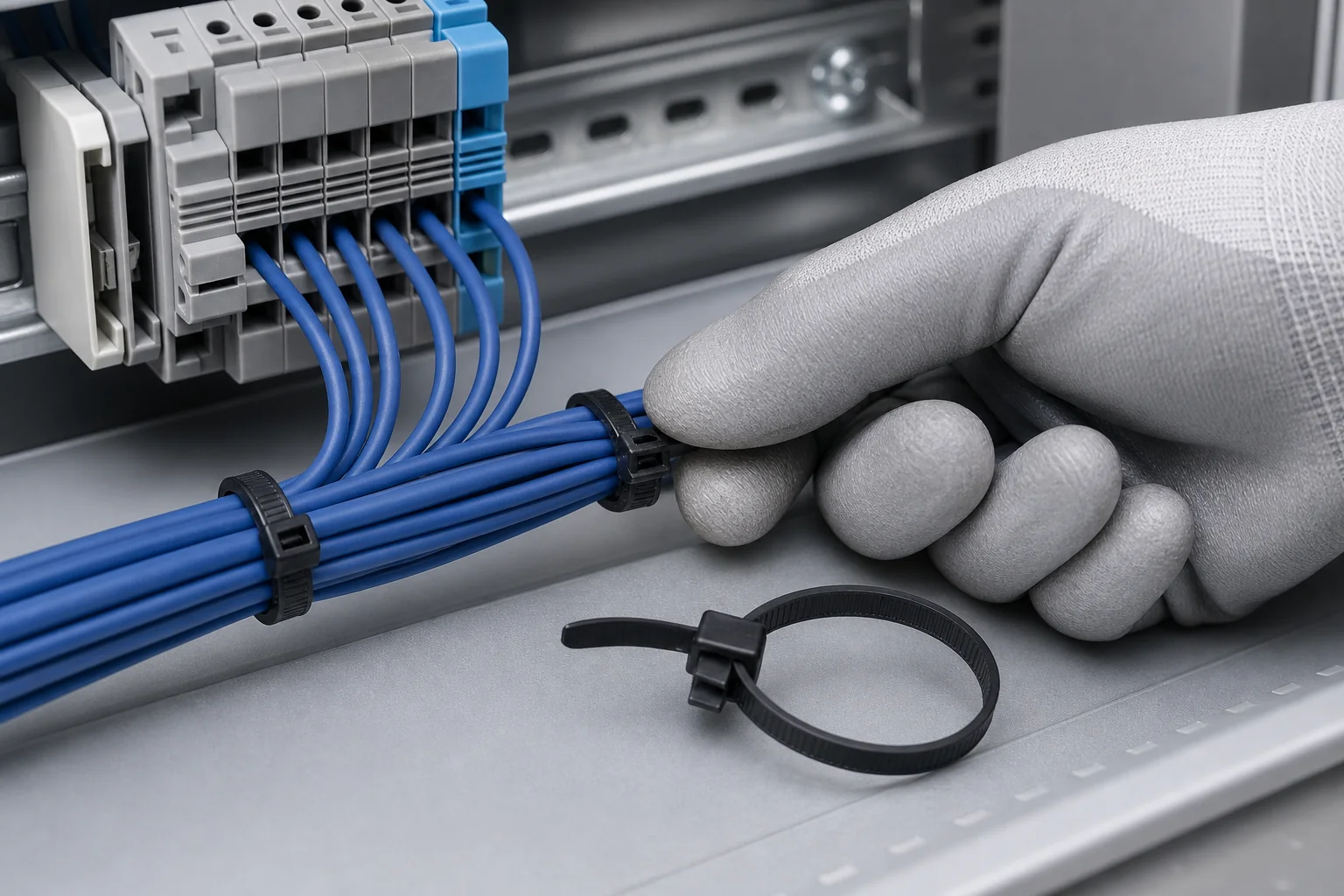
Releasable Cable Ties
Reusable cable ties for control cabinets, maintenance work, prototype development, and equipment servicing.