A guide to choosing UV resistant and durable cable ties for solar panel wiring and outdoor solar projects. This article explains the topic in a practical B2B way, with focus on product selection, sourcing risk, and clear communication with a cable ties manufacturer.
Solar installation requirements
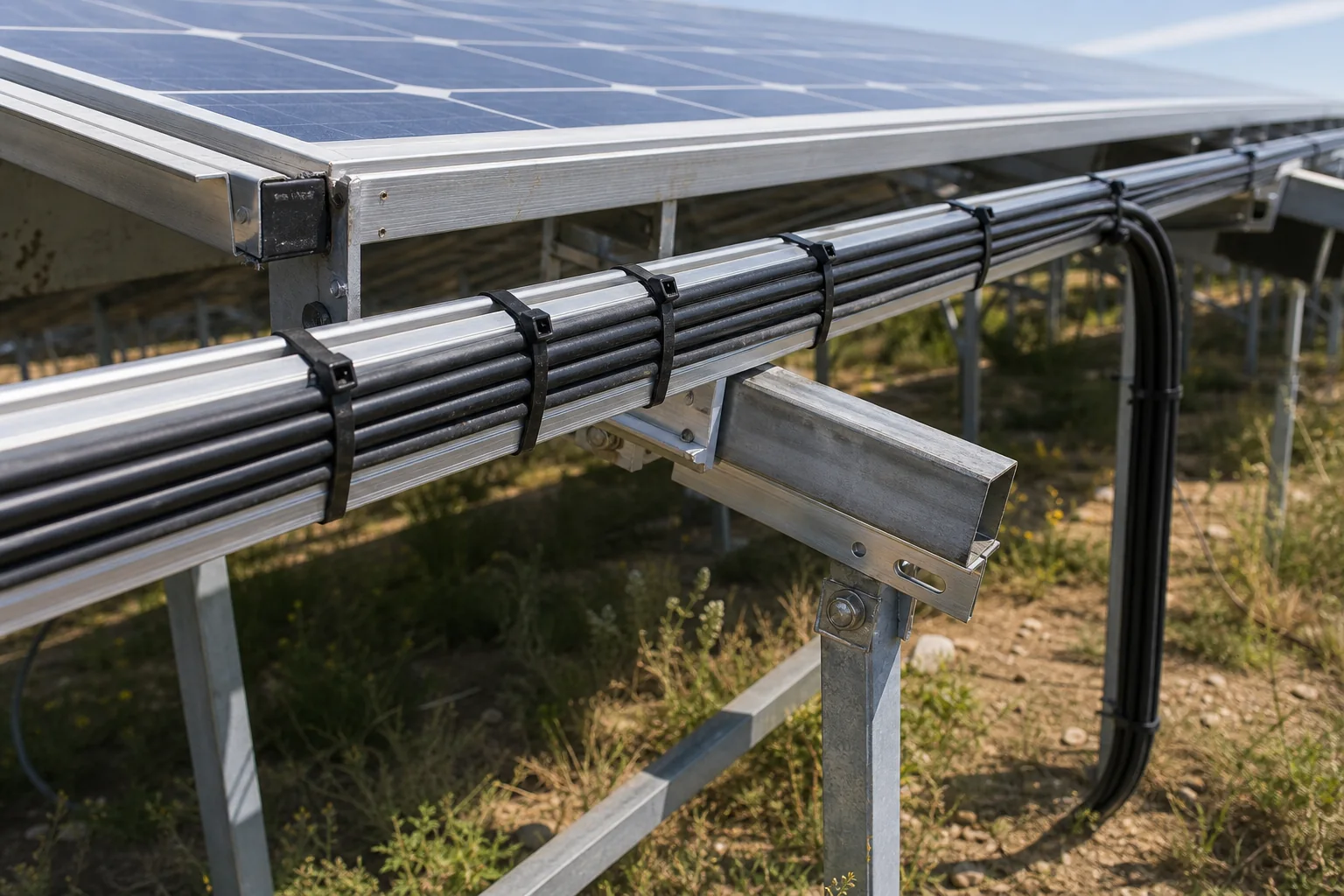
Cable ties for solar panel installation must handle sunlight, outdoor temperature changes, rain, wind, and long-term exposure. A low-cost indoor cable tie is not suitable for PV wiring because early aging can create maintenance problems.
UV resistant cable ties for PV projects
UV resistant cable ties are widely used to fix solar cables along frames, brackets, and routing paths. They are usually black and made from UV stabilized nylon. Buyers should confirm size, tensile strength, and outdoor material information before ordering.
When stainless steel may be needed
Some solar projects require stainless steel cable ties because of long service expectations, strong wind, high heat, or project specifications. Coated stainless steel may be selected when cable jacket protection is important.
Installation considerations
Cable ties should hold wires securely without damaging insulation. Installers should avoid sharp metal edges, excessive tension, and unsupported cable runs. Proper routing helps reduce movement and makes maintenance easier.
Buying for solar contractors and importers
Solar buyers should confirm project quantity, bag quantity, carton marks, delivery schedule, and whether samples are needed for approval. For repeat projects, consistent model numbers and packaging are important.
Specification Table
| Solar Requirement | Product Option | Buyer Note |
|---|---|---|
| Standard PV cable fixing | UV resistant cable ties | Common choice for outdoor solar wiring |
| High wind or long service | Stainless steel cable ties | Check project specification |
| Cable jacket protection | Coated stainless steel ties | Reduces metal edge contact |
| Large cable bundles | Heavy duty UV ties | Confirm width and tensile strength |
| Project sourcing | Bulk or labeled packaging | Useful for site distribution |
Application Suggestions
- Rooftop solar systems
- Ground-mounted solar farms
- Inverter and combiner box cable routing
- Outdoor DC cable management
- Solar project maintenance
Buying Tips
- Do not use natural nylon ties for long outdoor PV exposure.
- Confirm UV stabilized material.
- Match tie size to cable bundle diameter.
- Ask whether stainless steel is required by the project.
- Request samples before buying project quantities.
B2B Procurement Checklist
For a solar project, provide the mounting system, cable diameter, routing position, sunlight exposure, temperature range, wind or vibration conditions, project lifetime expectations, and applicable project specifications. Confirm whether UV-stabilized nylon, coated stainless steel, or another approved fixing method is required. Record model, size, tensile strength, installation spacing, quantity by project phase, packaging, labels, samples, and available material or test documentation before approval.
Translate the solar design into purchasing data
Provide the module and mounting arrangement, cable type, cable diameter, routing position, fixing interval, exposure below or beside the module, ambient temperature range, wind conditions, site location, and expected project life. State whether the engineering specification names UV-stabilized nylon, coated stainless steel, a particular stainless grade, or another fastening method. The supplier should quote against this information and identify any limits instead of selecting a product only from a photograph.
Approve installation samples on the mounting system
Fit samples to the actual frame edge, rail, clip position, or cable route. Check that the tie does not create a sharp contact point, over-compress the PV cable, interfere with connectors, or leave unsupported cable loops. Confirm the correct length for gloved installation and the required tensioning tool for stainless products. Record installation photographs, model numbers, fixing intervals, and approved alternatives so different crews use the same method across the site.
Control project batches and documentation
Large solar orders are often delivered in phases. Agree on batch identification, quantity by phase, bag and carton labels, pallet marks, spare quantity, and the process for reporting damaged or missing cartons. Ask which material declarations or test documents are available for the exact selected model and keep them with the project record. On repeat phases, compare dimensions, color, locking performance, packaging, and batch information with the approved sample. This is more reliable than assuming that every black cable tie provides the same outdoor performance.
FAQ
Can normal indoor cable ties be used on solar cables?
They are not recommended for long outdoor exposure. Solar projects should follow the engineering specification and use a suitable UV-stabilized or stainless product.
Are stainless steel ties always required for solar?
No. The choice depends on project requirements, environment, service life, cable protection, and approved installation method.
How tight should a tie be on a PV cable?
It should secure the cable without crushing or damaging the jacket. Installation tension and fixing interval should follow the project method.
What should be tested before a project order?
Check fit on the real frame and cable, edge contact, locking, installation access, tool use, routing clearance, labels, and packaging.
How should phased solar deliveries be controlled?
Use consistent model codes, batch references, bag and carton labels, quantity by phase, pallet marks, and an approved sample for comparison.
Related Products
Products for This Guide
Review specifications or request pricing for the products most relevant to this article.
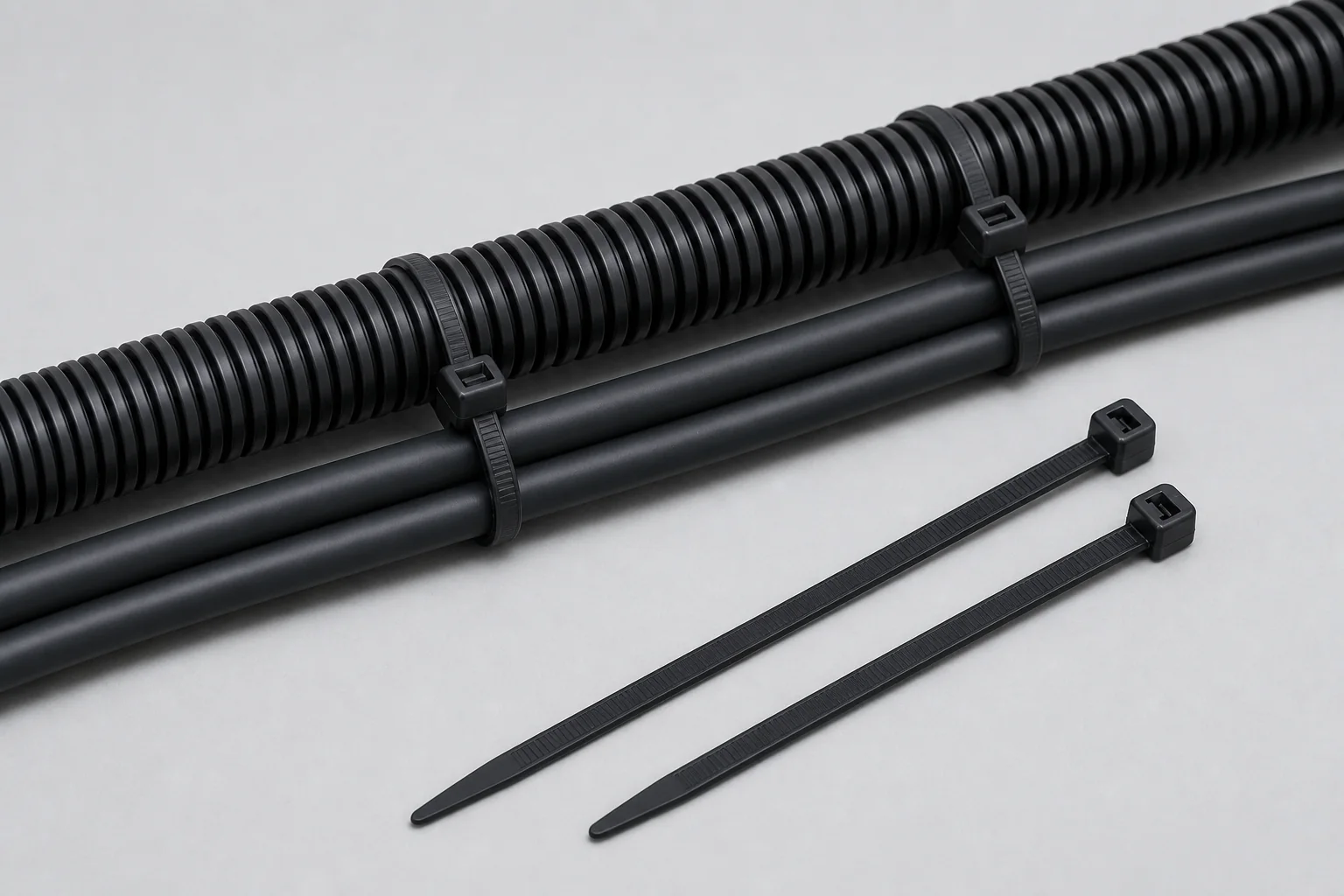
UV Resistant Cable Ties
Weather-resistant black cable ties for solar, telecom, outdoor engineering, and power installations.
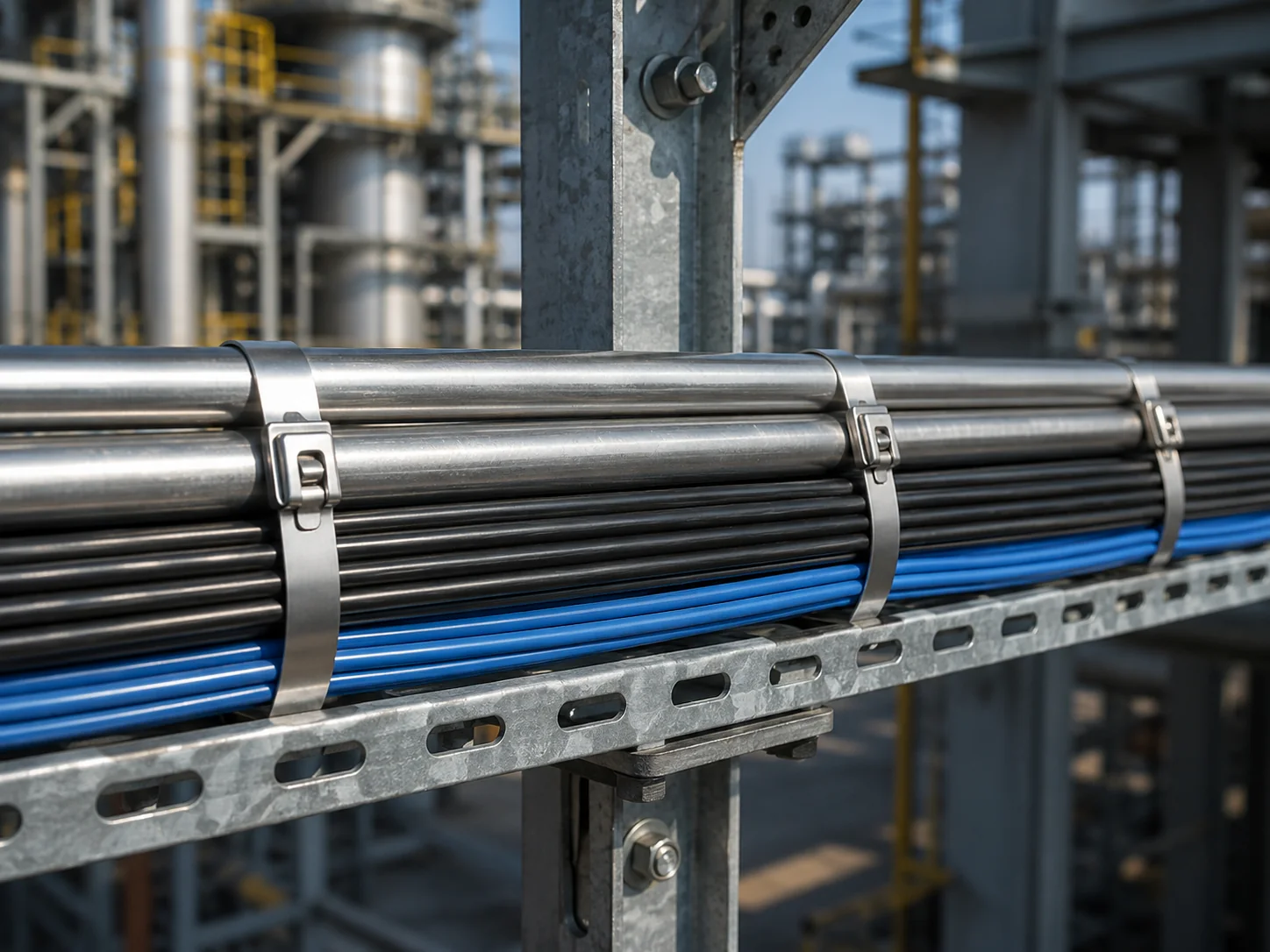
Stainless Steel Cable Ties
High-value fastening for marine, oil and gas, chemical, railway, and extreme outdoor environments.