
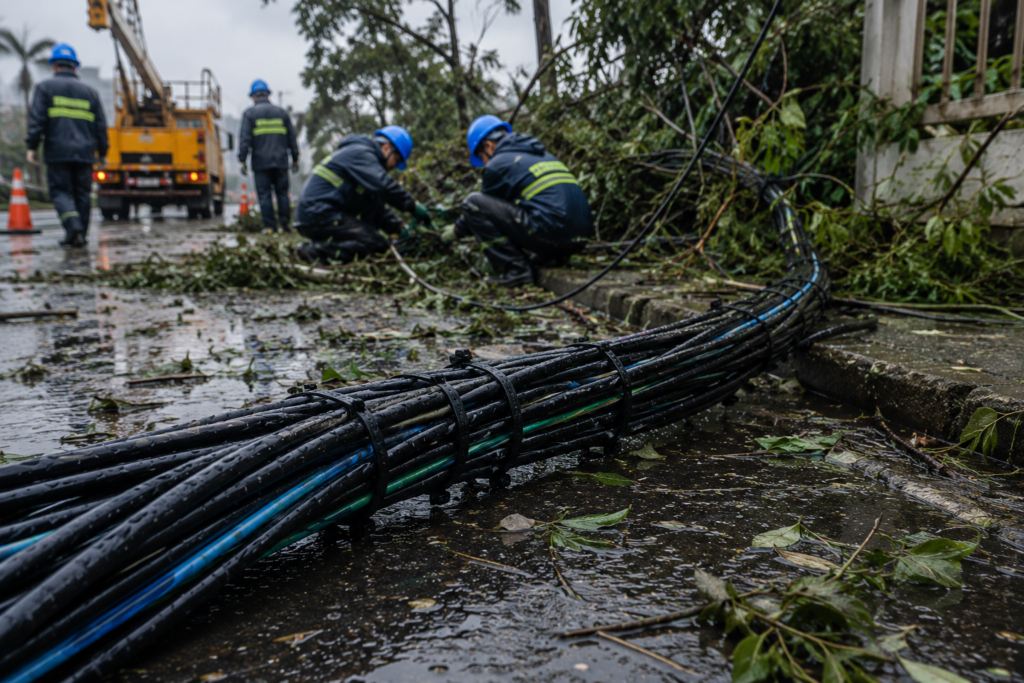
Typhoon season always brings higher risks to outdoor electrical systems, solar installations, construction sites, communication networks, and public infrastructure. Recent typhoon events such as Typhoon BAVI have once again reminded many industries that strong winds, heavy rain, salt spray, flying debris, and long-term outdoor exposure can quickly expose weak points in cable management.
For electrical contractors, solar installers, construction companies, infrastructure maintenance teams, distributors, and industrial users, cable management is not only about keeping wires neat. In storm-prone environments, properly selected cable ties and cable accessories can help reduce cable movement, improve outdoor wiring organization, support temporary repair work, and make post-typhoon inspection easier.
Cable ties are simple products, but they play a practical role in many outdoor and typhoon-related applications. UV resistant cable ties, heavy duty cable ties, stainless steel cable ties, releasable cable ties, cable clips, and mounting bases can all be used to support outdoor cable fixing, solar panel wiring, construction site preparation, temporary signage fixing, and emergency maintenance.
However, cable ties should always be used correctly. They are not a replacement for engineered clamps, structural fasteners, metal brackets, cable trays, conduits, or certified safety systems. In high-risk or critical infrastructure projects, cable ties should be used as part of a complete cable management solution.
Why Typhoon Season Creates Higher Demands for Cable Management
During typhoon season, outdoor cables and wiring systems may face multiple environmental challenges at the same time.
Strong winds can cause cables to swing, vibrate, or loosen. Heavy rain can increase moisture exposure. Coastal areas may bring salt spray and corrosion risks. Flying debris may hit exposed cables or supporting structures. After the storm, maintenance teams often need to quickly inspect, organize, and repair affected cable systems.
Good cable management helps reduce these problems by keeping cables fixed, grouped, and easier to identify.
Proper cable fixing can help:
- Reduce unnecessary cable movement during strong winds
- Keep outdoor wiring organized before and after storms
- Support faster inspection and maintenance
- Improve installation appearance and professional standards
- Help protect cable routing in exposed environments
- Support temporary fixing during emergency repair work
- Reduce disorder caused by loose cables after severe weather
For buyers in typhoon-prone markets, cable ties should not be selected only by price. Material, tensile strength, UV resistance, weather resistance, and application environment should all be considered.
Common Cable Tie Applications in Typhoon-Prone Areas
1. Utility Poles and Outdoor Cable Fixing
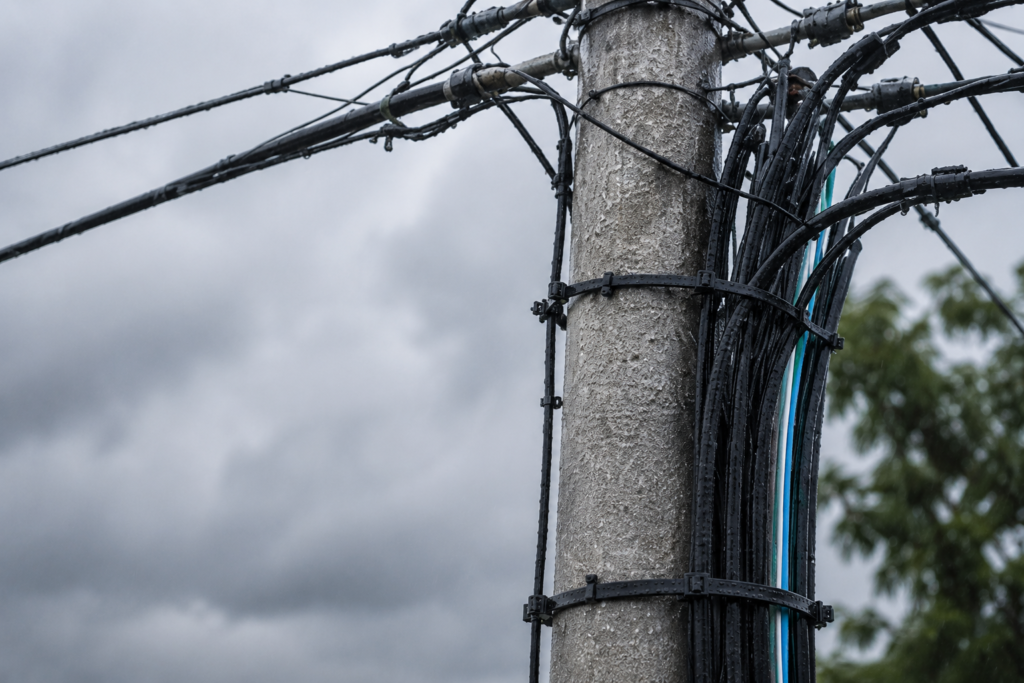
Utility poles, street lighting poles, communication poles, and outdoor power systems often include exposed cables, conduits, and protective tubes. Under strong winds, loose cables may swing or vibrate, making inspection and maintenance more difficult.
Heavy duty cable ties and UV resistant cable ties can be used to bundle and secure cable groups to poles or support structures. For harsher outdoor environments, stainless steel cable ties may be used where higher strength, better temperature resistance, or long-term durability is required.
Typical applications include:
- Outdoor power cable fixing
- Utility pole cable bundling
- Communication cable routing
- Street lighting cable organization
- Temporary cable securing after storm damage
- Outdoor conduit and wire organization
For important electrical infrastructure, cable ties should be used together with proper clamps, brackets, conduits, cable trays, or other approved fixing systems.
2. Solar Panel Cable Management
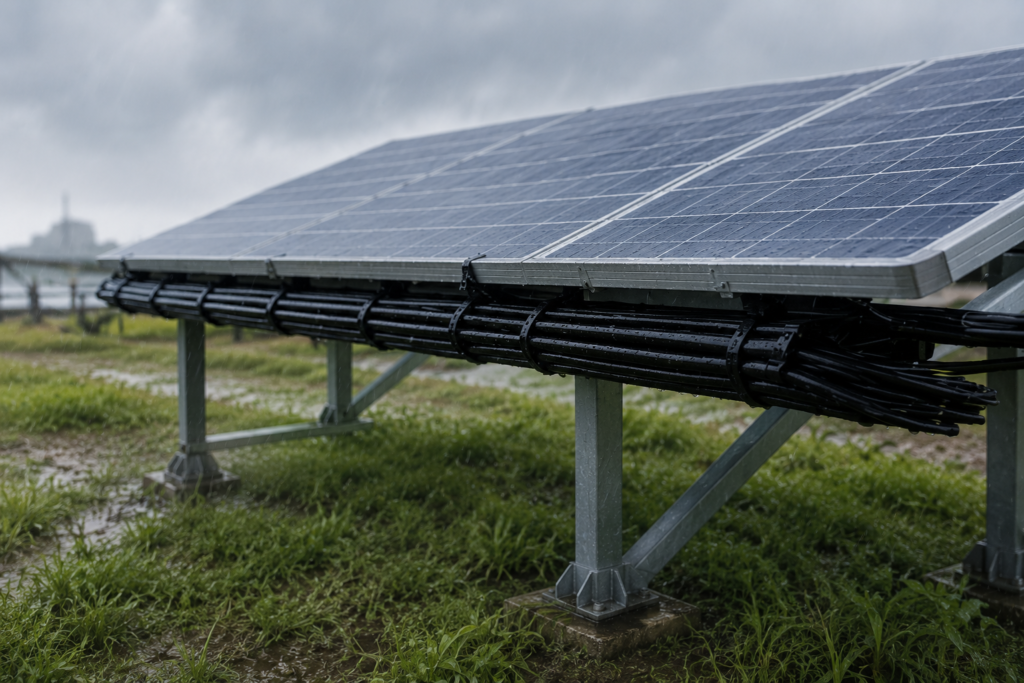
Solar power systems are often installed in open outdoor areas, where they are exposed to sunlight, wind, rain, and temperature changes. During typhoon season, cables under solar panels must be properly fixed to reduce unnecessary movement.
UV resistant cable ties are commonly used in solar panel cable management because they are designed for outdoor exposure and long-term sunlight conditions. They help keep PV cables organized along frames, rails, and support structures.
When selecting cable ties for solar projects, installers should consider:
- UV resistance
- Tensile strength
- Outdoor weather resistance
- Cable diameter and bundle size
- Installation position
- Contact with sharp edges
- Long-term exposure to sunlight and heat
- Proper spacing between fixing points
Recommended products for solar applications include:
- UV Resistant Cable Ties
- Heavy Duty Cable Ties
- Stainless Steel Cable Ties
- Cable Clips
- Mounting Bases
3. Construction Sites and Scaffolding
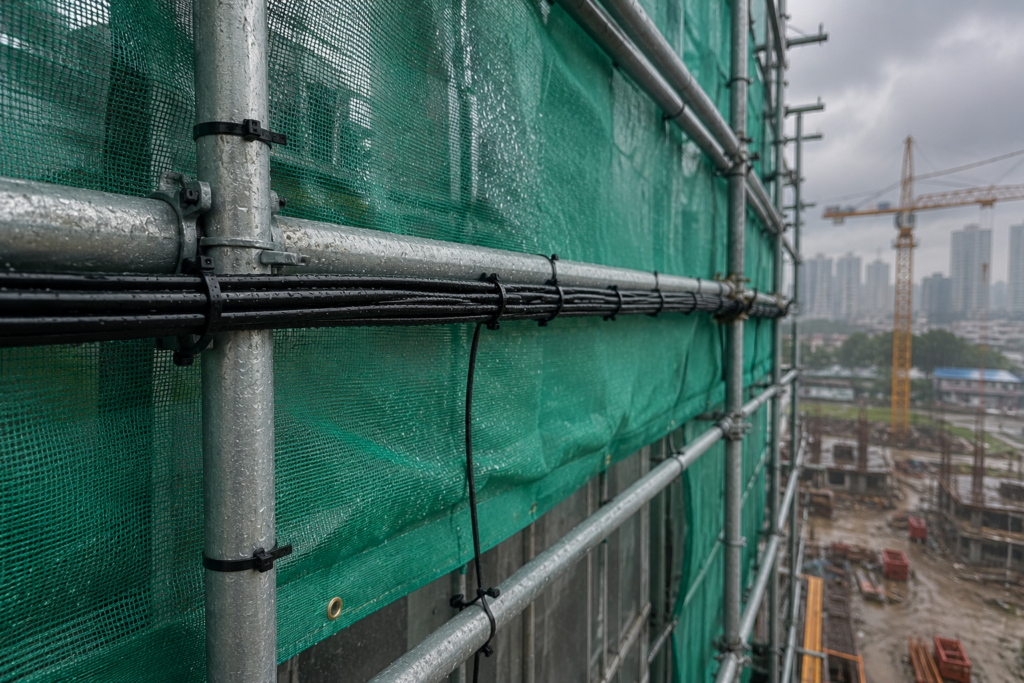
Construction sites are often vulnerable before and after typhoons. Temporary cables, scaffolding nets, tarps, warning signs, pipes, and lightweight materials may need to be secured quickly.
Cable ties are useful for construction and scaffolding work because they are fast to install, easy to carry, and suitable for temporary fixing. Heavy duty cable ties can support stronger bundling needs, while releasable cable ties are useful when the fixing position may need to be adjusted or removed later.
Common applications include:
- Temporary cable organization
- Scaffold net fixing
- Tarp and cover fastening
- Warning sign fixing
- Pipe and conduit bundling
- Construction material organization
- Site cleanup after storms
For construction projects, cable ties should be selected according to the application, expected load, installation period, and safety requirements. For important or high-risk fixing, professional fastening methods should be used together with cable ties.
4. Outdoor Signage and Temporary Warning Boards
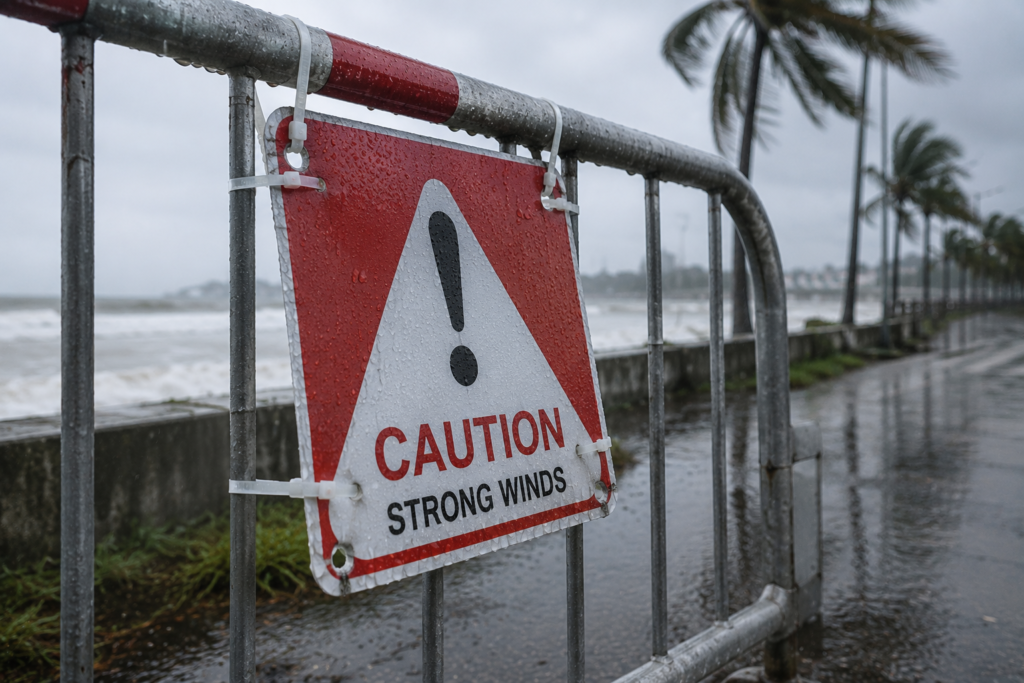
During typhoon preparation, outdoor signs, safety notices, warning boards, temporary banners, and direction signs may need additional fixing. Poorly fixed signage can loosen, flap, or fall during strong wind.
Cable ties can be used to secure temporary signs to fences, railings, poles, frames, or scaffolding. Releasable cable ties are especially useful when signs need to be removed or repositioned after the weather event.
Suitable products include:
- Heavy Duty Cable Ties
- Releasable Cable Ties
- UV Resistant Cable Ties
- Stainless Steel Cable Ties
For better stability, installers should use multiple fixing points instead of relying on a single cable tie. The fixing structure itself must also be strong enough for outdoor conditions.
5. Emergency Repair and Post-Typhoon Cleanup
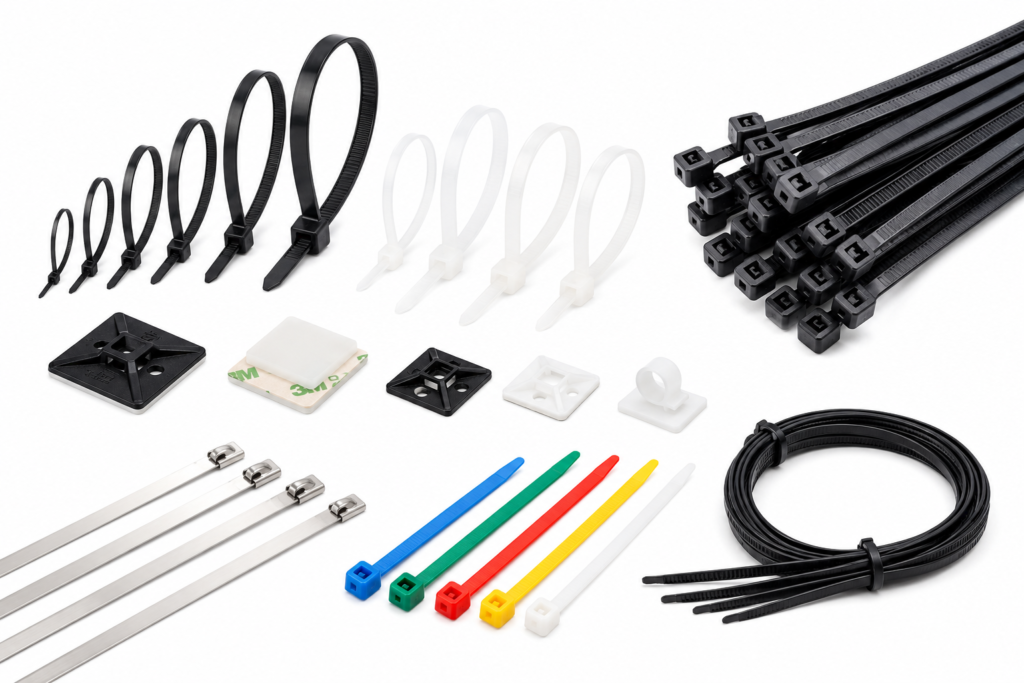
After typhoons such as BAVI or similar severe storms, maintenance teams may need to organize loose cables, temporarily secure damaged cable groups, bundle lightweight debris, or prepare field repairs.
Cable ties are practical tools for emergency maintenance because they are lightweight, easy to store, and quick to apply. They can help workers organize affected areas before permanent repair work begins.
Common emergency uses include:
- Bundling loose cables
- Temporary fixing of protective tubes
- Organizing damaged cable groups
- Holding temporary covers in place
- Bundling small debris for cleanup
- Supporting field maintenance work
- Marking or separating cable groups during inspection
Cable ties used in emergency repair should be treated as temporary or auxiliary fixing tools unless the application is properly evaluated.
How to Choose Cable Ties for Typhoon Season
Choosing the right cable tie for typhoon-prone markets requires more than selecting a standard product. Buyers should evaluate the environment, application, expected service time, and fixing requireme
UV Resistance
Outdoor cable ties may be exposed to sunlight for long periods. UV resistant cable ties are more suitable for outdoor applications than standard indoor-use cable ties because they are designed to reduce aging caused by sunlight exposure.
For solar projects, outdoor wiring, coastal installations, and long-term outdoor use, UV resistant cable ties are usually a better choice.
Tensile Strength
Strong winds may cause cable movement and vibration. For larger cable bundles or stronger fixing needs, heavy duty cable ties with higher tensile strength may be more suitable.
The correct tensile strength depends on cable bundle size, fixing distance, application environment, and whether the fixing is temporary or long-term.
Material Selection
Different materials are suitable for different environments.
Nylon cable ties are suitable for general cable bundling and electrical installation.
UV resistant nylon cable ties are suitable for outdoor and solar applications.
Stainless steel cable ties are suitable for harsh environments, higher strength requirements, coastal environments, and long-term outdoor applications.
Releasable cable ties are suitable for temporary fixing, maintenance, and adjustable cable organization.
Weather Resistance
Rain, humidity, salt spray, and temperature changes can all affect product performance. For coastal and typhoon-prone areas, weather resistance should be considered carefully.
If the installation area is exposed to salt spray, strong sunlight, high humidity, or frequent storms, buyers should consider products with stronger outdoor durability.
Installation Method
Even high-quality cable ties may fail if they are installed incorrectly. Installers should avoid sharp edges, over-tightening, insufficient fixing points, and unsuitable fixing surfaces.
Good installation practice includes:
- Using enough fixing points
- Avoiding contact with sharp metal edges
- Choosing the correct tie width and length
- Leaving proper cable bending space
- Checking ties after severe weather
- Replacing damaged or aged ties in time
Recommended SMK Cable Tie Products for Outdoor and Typhoon-Prone Applications
SMK Cable Management provides cable tie solutions for outdoor, industrial, solar, construction, and electrical applications.
UV Resistant Nylon Cable Ties
UV resistant nylon cable ties are designed for outdoor cable fixing, solar panel wiring, communication cables, and long-term sunlight exposure. They are suitable for customers who need stable cable management products for outdoor markets.
Heavy Duty Cable Ties
Heavy duty cable ties are suitable for larger cable bundles, construction sites, machinery wiring, and stronger fastening needs. They are useful when standard cable ties are not strong enough for the application.
Stainless Steel Cable Ties
Stainless steel cable ties are suitable for harsh outdoor environments, heavy-duty fixing, high-strength applications, and long-term outdoor use. They can be considered for coastal, industrial, and demanding environments.
Releasable Cable Ties
Releasable cable ties are suitable for temporary fixing, maintenance work, emergency repair, and adjustable cable organization. They are useful when cables need to be repositioned or removed later.
Cable Clips and Mounting Bases
Cable clips and mounting bases are useful for guiding cables, fixing cables onto surfaces, and improving cable routing stability. They can work together with cable ties to create a more complete cable management solution.
Important Safety Note
Cable ties are useful cable management products, but they should not be used as the only fixing method for critical structural or load-bearing applications.
For public infrastructure, electrical safety systems, high-risk outdoor projects, and heavy-duty applications, cable ties should be used together with proper engineering supports, certified clamps, cable trays, conduits, brackets, or other approved fastening systems.
Always choose cable management products according to the application environment, cable size, fixing strength, local safety requirements, and project specifications.
Conclusion
Typhoon BAVI reminds us that preparation, inspection, and reliable outdoor cable management are important during typhoon season. In storm-prone regions, cable ties can support many practical applications, including utility pole cable fixing, solar panel wiring, construction site preparation, outdoor signage fixing, emergency repair, and post-typhoon cleanup.
For outdoor and typhoon-prone applications, buyers should choose cable ties based on UV resistance, tensile strength, material, weather resistance, and installation method.
SMK Cable Management supplies UV resistant cable ties, heavy duty cable ties, stainless steel cable ties, releasable cable ties, cable clips, mounting bases, wiring ducts, and cable management accessories for global B2B customers.
If you are looking for cable ties for outdoor, storm-prone, solar, construction, or industrial applications, contact SMK for product options, specifications, OEM packaging, and quotation.
Looking for Cable Ties for Typhoon-Prone Applications?
Contact SMK Cable Management for suitable product options, specifications, OEM packaging, and quotation.
Get A Quote
View Cable Ties
Contact Us
Related Products
Products for This Guide
Review specifications or request pricing for the products most relevant to this article.
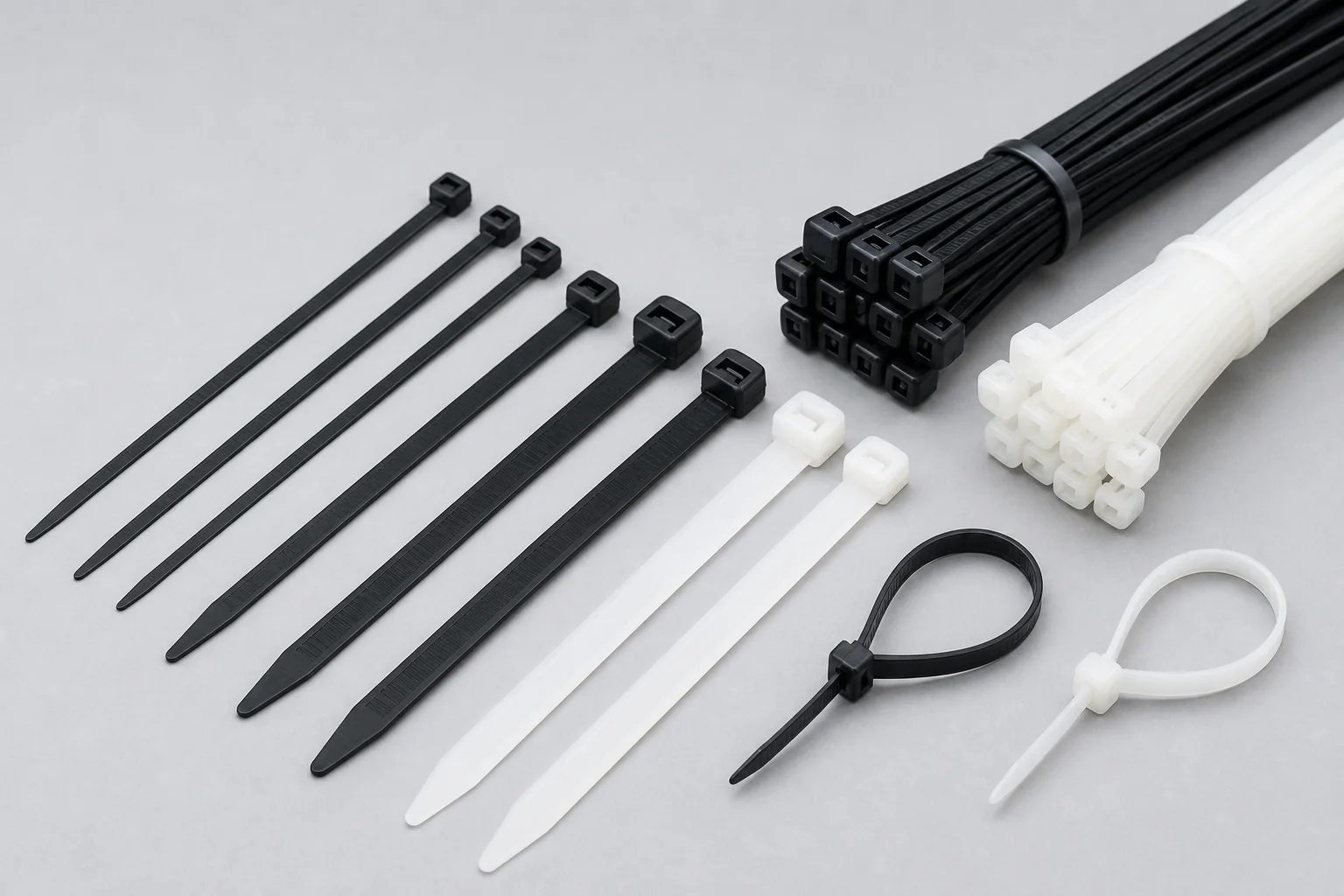
Standard Nylon Cable Ties
The most widely used cable fastening solution for electrical, factory, construction, electronics, and wholesale markets.
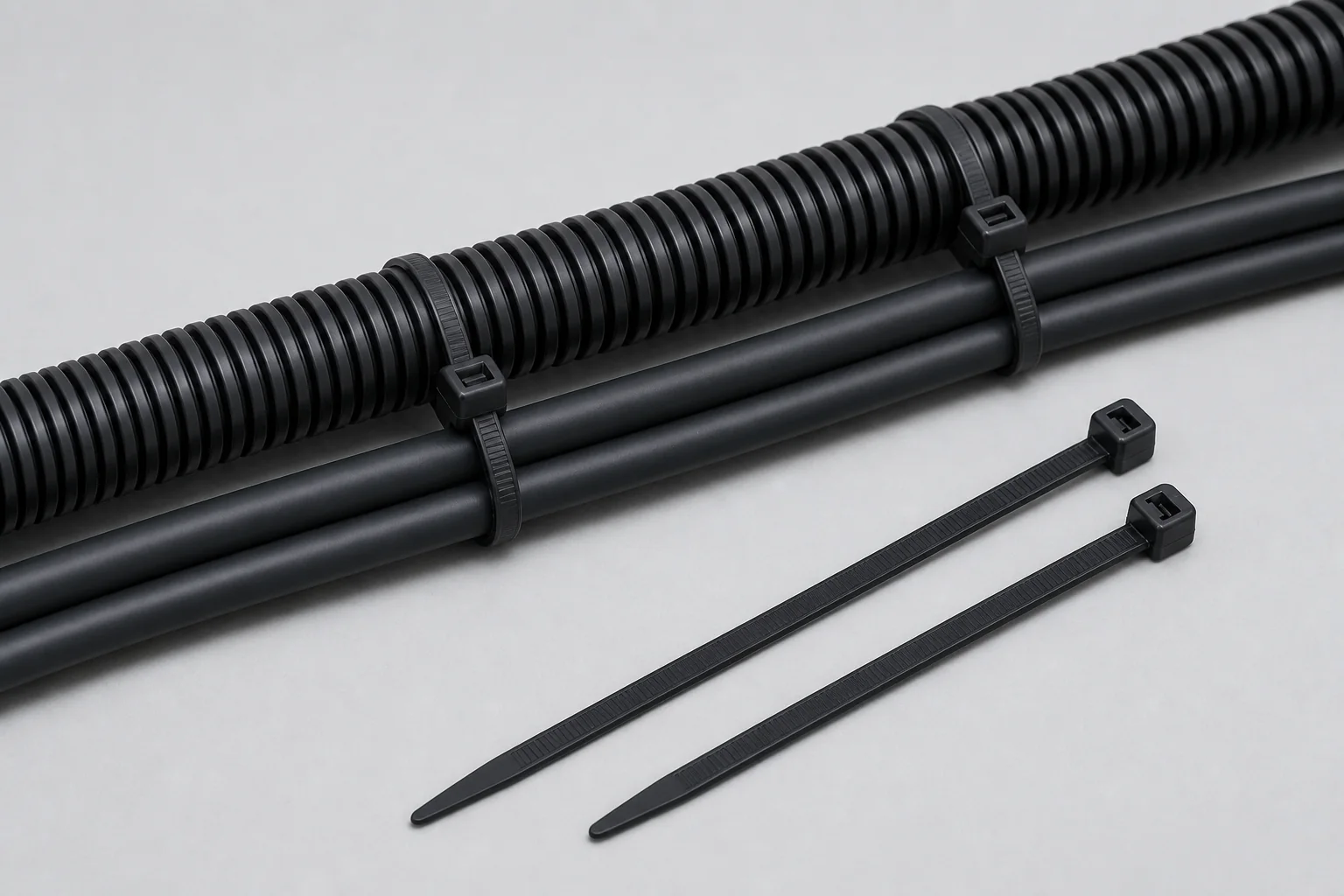
UV Resistant Cable Ties
Weather-resistant black cable ties for solar, telecom, outdoor engineering, and power installations.
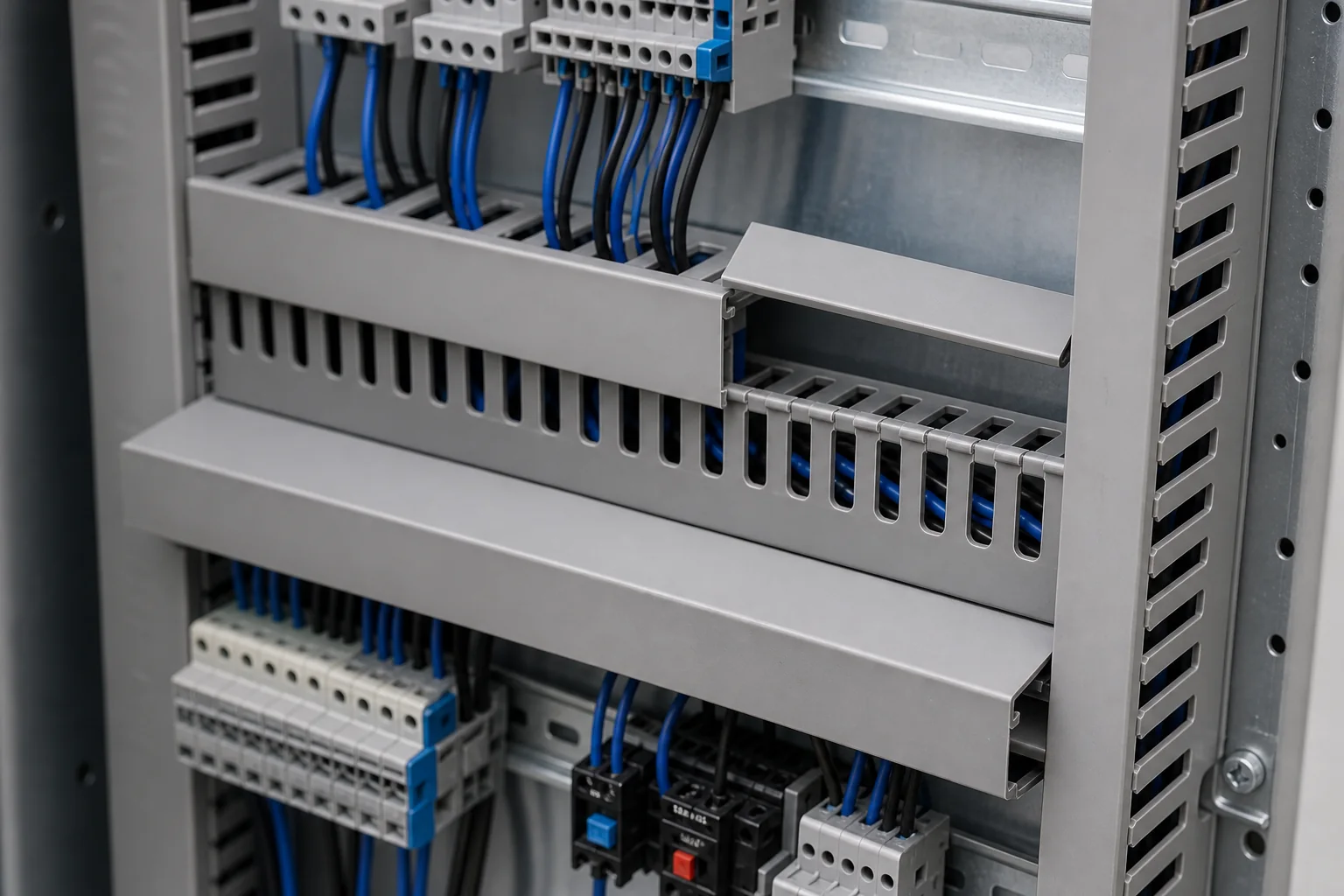
Insulated Wiring Duct
Standard slotted PVC wiring duct for organized routing inside control panels and electrical cabinets.