
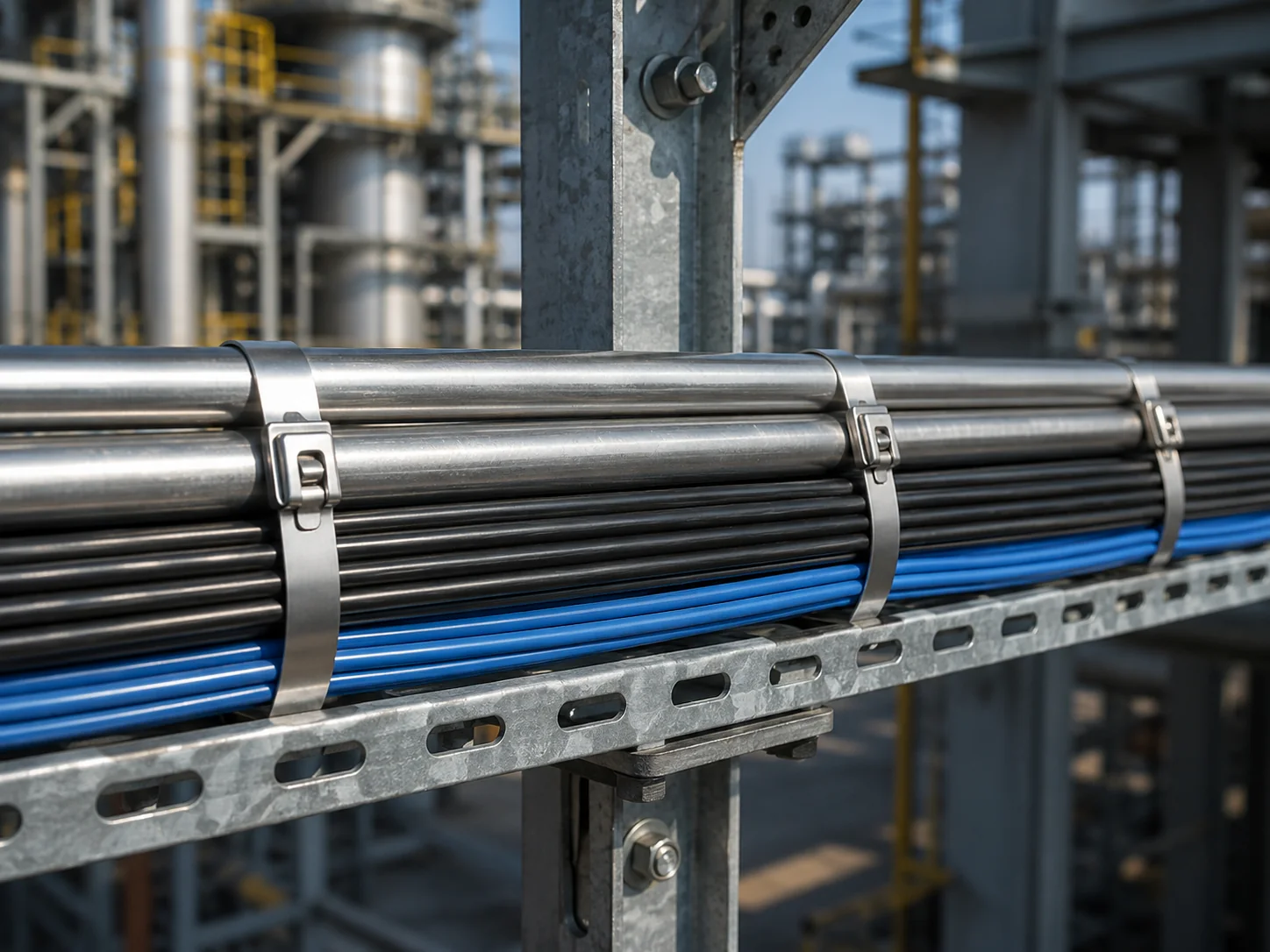
Compare nylon cable ties and stainless steel cable ties for strength, durability, environment, and cost. This article explains the topic in a practical B2B way, with focus on product selection, sourcing risk, and clear communication with a cable ties manufacturer.
Material difference
Nylon cable ties are usually made from Nylon 66 and are selected for cost-effective fastening, flexibility, and fast installation. Stainless steel cable ties are made from SS304 or SS316 and are selected when heat, corrosion, fire exposure, sharp edges, or long outdoor service life create higher risk. For a buyer comparing cable management products, the correct material choice should follow the working environment, not only the product price.
Strength and durability comparison
Standard nylon ties are suitable for electrical installation, control panels, construction, electronics, and general industrial cable fixing. Heavy duty nylon ties can handle larger bundles, but they still have environmental limits. Stainless steel cable ties provide higher durability in harsh conditions and are commonly used in marine, oil and gas, railway, chemical, and outdoor infrastructure projects.
Cost and sourcing considerations
Nylon ties are normally the higher-volume choice for wholesale cable ties because the unit cost is lower and the size range is broad. Stainless steel ties have a higher unit value and are often purchased for specific projects. Importers and distributors may stock both: nylon for daily demand and stainless steel for industrial customers who require long-term performance.
When to choose nylon cable ties
Choose nylon cable ties when the installation is indoor, the cable bundle is moderate, the environment is not corrosive, and fast installation matters. A nylon cable ties supplier should offer standard, UV resistant, releasable, and heavy duty options so buyers can cover multiple market needs with one source.
When to choose stainless steel cable ties
Choose stainless steel cable ties when the project involves high temperature, chemical exposure, heavy vibration, fire risk, or long outdoor exposure. Buyers should confirm stainless steel grade, coating option, width, length, and installation tool requirements before ordering.
Specification Table
| Item | Nylon Cable Ties | Stainless Steel Cable Ties |
|---|---|---|
| Material | Nylon 66 or UV stabilized nylon | SS304 or SS316 stainless steel |
| Typical Cost | Lower unit cost for high-volume demand | Higher unit value for demanding applications |
| Environment | Indoor, general outdoor with UV grade | Harsh outdoor, marine, chemical, railway |
| Installation | Fast hand installation or tensioning tool | Usually requires stainless steel tie tool |
| Best Buyer Type | Wholesalers, distributors, contractors | Industrial project buyers and specialist distributors |
Application Suggestions
- Electrical and cabinet wiring with nylon ties
- Outdoor solar and telecom projects with UV resistant nylon ties
- Marine and chemical plants with stainless steel cable ties
- Railway, oil, and gas projects
- Distributor product ranges that need both economy and premium fastening options
Buying Tips
- Do not compare nylon and stainless steel by price alone.
- Confirm SS304 or SS316 based on the environment.
- Ask whether coated stainless steel ties are required to protect cable jackets.
- For nylon ties, confirm UV resistance if the project is outdoors.
- Request samples and installation tool information before project approval.
B2B Procurement Checklist
Create an environment comparison before requesting prices. Record temperature, sunlight, corrosion, chemicals, vibration, fire exposure, sharp edges, service life, and maintenance access. For nylon, confirm standard or UV-stabilized material, size, and tensile strength. For stainless steel, confirm SS304 or SS316, coated or uncoated finish, edge protection, locking design, and required installation tool. Approve samples of the selected material and compare total installed cost rather than unit price alone.
Compare the complete installed system
The material decision should include the cable jacket, supporting structure, environment, installation tool, maintenance access, and expected service life. Nylon can reduce purchase and installation time for general indoor and suitable outdoor work. Stainless steel can reduce replacement risk in heat, corrosion, chemical exposure, heavy vibration, or long-life infrastructure. The lowest unit price is not always the lowest installed cost when tool requirements, labor, inspection, and future maintenance are included.
Specify each material correctly
For nylon, record standard or UV-stabilized material option, color, length, width, bundle diameter, tensile-strength class, and expected storage conditions. For stainless steel, record SS304 or SS316, coated or uncoated finish, locking design, width, length, edge condition, and installation tool. Ask what documentation is available for the quoted product. Avoid vague requests such as heavy duty or marine grade without measurable details.
Approve installation and handling
Test both candidate materials on the actual bundle where the choice is uncertain. Check cable-jacket contact, tightening control, tail cut-off, sharp edges, tool access, and removal method. Train installers on the approved tool and tension where stainless steel is selected. For mixed orders, require clear model labels and separate cartons to prevent nylon and stainless products from being confused. Keep the environmental assessment, approved sample, and final material decision with the project record for later maintenance and repeat purchasing.
FAQ
Which material is better for general indoor wiring?
Nylon is commonly selected for suitable indoor applications because it is quick to install and economical, but size and environment still need confirmation.
When is SS316 preferred over SS304?
SS316 may be considered for more demanding corrosive or marine conditions, subject to the project specification and engineering review.
Do stainless steel ties require a special tool?
Many stainless designs benefit from a compatible tensioning and cut-off tool. Confirm the locking design and tool before ordering.
Can UV-stabilized nylon replace stainless steel?
Not in every environment. Heat, chemicals, corrosion, fire exposure, sharp edges, vibration, and service life may still favor stainless steel.
How should buyers compare total cost?
Include material price, installation labor, tools, inspection, expected service life, maintenance access, and replacement risk.
Related Products
Products for This Guide
Review specifications or request pricing for the products most relevant to this article.
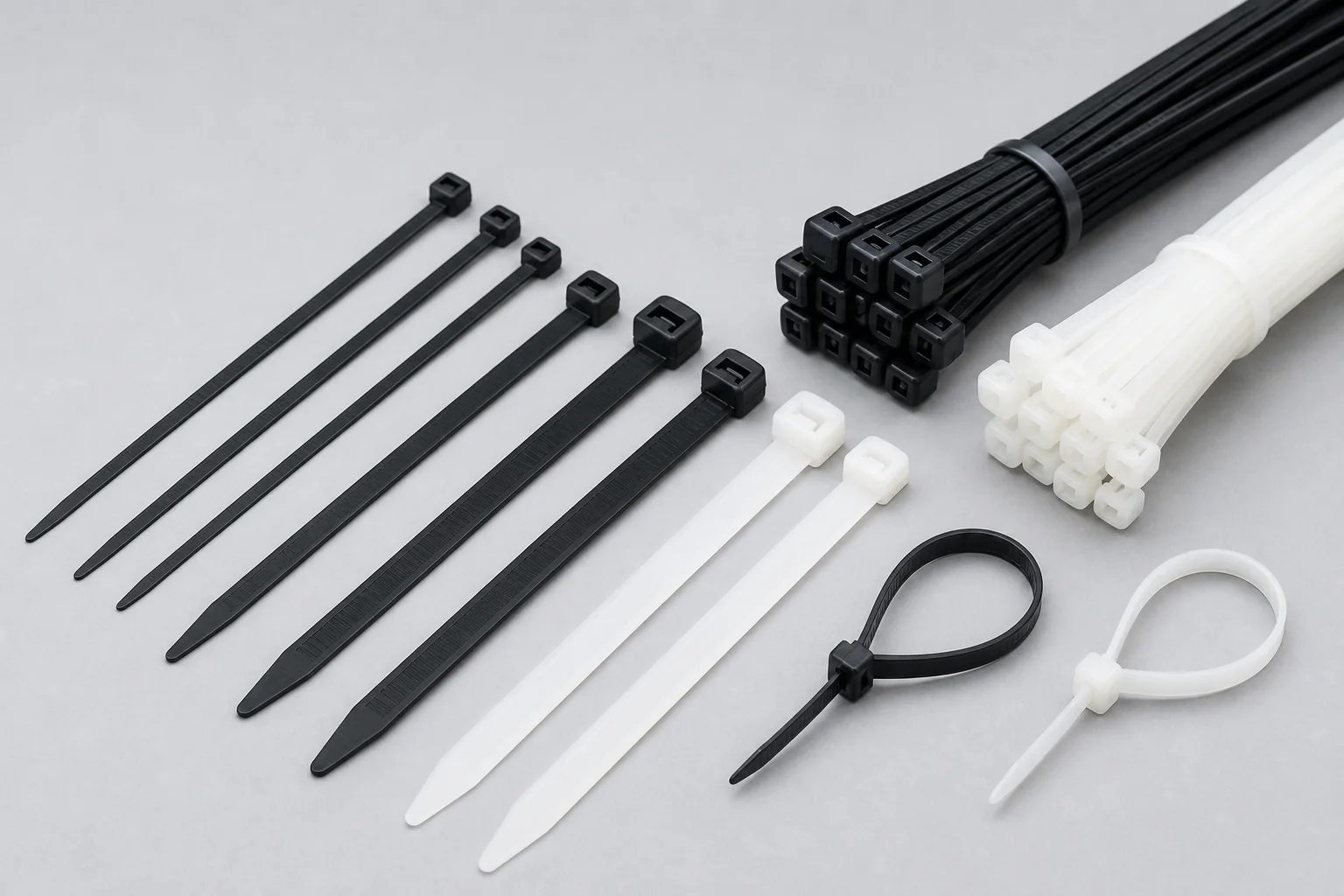
Standard Nylon Cable Ties
The most widely used cable fastening solution for electrical, factory, construction, electronics, and wholesale markets.
Stainless Steel Cable Ties
High-value fastening for marine, oil and gas, chemical, railway, and extreme outdoor environments.