
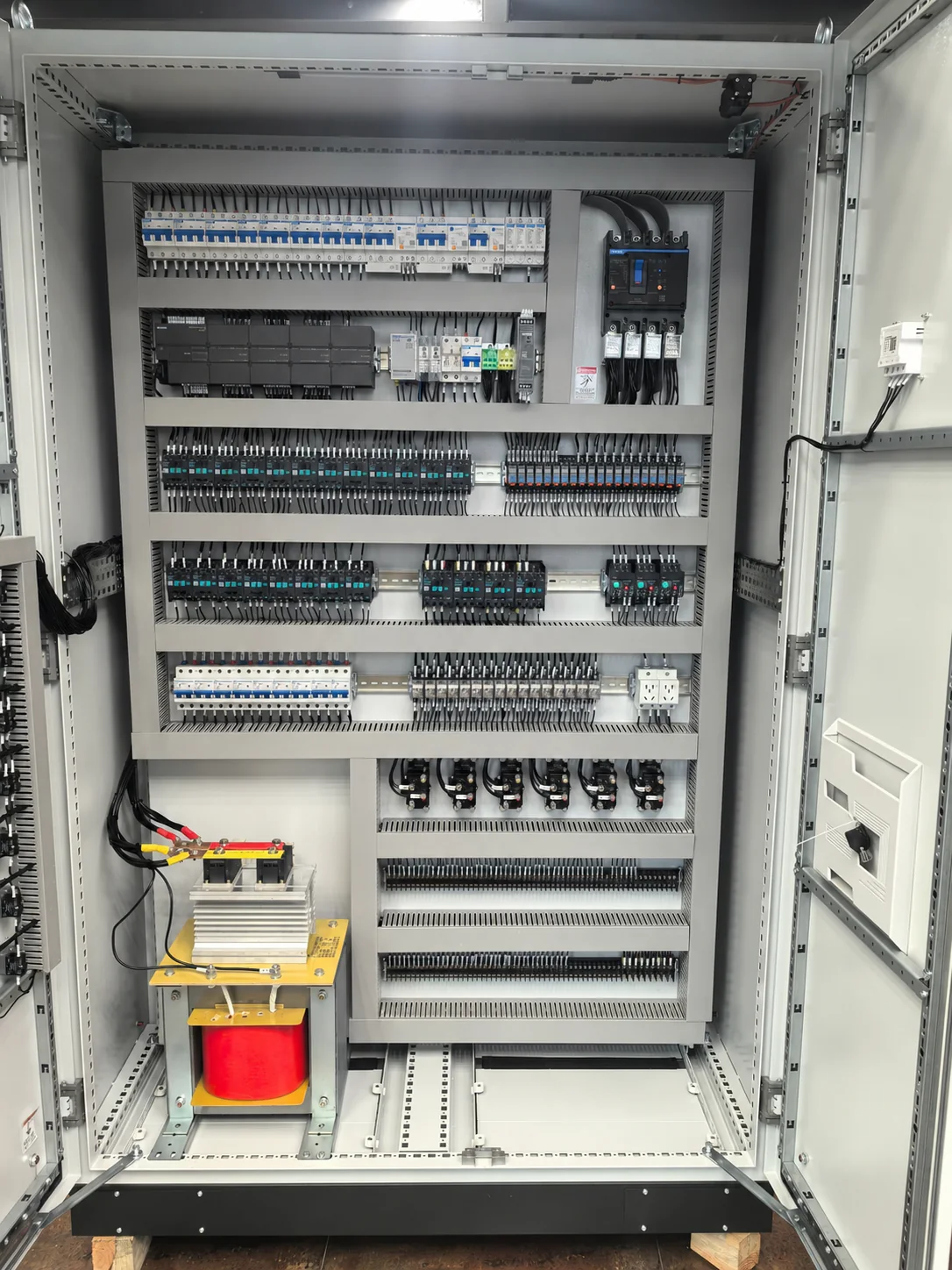
A PLC control cabinet is an electrical control cabinet built around a programmable logic controller. It receives signals from sensors, buttons, switches, instruments, and field devices, processes the control logic, and sends output signals to motors, valves, relays, drives, alarms, or other equipment. In industrial automation, the PLC control cabinet is the command center that helps machines and production systems operate in a controlled and repeatable way.
Table of Contents
Working Principle of a PLC Control Cabinet
The PLC reads input signals, runs the programmed logic, and controls output devices. For example, a sensor may detect product position, the PLC checks the programmed condition, and then the cabinet sends a signal to a motor starter, solenoid valve, servo drive, or alarm. This process can happen continuously during machine operation.
A PLC control cabinet normally includes both power wiring and signal wiring. Good layout is important because high-voltage power cables, low-voltage control wires, and communication cables should be arranged clearly to reduce interference, improve serviceability, and support future maintenance. Wiring ducts, cable ties, wire markers, terminal blocks, and labels are important supporting products inside the cabinet.
Main Components of a PLC Control Cabinet
| Component | Purpose | Selection Note |
|---|---|---|
| PLC CPU and I/O modules | Process logic and connect field signals | Confirm input/output points and communication needs |
| HMI | Operator interface for monitoring and settings | Confirm screen size and installation position |
| Power supply | Converts voltage for control components | Confirm voltage and load capacity |
| Relays and contactors | Switch control circuits and loads | Match control voltage and application |
| VFD or servo drive | Controls motor speed or motion | Confirm motor power and control method |
| Wiring ducts and terminals | Organize wiring and field connections | Reserve enough wiring space |
Industrial Uses and Application Suggestions
PLC control cabinets are widely used in automation equipment, production lines, packaging machines, conveyor systems, material handling, water treatment, HVAC control, testing equipment, machine tools, and OEM equipment. They are suitable when a project requires logic control, sequence control, sensor input, motor operation, alarms, interlocks, or operator monitoring.
For simple power distribution, a power distribution cabinet may be enough. For automated operation, process control, or machine communication, a PLC control cabinet is usually required. Buyers should separate these two needs clearly when discussing a project with a cabinet supplier.
Buying Tips for Automation Buyers
When sourcing a PLC control cabinet, prepare the equipment description, control process, I/O list, electrical drawing, cabinet size, component brand preference, HMI requirement, communication protocol, installation environment, and quantity. If programming is handled by another automation integrator, clarify whether the supplier only manufactures the cabinet or also supports wiring and assembly based on drawings.
Importers and OEM buyers should confirm cabinet repeatability, labeling standard, packaging method, inspection procedure, and document support. Project buyers should ask for layout confirmation before production. Related pages: PLC Control Cabinet, Power Distribution Cabinet, Applications, and Contact SMK.
For repeat production, keep an approved cabinet drawing and wiring standard for every order. This helps the supplier keep terminal numbering, wire color, wiring duct size, label position, and component placement consistent. When the cabinet is part of exported equipment, confirm whether the final buyer needs English labels, shipping marks, spare terminal space, or a packing list that identifies the cabinet and accessories clearly.
FAQ
What does PLC mean?
PLC means programmable logic controller. It controls machine operation according to programmed logic and field signals.
Can PLC control cabinets be customized?
Yes. Cabinet size, internal layout, terminal arrangement, HMI position, and cable entry can be customized based on drawings.
Is programming included?
Programming scope should be confirmed by project. SMK can discuss cabinet assembly requirements based on customer drawings and component lists.
What products help organize PLC cabinet wiring?
Wiring ducts, cable ties, wire markers, terminal blocks, and cable accessories help keep the cabinet clean and easier to maintain.
Related Products
Products for This Guide
Review specifications or request pricing for the products most relevant to this article.
PLC Control Cabinet
Automation control cabinet solutions for equipment operation, PLC control systems, sensor signals, and production line control.
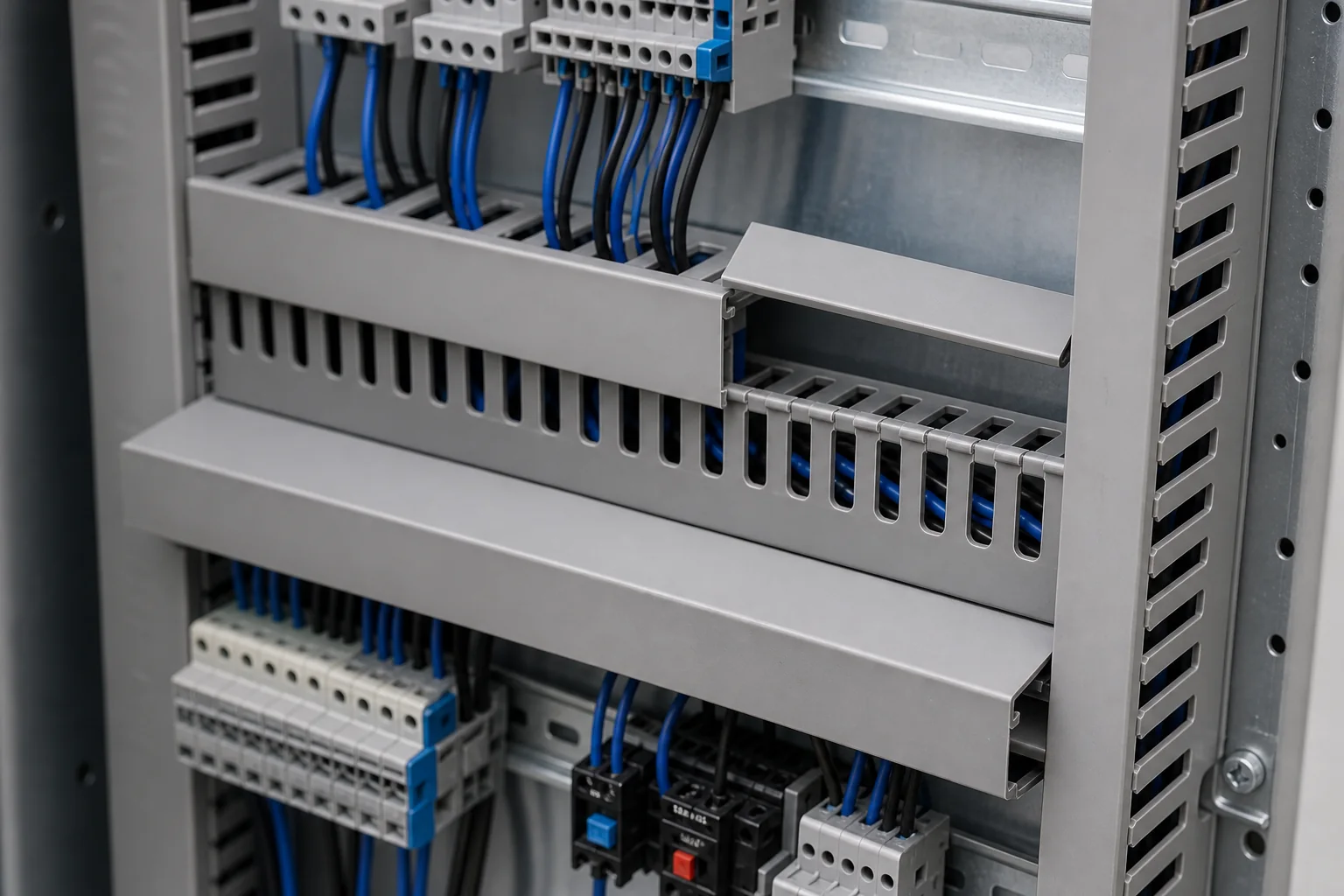
Insulated Wiring Duct
Standard slotted PVC wiring duct for organized routing inside control panels and electrical cabinets.
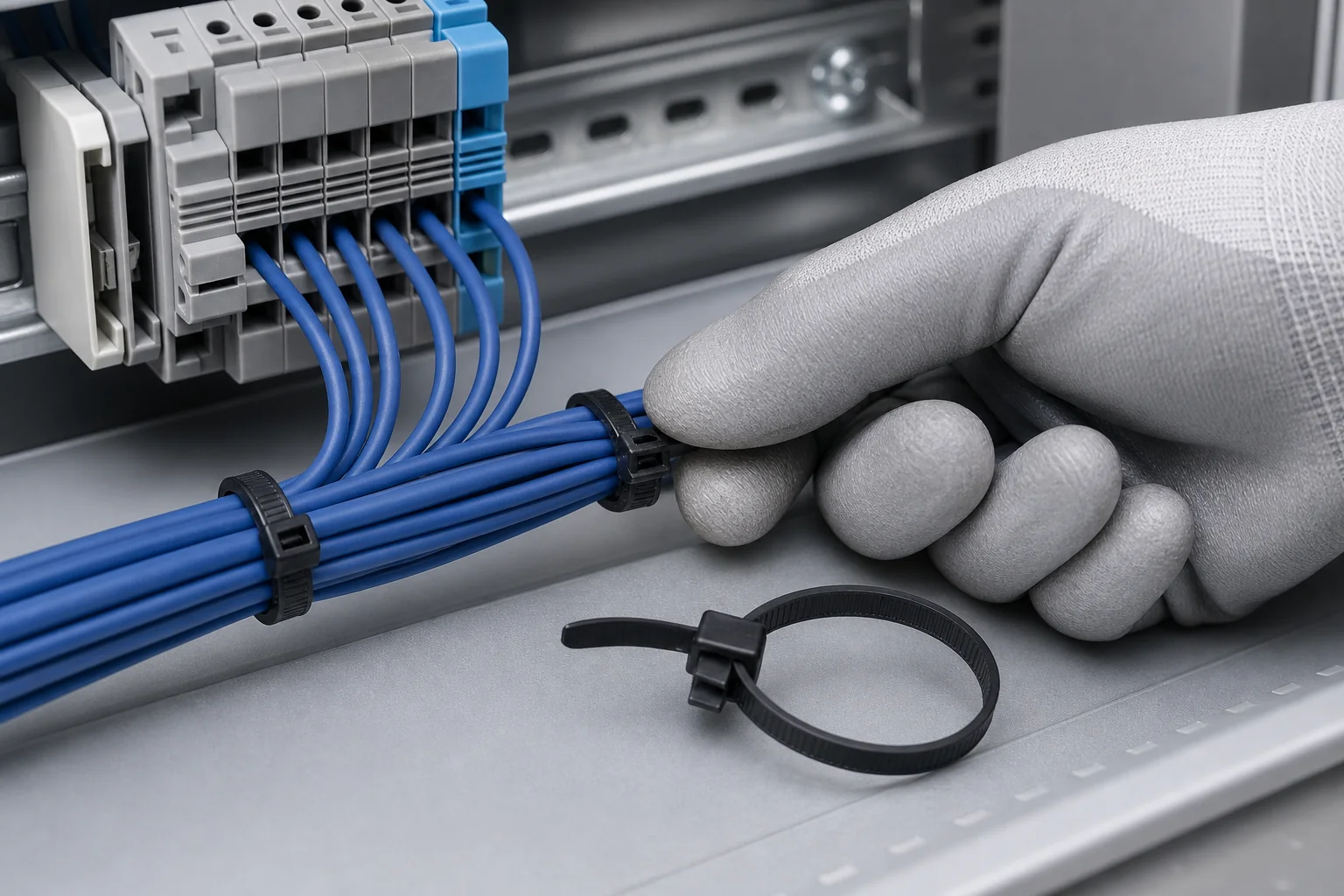
Releasable Cable Ties
Reusable cable ties for control cabinets, maintenance work, prototype development, and equipment servicing.