
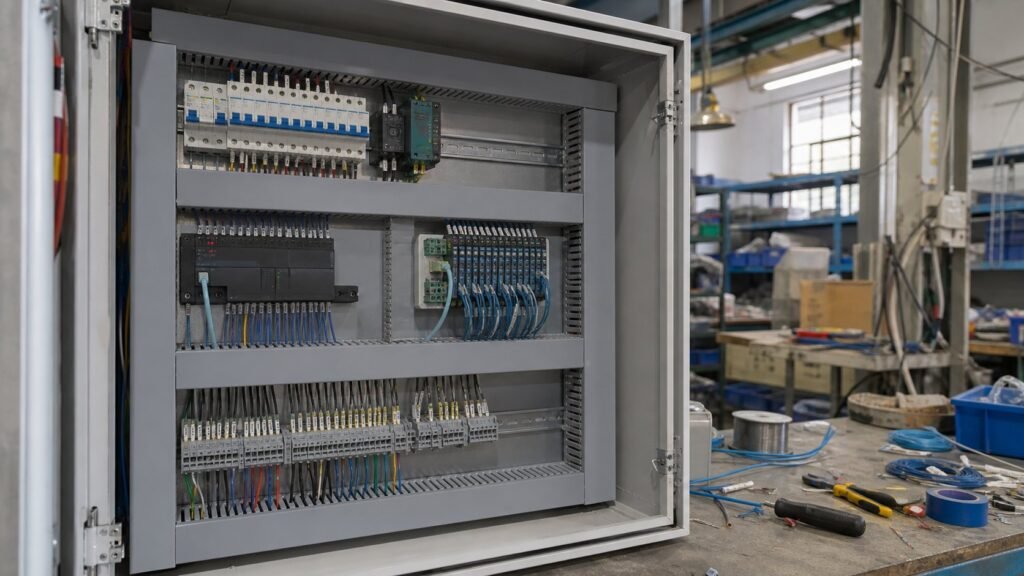
Wiring duct affects much more than the appearance of a control panel. Its structure influences how quickly technicians can route conductors, how easily they can make changes, how much wiring a channel can hold, and how consistently an OEM can repeat the same layout.
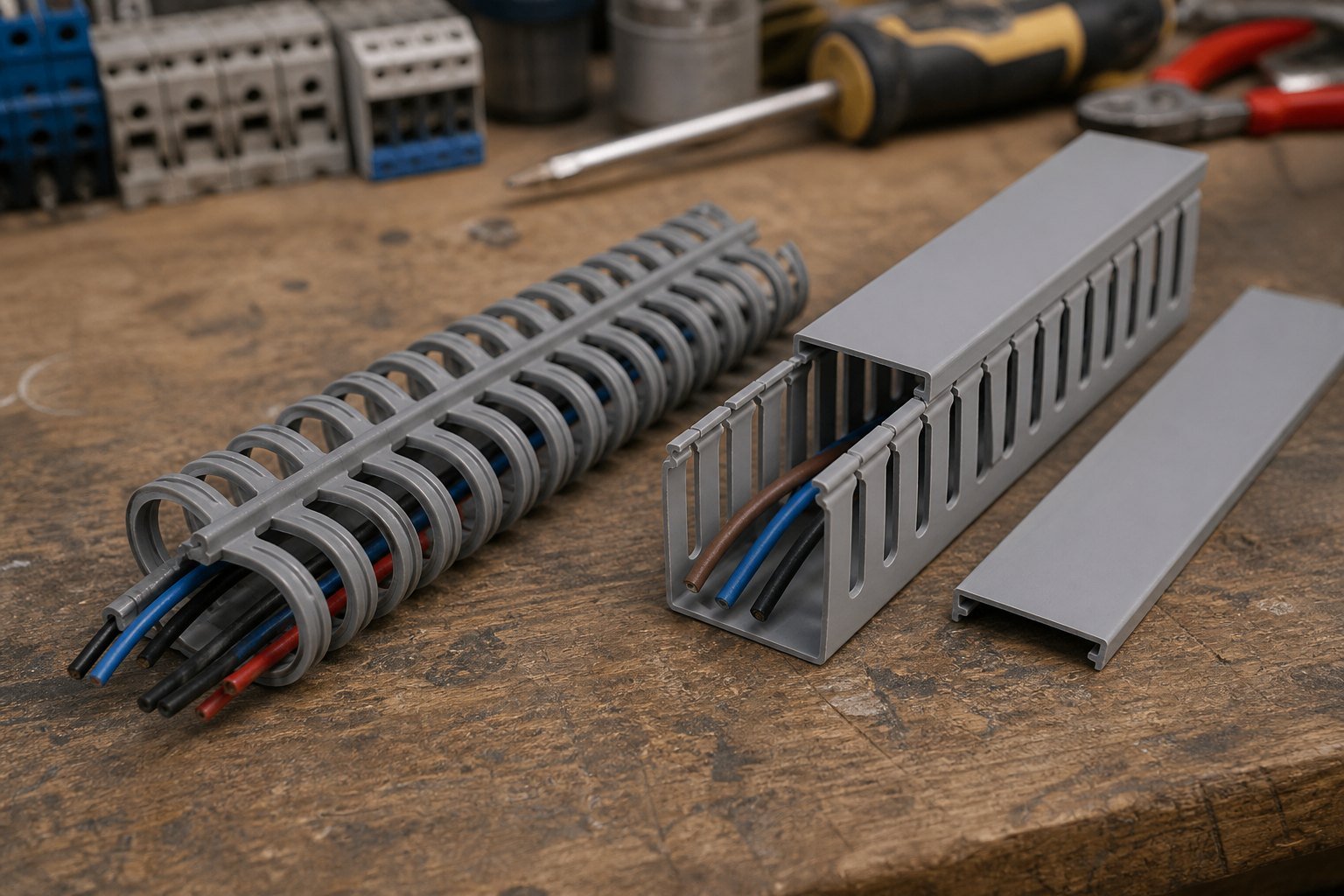
Two useful options are pull-apart wiring duct and conventional slotted PVC wiring duct. A pull-apart design uses flexible loop-shaped fingers that retain wiring without a separate cover. A conventional slotted duct uses rigid side walls, wire-exit slots, and a snap-on cover.
Neither construction is automatically better. The right choice depends on routing geometry, conductor volume, access frequency, cabinet space, operating conditions, and the assembly process. This guide compares pull-apart wiring duct vs slotted wiring duct so panel builders, distributors, and OEM buyers can specify the right product and request comparable quotations.
Quick Comparison: Pull-Apart vs Slotted Wiring Duct
| Selection factor | Pull-apart wiring duct | Conventional slotted wiring duct |
|---|---|---|
| Basic construction | Flexible base with loop-shaped fingers | Rigid channel with slotted side walls |
| Wire retention | Fingers wrap over the opening | Separate snap-on cover closes the channel |
| Typical strength | Easy access and flexible routing | Broad size range and structured straight runs |
| Best-fit wiring | Smaller routes or groups requiring changes | Main routes carrying moderate or high wire volume |
| Access during changes | Wires can be inserted or removed through the fingers | Cover is removed before accessing the channel |
| Layout suitability | Compact or non-standard routes, subject to installation review | Straight, repeatable panel layouts |
| Parts to manage | One-piece, coverless design | Duct base plus matching cover |
| Key purchasing checks | Finger resilience, usable space, base flexibility | Cover fit, slot geometry, cutting quality, capacity |
Use this table as a first filter, not a final engineering decision. The actual model must still fit the conductor sizes, bend space, mounting method, temperature, and documentation requirements of the project.
How the Two Wiring Duct Designs Work
Pull-Apart Wiring Duct
SMK pull-apart wiring duct is a flexible nylon duct with loop-shaped fingers. Conductors are pushed between the fingers, which then help retain the wiring. Because the fingers close over the top, a separate removable cover is not required.
This construction is useful where a technician expects to add, remove, or reroute wires during panel assembly, testing, commissioning, or servicing. The flexible base can also help with compact layouts where a long, rigid channel would be inconvenient. Flexibility does not eliminate the need for proper mounting, clearance, bend control, and protection from moving or sharp parts.
SMK lists three reference sizes: FD-20 at 20 × 15 mm, FD-30 at 29 × 25 mm, and FD-40 at 38 × 35 mm. Each is shown with a 500 mm section length and a flame-retardant nylon material option. The exact material rating and other product values should be reconfirmed for the ordered model.
Conventional Slotted PVC Wiring Duct
SMK insulated wiring duct uses rigid PVC side walls with repeated slots and a snap-on cover. Individual conductors exit through the slots near terminals, relays, breakers, drives, or PLC modules.
This familiar construction suits straight routing paths and organized component rows. Its wide range of widths and heights gives designers more options for main horizontal and vertical wire routes. The cover helps create a visually enclosed channel, but technicians must have enough clearance to remove and replace it.
SMK describes its standard duct as rigid flame-retardant PVC in grey, with a typical working range of -20°C to 65°C and a standard length of 2 m. The product page lists sizes from 25 × 25 mm to 120 × 100 mm. Listed wire counts are selection references only; real usable capacity changes with conductor diameter, markers, bends, routing arrangement, and required spare space.
Choose by the Work the Panel Must Support
Frequent Wiring Changes and Commissioning
Pull-apart duct is a strong candidate when wiring will change repeatedly. Prototype machines, test systems, low-volume custom equipment, and panels with evolving I/O assignments often require several routing revisions before design freeze.
With a coverless finger design, a technician can access one wire group without removing a long cover. This may simplify additions and corrections. Before approving the design, test whether the fingers retain the actual conductors after repeated access and whether the duct remains securely mounted.
High Wire Volume and Repeatable OEM Layouts
Rigid slotted duct is often easier to standardize for a stable panel design with straight component rows and higher conductor volume. Designers can assign different duct sizes to main and branch routes, then document each cut length in the assembly drawing or bill of materials.
For repeat production, check more than nominal width and height. Confirm inside dimensions, slot pitch, finger thickness, cover fit, mounting-hole pattern, color consistency, and cut quality. A nominally similar replacement may still behave differently on the production line.
Tight Spaces and Short Branch Routes
Pull-apart duct can be useful for short routes around compact devices or in areas where technicians need direct access. However, do not select it simply because the panel is crowded. Verify conductor bend space, terminal access, door clearance, mounting surface, and the movement of any hinged section.
Conventional slotted duct may still be preferable if the small area carries many conductors or needs a rigid, covered channel. A panel can use several sizes rather than forcing one duct profile into every route.
Finished Appearance and Service Access
A covered slotted duct creates a clean continuous surface when the cover is correctly fitted. This can suit standardized cabinets presented to end users or inspected against an approved build sample.
Pull-apart duct provides faster direct access, but wire placement remains visible through the finger structure. The decision should reflect the customer's appearance expectations as well as the service procedure. A neat panel is useful only if technicians can still reach labels, terminals, and release points.
Six Criteria for a Defensible Selection
1. Routing Geometry
Mark every main route, branch, turn, cable entry, and device exit on the panel layout. Use rigid slotted duct where long straight runs dominate. Evaluate pull-apart duct where routes are short, compact, or frequently revised. Never rely on product flexibility to compensate for an unresolved layout.
2. Conductor Volume and Spare Capacity
Estimate each duct section separately. Include conductor outside diameter, ferrules, markers, shielded cables, crossing points, and planned additions. Do not fill a duct so tightly that wires are compressed, fingers are forced open, or a cover cannot close normally.
The existing SMK guide, How to Choose Wiring Duct for Electrical Control Panels, provides a broader capacity and layout checklist.
3. Exit Frequency
Review how often conductors leave the channel. Closely spaced terminals may require many precise exits. Compare the slot or finger spacing with the component pitch using the real panel layout, not a catalogue photo.
4. Access and Retention
Ask how frequently the channel will be opened and who will service it. Pull-apart fingers should allow access without releasing wires unintentionally. Slotted-duct covers should remove and refit without excessive force, interference, or lifting after the channel is loaded.
5. Material and Environment
Confirm the enclosure's internal temperature, nearby heat sources, chemicals, oil, moisture, vibration, and flame-performance requirements. Nylon and PVC are not interchangeable descriptions. Request the material declaration, rating, or report required for the specific model and target market rather than assuming that every option has the same compliance status.
6. Assembly and Supply Consistency
For an OEM, the best duct is one the workshop can cut, mount, load, inspect, and reorder consistently. For a distributor, the range must also match customer demand and packaging constraints. Approve the product specification, physical sample, label, packing method, and document revision before a bulk order.
A Hybrid Layout Can Be the Best Answer
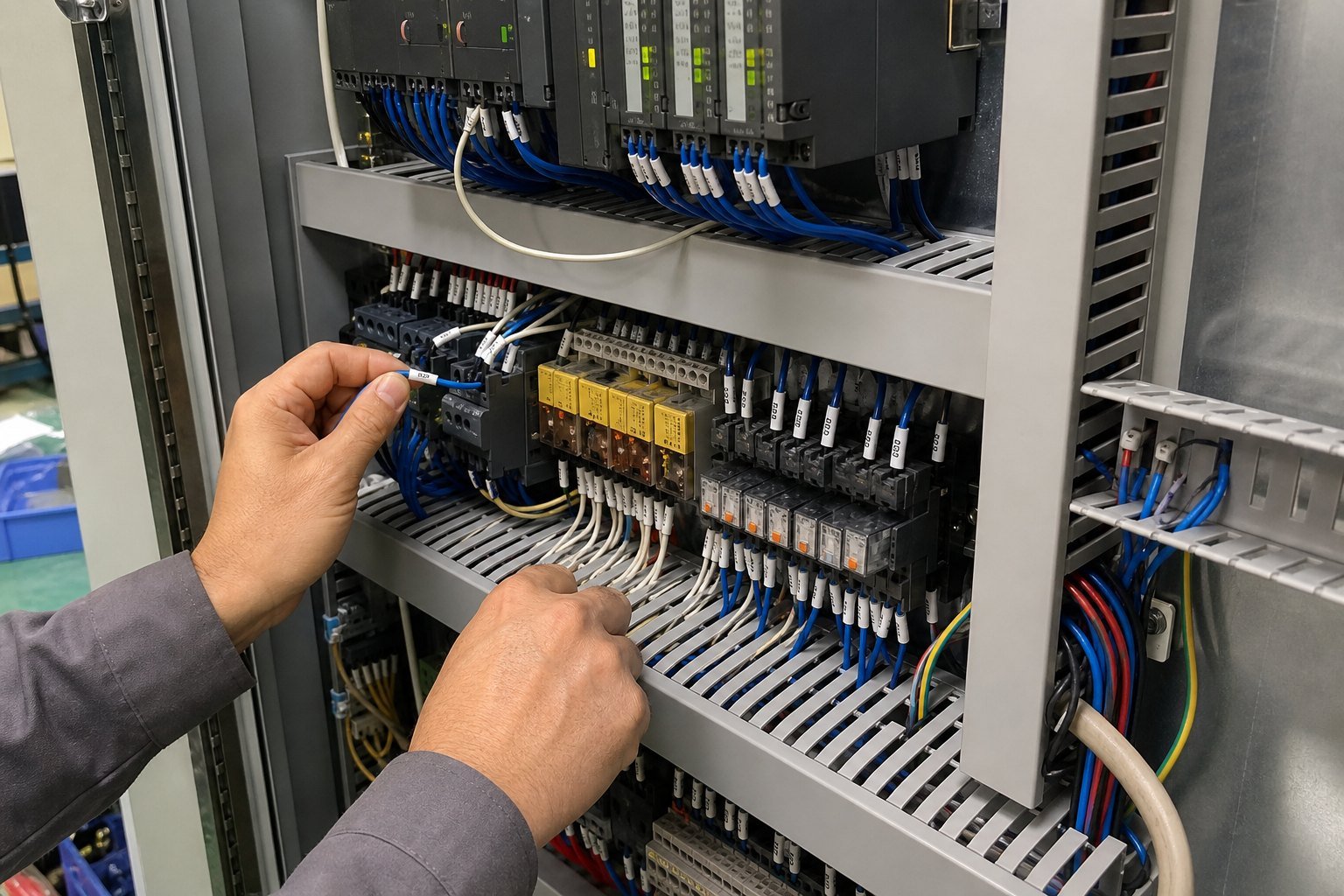
The comparison does not require an all-or-nothing choice. A control panel can use rigid slotted PVC duct for high-volume main routes and pull-apart duct for short service branches, prototype sections, or locations that need frequent access.
For example, the mounting plate of a PLC control cabinet may use covered slotted duct between DIN-rail component rows, while a smaller pull-apart section manages a group expected to change during commissioning. The same principle can apply inside a power distribution cabinet when auxiliary control wiring needs different access from the main organized routes.
Keep electrical separation, grounding, shielding, heat, bend radius, and applicable project rules under engineering control. Wiring duct organizes conductors; it does not replace a complete electrical design.
What to Put in the RFQ
Send suppliers enough information to quote the same requirement:
- Duct type: pull-apart or rigid slotted with cover
- Required width, height, and section or standard length
- Estimated quantity by size
- Material and color
- Conductor types and approximate route volume
- Panel type and installation location
- Mounting method and any cut-length requirement
- Internal temperature and environmental conditions
- Required flame-performance, material, or market documents
- Sample quantity and test expectations
- Bag, carton, label, barcode, or private-label requirements
- Destination, Incoterm, and required delivery schedule
Ask the supplier to identify exceptions instead of silently substituting a similar size or material. A clear comparison should align the duct, cover where applicable, packaging quantity, documents, and commercial terms.
Sample Approval Checklist Before Bulk Purchase
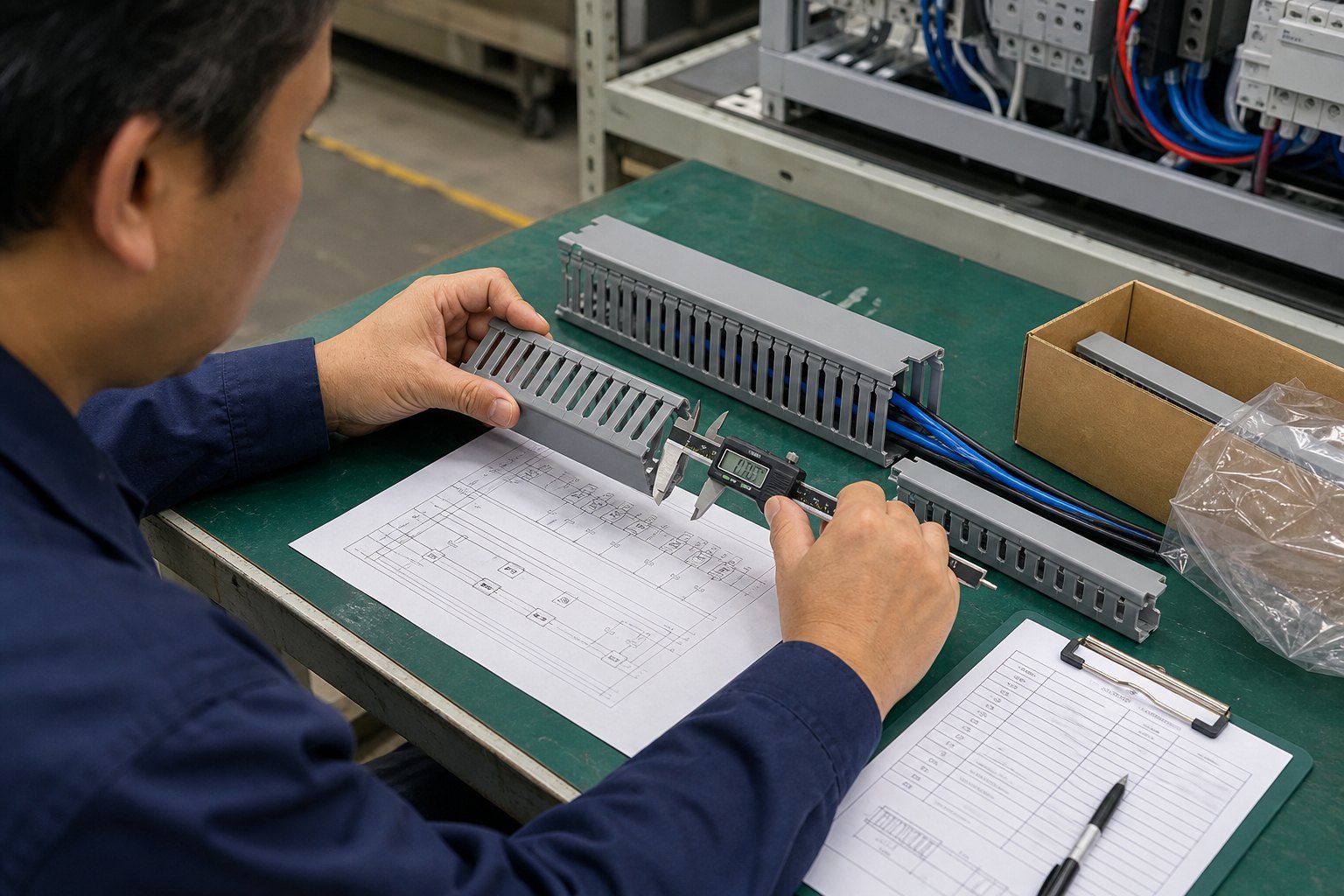
Test samples in the real assembly process:
- Measure width, height, and length against the drawing.
- Load the actual conductor mix and planned spare wires.
- Check wire insertion, exit position, and bend space.
- For pull-apart duct, repeat access and inspect finger recovery and retention.
- For slotted duct, check cutting, finger removal, cover fit, and cover removal clearance.
- Confirm mounting stability on the intended surface.
- Inspect edges, color, surface finish, and visible consistency.
- Verify labels, packing quantity, carton protection, and requested documents.
- Keep an approved sample and specification revision for repeat orders.
The goal is not to declare one design universally superior. It is to prove that the selected model works in the target panel and can be supplied consistently.
Conclusion: Match the Duct to the Routing Task
Choose pull-apart wiring duct when direct access, repeated changes, a compact route, and a one-piece coverless structure are priorities. Choose conventional slotted PVC duct when the design needs rigid straight routes, a broad size range, covered wire channels, and repeatable high-volume assembly.
Many panels benefit from using both. Start with the wire schedule and layout, select the construction for each route, and validate the choice with actual conductors and workshop tools.
SMK supplies pull-apart wiring duct and conventional slotted insulated wiring duct for control panels, automation equipment, and OEM projects. Review the broader cable management solutions, then contact SMK for a sample or quotation with your required dimensions, quantity, application, packaging, target market, and document needs.
Frequently Asked Questions
Is pull-apart wiring duct the same as slotted wiring duct?
No. Pull-apart duct uses flexible loop-shaped fingers to retain wires without a separate cover. Conventional slotted duct normally uses rigid side walls and a snap-on cover. Both route wires, but their access, capacity, and installation characteristics differ.
When should I use pull-apart wiring duct in a control panel?
Consider it for compact routes, prototype systems, commissioning areas, or wire groups expected to change. Verify mounting, conductor retention, bend space, material requirements, and the actual number and size of wires before approval.
Is slotted PVC duct better for high-density wiring?
It often provides more width and height options for larger wire volumes, but suitability depends on actual conductor diameters, slot geometry, reserve space, and layout. Test the selected size rather than relying only on a catalogue wire count.
Can both duct types be used in one electrical cabinet?
Yes. A hybrid layout can use covered slotted duct for main straight routes and pull-apart duct for smaller branches or frequently accessed wiring. The overall design must still meet the project's separation, temperature, clearance, and safety requirements.
What should an OEM buyer test on wiring duct samples?
Check dimensions, usable capacity, mounting, wire insertion and removal, cut quality, edges, retention, cover fit where applicable, repeated access, appearance, packaging, labels, and required documentation. Keep the approved sample as a repeat-order reference.
Related Products
Products for This Guide
Review specifications or request pricing for the products most relevant to this article.
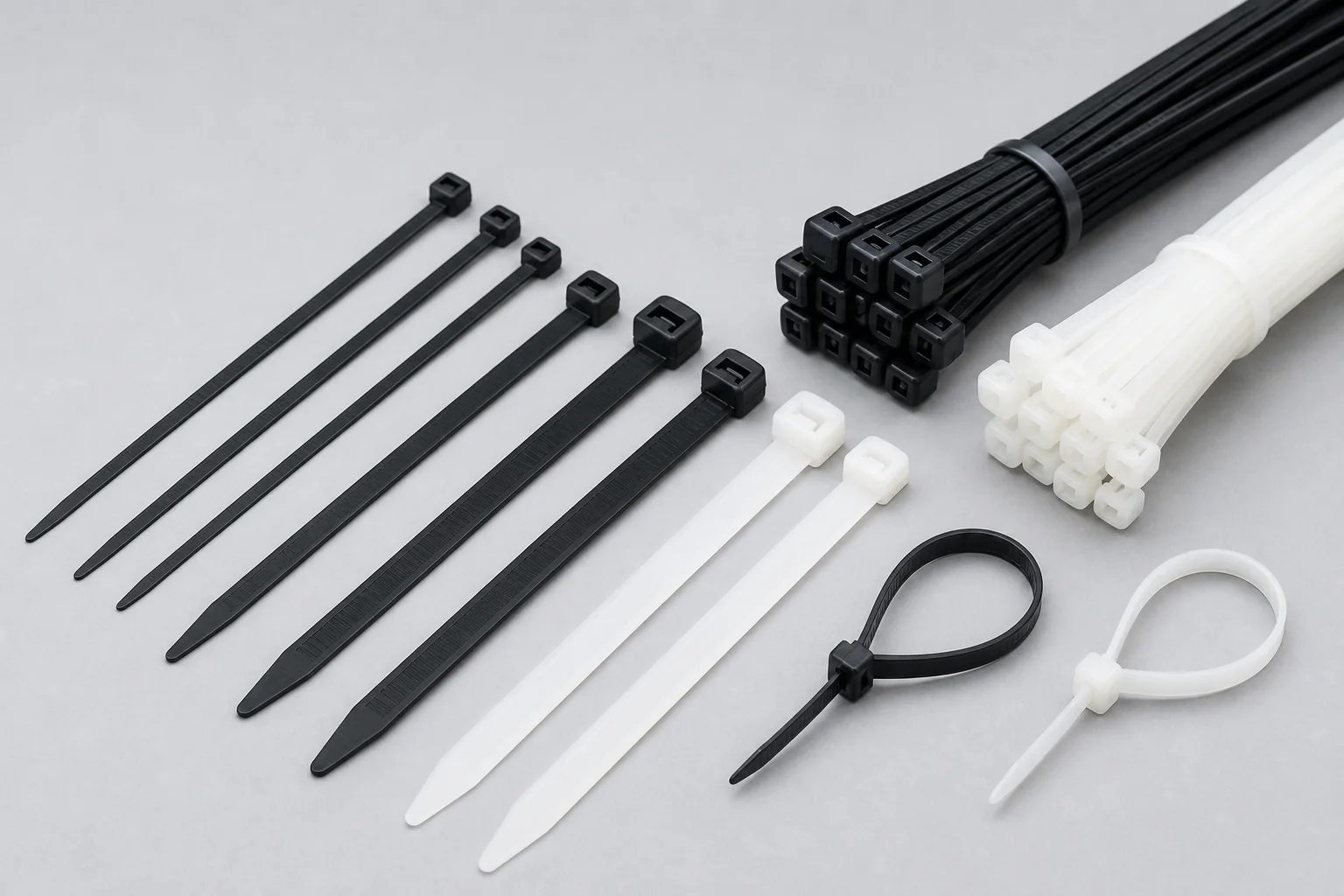
Standard Nylon Cable Ties
The most widely used cable fastening solution for electrical, factory, construction, electronics, and wholesale markets.
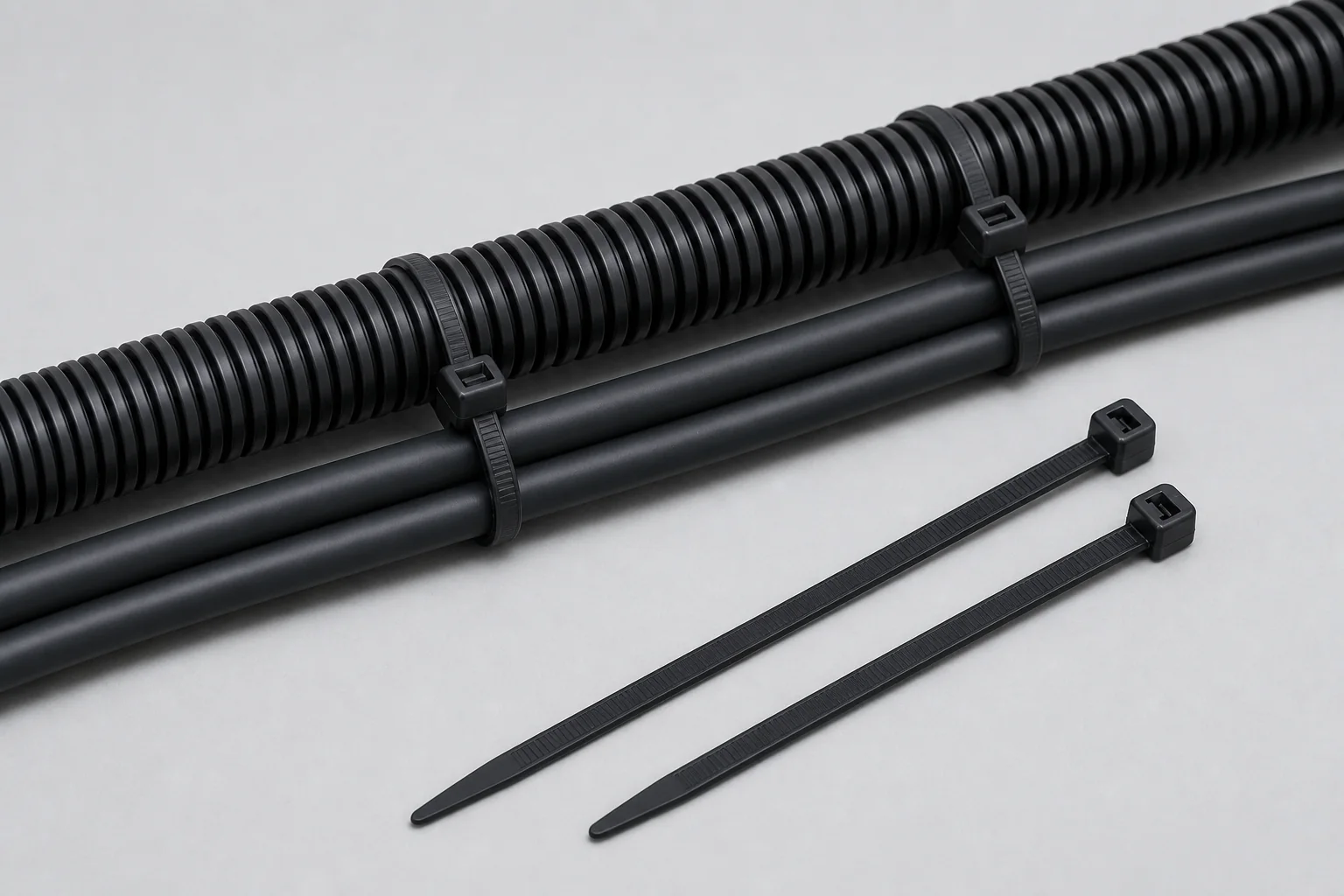
UV Resistant Cable Ties
Weather-resistant black cable ties for solar, telecom, outdoor engineering, and power installations.

Stainless Steel Cable Ties
High-value fastening for marine, oil and gas, chemical, railway, and extreme outdoor environments.