
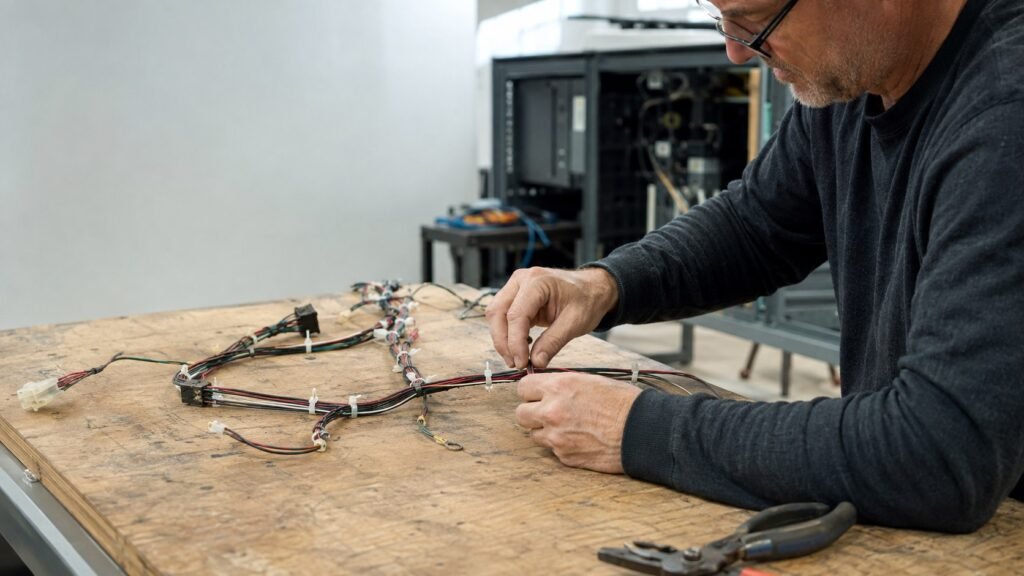
A prototype harness rarely stays unchanged. A sensor moves, a connector changes, or an extra circuit joins a branch that already looked finished. Each revision requires access to the wires without losing control of the routing.
Releasable cable ties for prototype harnesses give assembly teams a way to reopen selected bundle locations. The purchasing decision, however, should include more than strap length. The tie must fit the changing bundle, remain accessible in the installed position, and have a clear role when the design enters production.
This guide follows that process from the first routing mock-up to sample approval and production handover.
Start with a Harness Change Map
Before selecting ties, mark the locations where the harness is likely to change. Use a drawing, a photograph of the assembly board, or a simple branch sketch.
Separate three kinds of location: branches still under development, sections that need access during testing, and routes already fixed by the mechanical design. This prevents the assembly team from treating every fastening point as equally temporary.
For each change location, record what the operator must do. Adding one wire is different from withdrawing a terminated branch or moving the complete bundle. A tie may need to loosen slightly, open completely, or come off the harness altogether.
Also identify who can authorize a routing change. Temporary bundling should support the build record, so a convenient adjustment does not become an undocumented design revision.
Select for the Smallest and Largest Build States
Measure the actual bundle
Check the bundle at its present size and at the largest planned build state. Include sleeving or protective covering wherever the tie will sit. For irregular bundles, a physical trial is more useful than estimating diameter from the wire count alone.
Confirm the manufacturer’s usable bundle range. Overall strap length does not describe how easily a tie can close around a small branch or accommodate a later addition.
As an illustrative planning example, a branch might grow from approximately 25 mm to 32 mm during development. Evaluate both conditions with the intended cables. These dimensions describe a hypothetical build, not a customer result or an approved installation.
Compare width and head clearance separately
A wider strap can change the space needed beside connectors, fixture posts and neighboring branches. Do not assume that it also means a higher published tensile value.
For example, SMK lists the following two options on its releasable cable ties product page:
| Model | Length | Width | Maximum bundle diameter | Listed minimum tensile strength |
|---|---|---|---|---|
| GTR-200ST | 200 mm | 4.8 mm | 50 mm | 50 lb |
| GTRN-200HD | 200 mm | 7.6 mm | 50 mm | 50 lb |
The listed width differs while the listed tensile value stays the same. Use the table to shortlist samples, then confirm the current specification, head dimensions and availability with SMK. Do not treat the tensile figure as permission to suspend equipment or replace a specified cable support.
Make the Release Tab Accessible After Installation
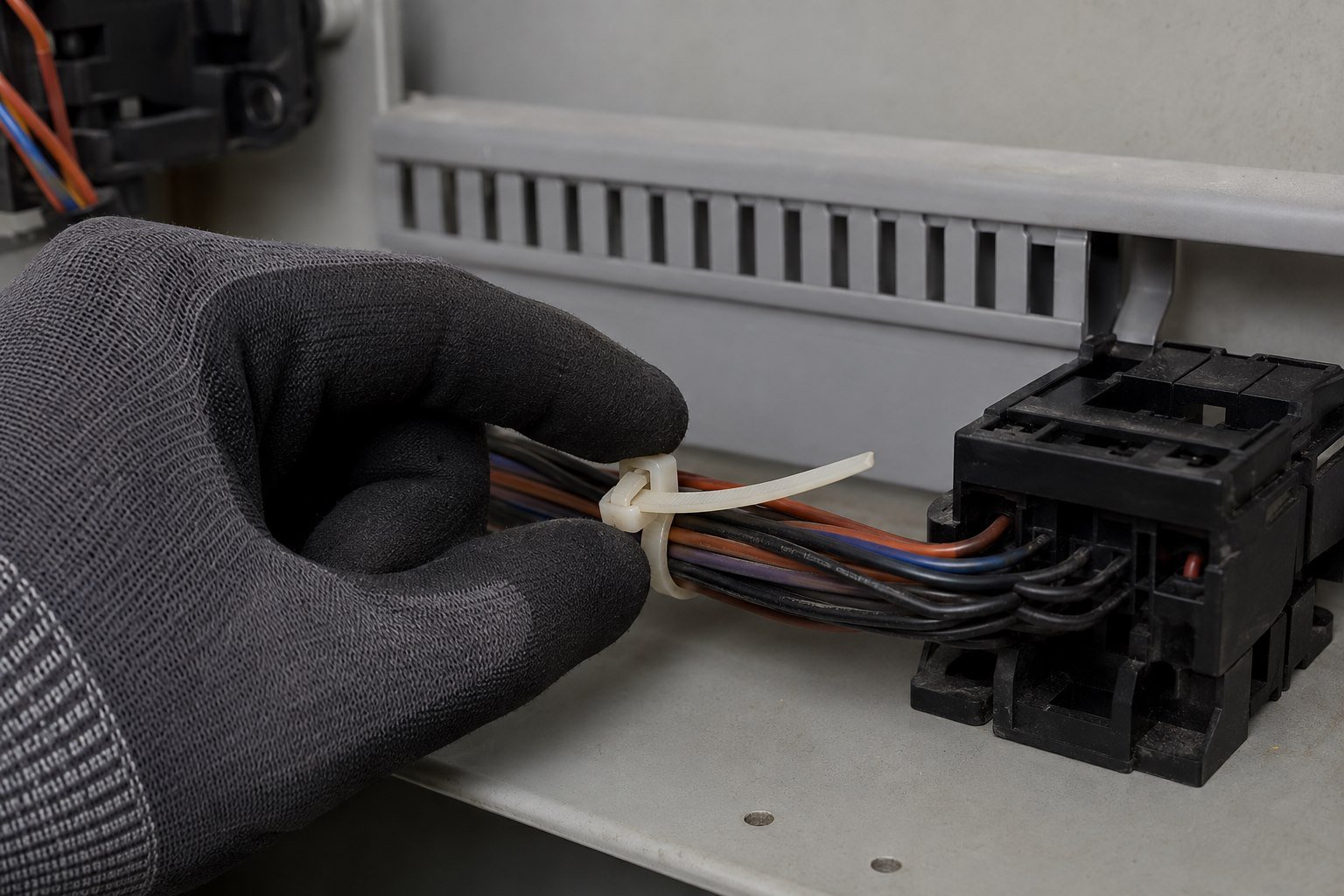
A tie that opens easily on a workbench may become awkward once the harness is inside a machine. Check access in the installed position, including any nearby cover, connector housing or cable duct.
Ask the operator to open the tie using the gloves normally worn for the task. Can they reach the tab, hold it in the release position and withdraw the strap without pulling on a connector? If not, change the tie orientation or fastening location before approving the layout.
Leave enough usable tail for the intended reopening and adjustment. Agree how to retain that tail so it does not obstruct covers or enter a moving area. Trimming should follow the selected product’s instructions and the planned reuse method.
For cabinet builds, review the surrounding routing through SMK’s control panel and industrial equipment applications. Include duct covers and maintenance access in the mock-up, rather than approving the harness in isolation.
Run a Sample Trial That Recreates the Rework
Set the task before judging the sample
Write a short trial sequence based on the planned build: bundle the wires, install the harness, reopen the chosen location, add or remove a branch, and close it again. Use the intended cable types, protective covering and working position.
Agree the number of trial repetitions with engineering and the supplier. A project trial is not a universal reuse rating, and a successful first release does not establish an unlimited service life.
Keep the evaluation focused on observable results:
| Trial observation | What to record | Possible next action |
|---|---|---|
| Access to the release tab | Hand position and any obstruction | Rotate the head or revise the location |
| Strap withdrawal | Whether the planned branch can be removed | Reconsider the opening space or tie size |
| Closure after rework | Slipping, incomplete engagement or visible damage | Reject the sample condition and investigate |
| Contact with the cable | Indentation, abrasion or displaced covering | Review tension, routing or fastening method |
| Fit after bundle growth | Tail handling and interference with adjacent parts | Trial another size or move the fastening point |
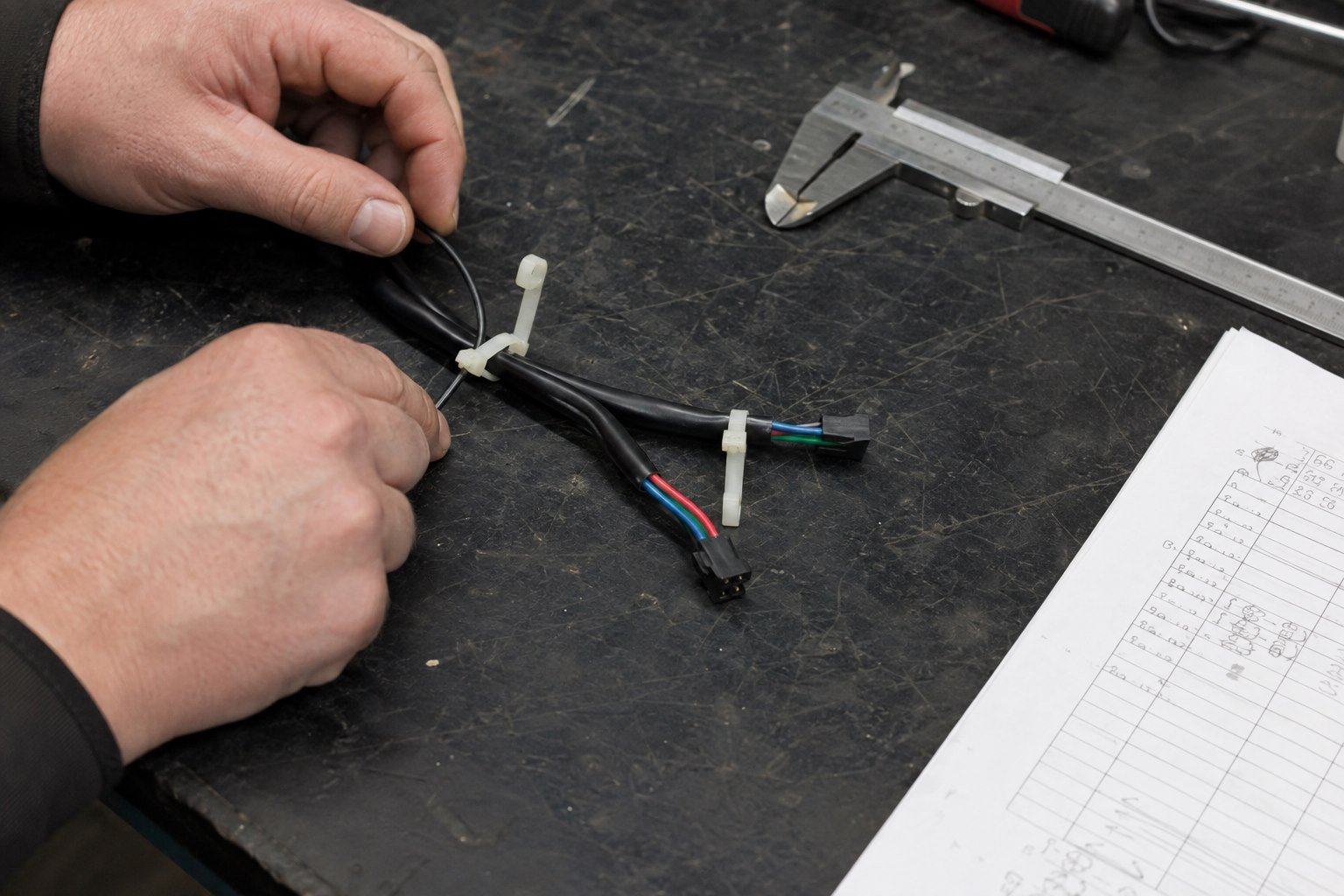
Use photos to document the sample arrangement and any failure. Record the model, sample batch reference if supplied, cable construction and trial conditions. This makes later sample comparisons more meaningful than comments such as “easy to use.”
Keep fastening and cable requirements separate
Follow the cable manufacturer’s bend-radius and compression guidance. A bundle can look tidy while being pulled too tightly near a connector or forced around a narrow fixture post.
Where the assembly requires strain relief, use the fastening arrangement specified by the equipment design. Treat vibration, moving harness sections and environmental exposure as separate approval questions. Passing a bench rework trial does not establish suitability for those conditions.
Do not transfer another supplier’s material, temperature or UV claims to the SMK model under evaluation. Request documents for the exact proposed product when the application needs those properties.
Decide What Happens to Each Tie at Production Handover
Prototype convenience can create ambiguity at the end of development. A temporary tie may remain on the first production unit simply because nobody recorded whether to remove it.
Give each temporary fastening location a clear disposition: remove after assembly, replace with the production fastener, or retain an approved releasable model for service access. Put that decision in the drawing notes or assembly instructions.
For a retained tie, record its model, location, orientation and installation method. For a removed tie, specify the build stage at which removal is checked. Where temporary and final fasteners look similar, use a controlled identification method in the work instruction.
The decision to retain a releasable design should follow the finished equipment’s requirements. If the team still needs to choose the general fastening approach, SMK’s reusable versus single-use cable tie guide provides the broader comparison.
Turn the Approved Sample into a Repeatable Order
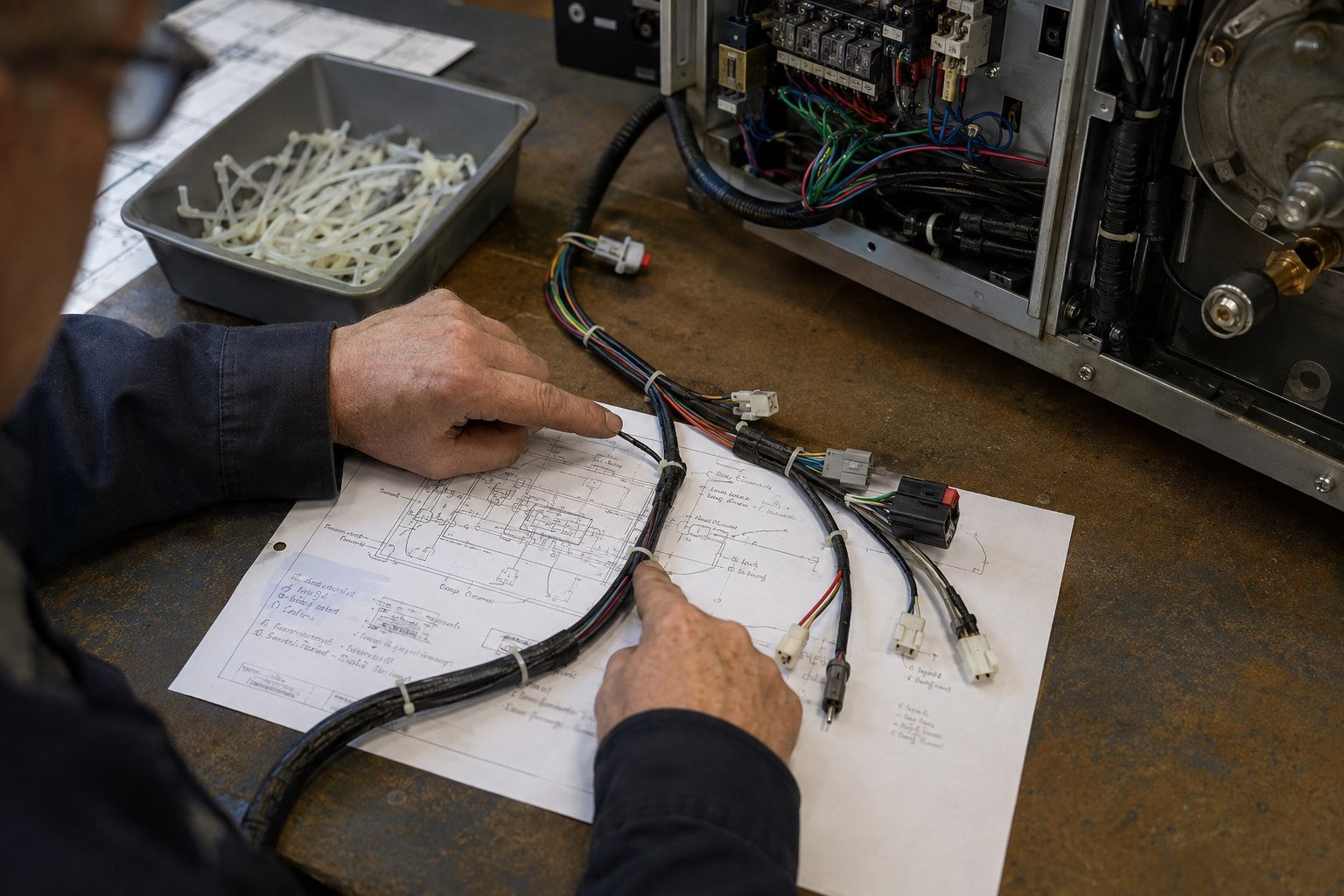
An approved sample is most useful when purchasing can identify exactly what engineering evaluated. Attach the sample record to the part specification, including the accepted model and any unresolved questions.
State whether the order is for prototype assembly stations, service kits or permanent installation. That distinction helps a supplier understand why opening access, packaging or documentation matters.
For importers and distributors supplying several OEM customers, keep application notes separate for each approved use. A model accepted on an indoor test bench should not automatically be described as suitable for outdoor machinery.
A practical inquiry can be brief:
We need releasable cable ties for prototype harness assembly. Please review our minimum and maximum bundle dimensions, access photos and sample trial sequence. Quote the proposed model, quantity and packaging, and identify any differences from the submitted requirements. Please confirm available technical documents and sample arrangements.
Add delivery destination and required timing to the commercial inquiry. Ask for confirmation of availability and order terms instead of treating catalog information as a fixed commitment.
Discuss Your Prototype Harness with SMK
Send a branch sketch or installation photo, the expected bundle range, planned rework steps and order quantity through SMK’s Contact / Get a Quote page. Ask the team to review releasable cable tie options and the sample requirements for your assembly process.
Frequently Asked Questions
What makes a releasable cable tie useful for prototype harnesses?
Its release mechanism allows the bundle to be opened for changes. The benefit depends on whether the operator can reach the tab and whether the tie fits the harness throughout the planned build stages.
How many times can a releasable cable tie be reused?
There is no single count that applies to every product and application. Obtain any model-specific reuse guidance, agree a relevant trial and inspect the strap and locking head. Do not reuse damaged ties or assume that appearance alone proves remaining strength.
Should I choose the longest tie to allow for future wires?
Choose a model that works with both the smallest and largest expected bundles. Excess length creates a tail-management task, while length alone does not confirm small-bundle fit, head clearance or convenient release access.
Can prototype ties stay on the finished equipment?
Only when the approved production design allows the selected model and installation. Record whether each temporary fastening point is removed, replaced or retained. Bench approval alone does not cover the finished equipment’s operating environment.
What should I send when requesting samples?
Provide bundle dimensions, cable or sleeve details, installation photos and the changes operators need to make. Include environmental requirements, expected purchasing quantity and the proposed trial. Ask the supplier to identify the supplied model and any specification differences.
Related Products
Products for This Guide
Review specifications or request pricing for the products most relevant to this article.
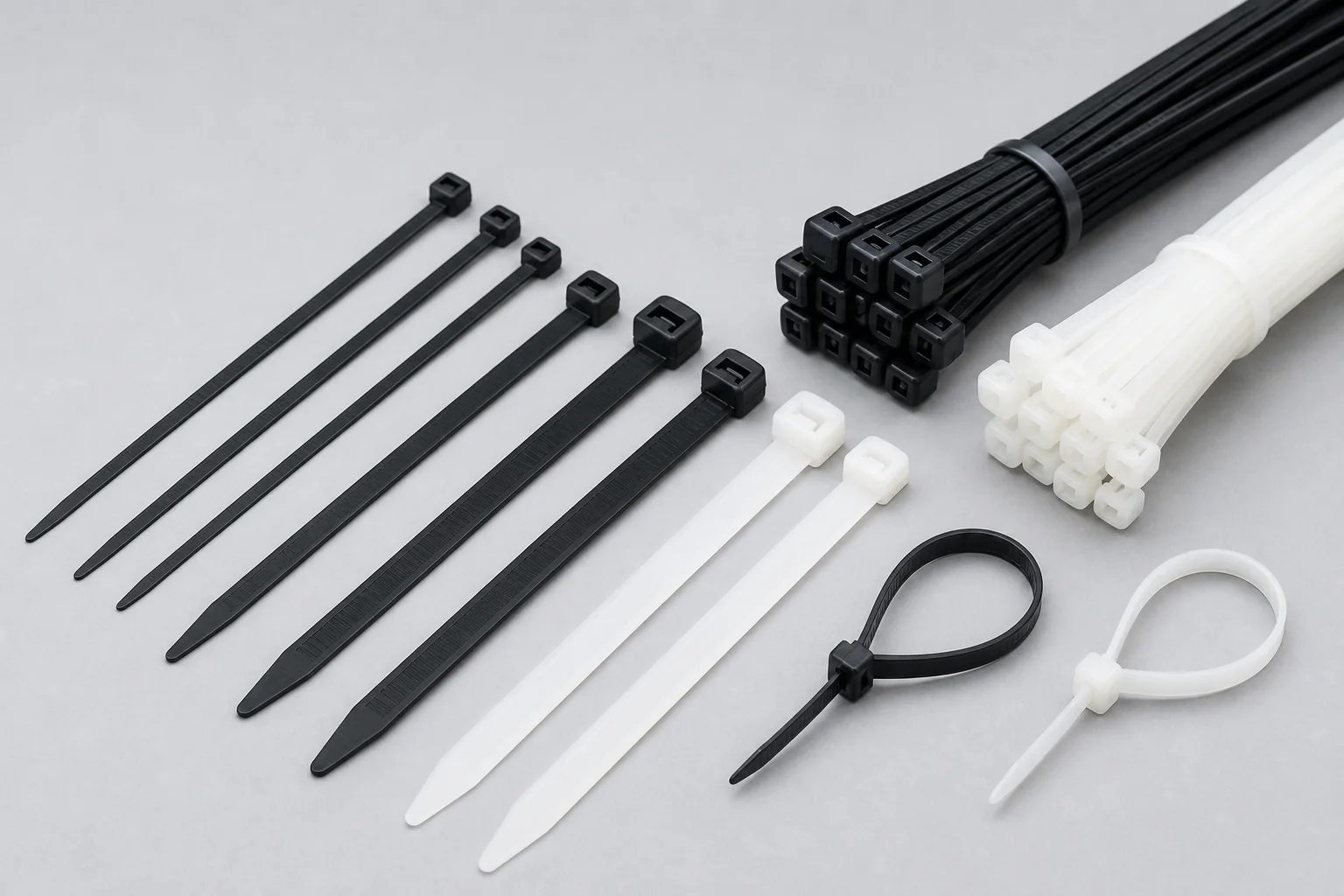
Standard Nylon Cable Ties
The most widely used cable fastening solution for electrical, factory, construction, electronics, and wholesale markets.
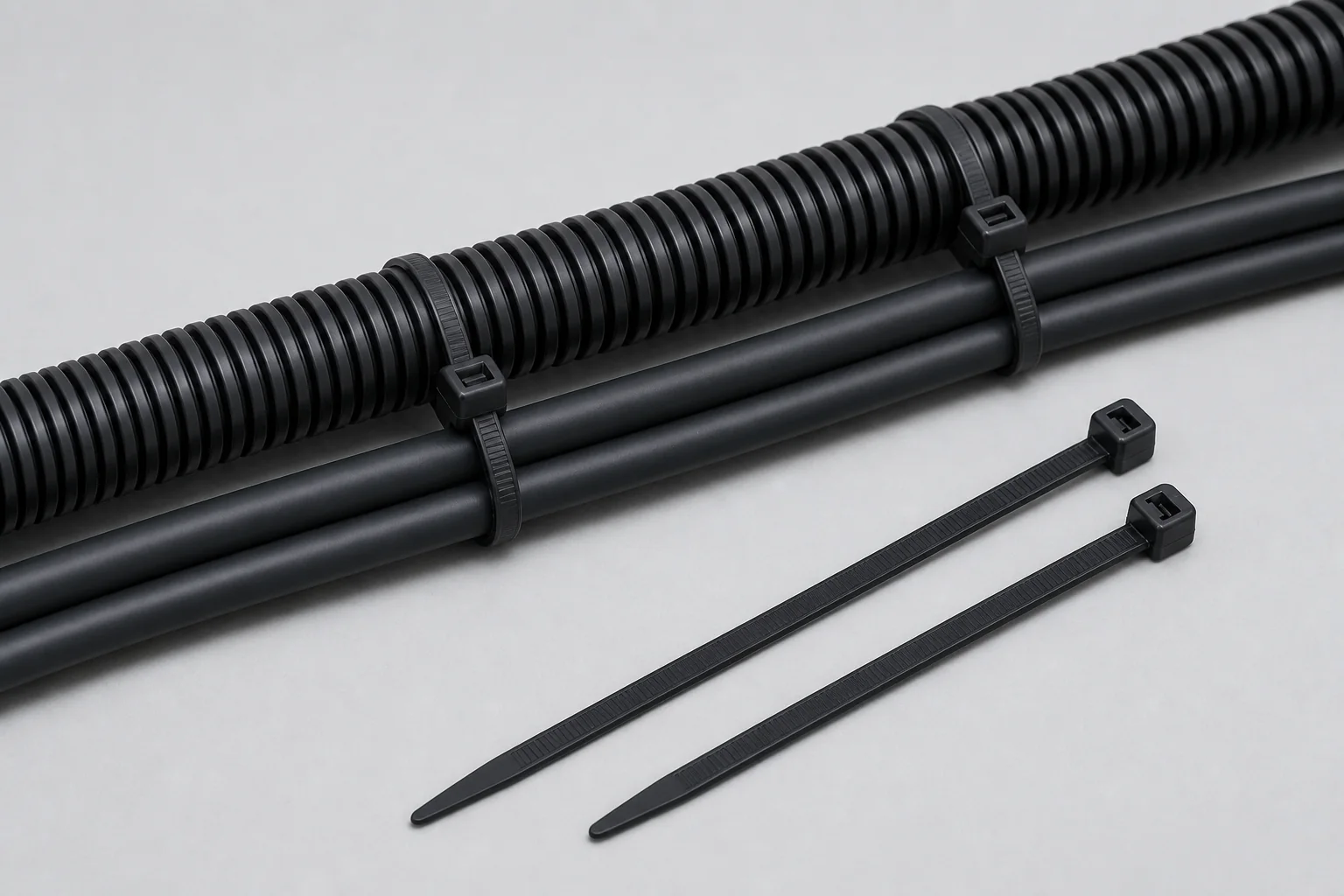
UV Resistant Cable Ties
Weather-resistant black cable ties for solar, telecom, outdoor engineering, and power installations.
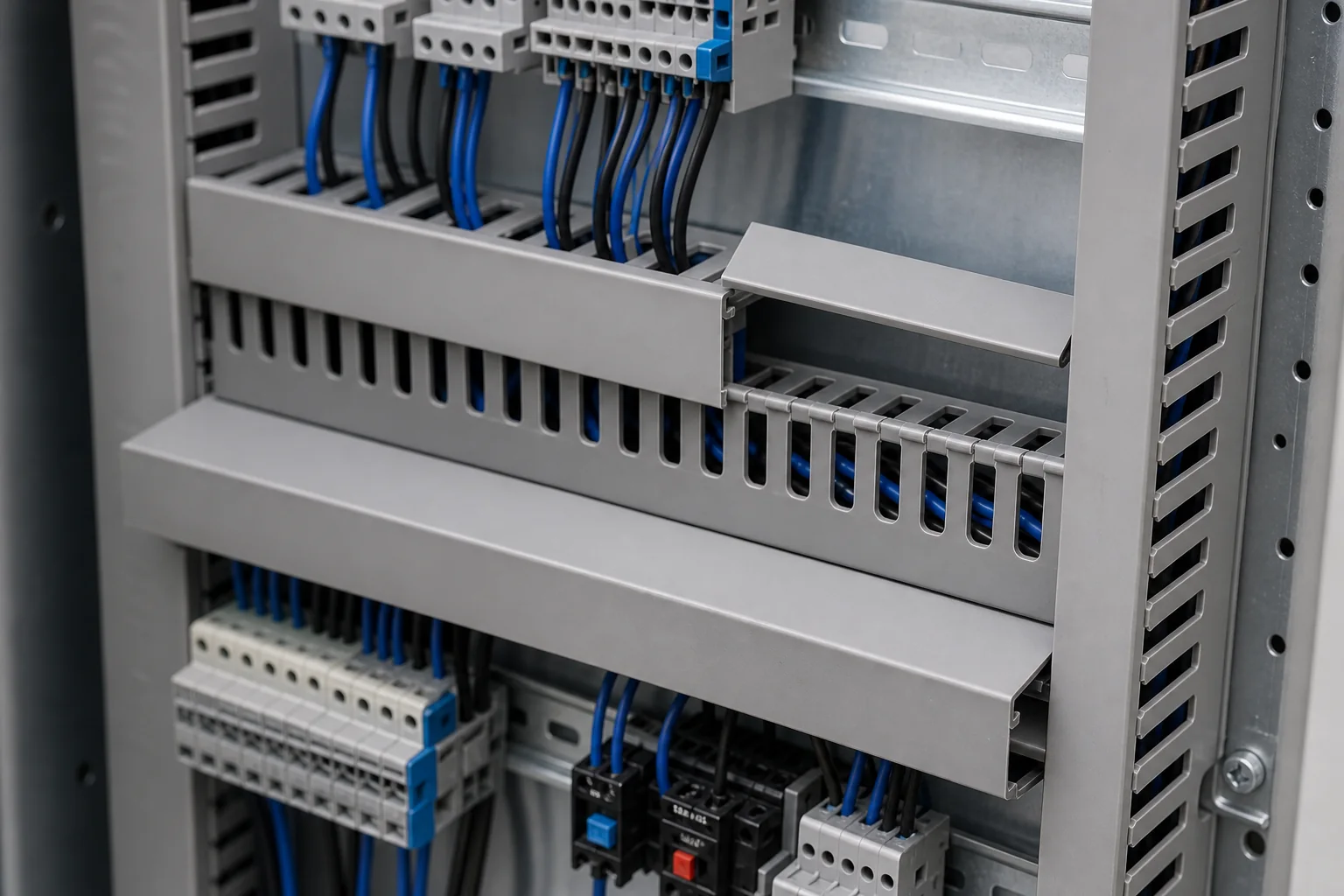
Insulated Wiring Duct
Standard slotted PVC wiring duct for organized routing inside control panels and electrical cabinets.