
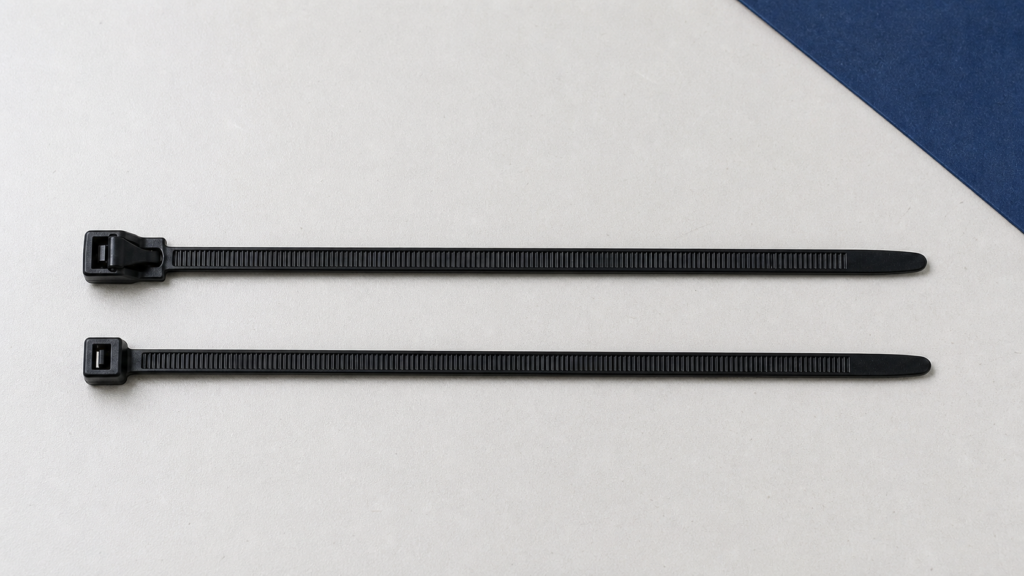
Cable ties are simple fastening products, but choosing the wrong locking design can increase installation time, maintenance work, and replacement costs.
Single-use cable ties are economical, secure, and suitable for permanent cable fixing. Reusable cable ties, also called releasable cable ties, can be opened, adjusted, and used again. They are especially useful for control panels, equipment maintenance, prototype development, and temporary cable routing.
The right choice depends on how long the cables will remain in place, whether the bundle needs regular adjustment, the required strength, and the working environment.
This guide compares reusable and single-use cable ties to help distributors, contractors, panel builders, maintenance teams, and OEM buyers select the right product.
Quick Comparison: Reusable vs. Single-Use Cable Ties
| Factor | Reusable Cable Ties | Single-Use Cable Ties |
|---|---|---|
| Locking design | Locking head with release tab | Permanent self-locking head |
| Adjustment | Can be opened and tightened again | Normally tightened only once |
| Removal | Released by hand | Usually removed by cutting |
| Initial price | Generally higher | Generally lower |
| Long-term cost | Can be lower when frequently reused | Economical for permanent, high-volume installation |
| Installation speed | Fast, with added adjustment flexibility | Very fast for repetitive installation |
| Typical applications | Maintenance, prototypes, temporary routing, and control panels | Construction, electrical installation, packaging, and permanent cable fixing |
| Availability | Selected sizes and designs | Very broad size, color, and strength range |
Neither design is better for every project. Reusable ties provide flexibility, while standard single-use ties provide a simple and economical permanent fastening method.
What Are Single-Use Cable Ties?
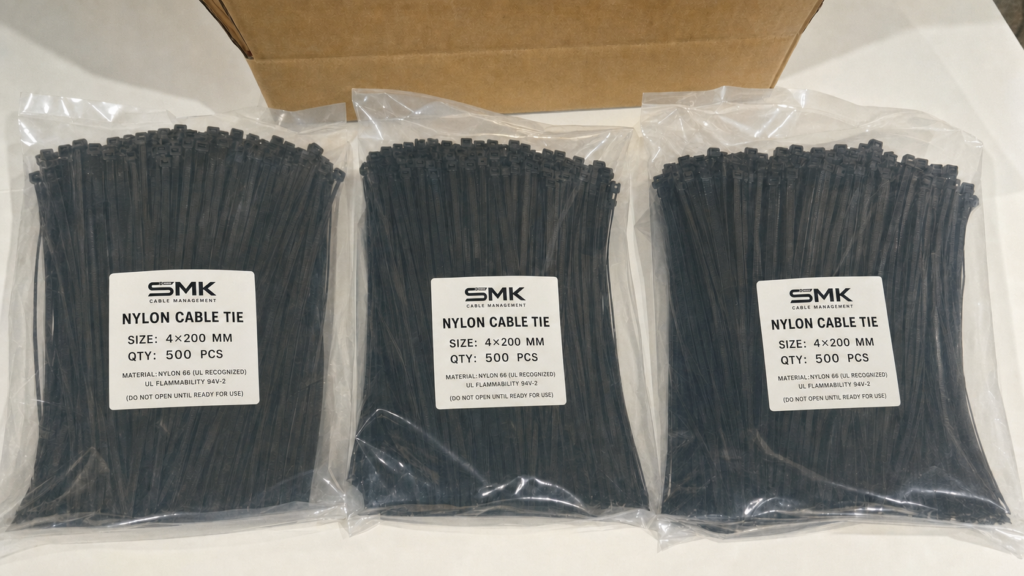
Single-use cable ties are the most common type of nylon cable tie. They have a flexible strap with molded teeth and a self-locking head. When the strap passes through the head, the internal pawl engages with the teeth and prevents the tie from moving backward.
This design provides several advantages:
- Fast installation
- Reliable locking
- Low unit cost
- Wide selection of lengths and widths
- Easy use by hand or with a cable tie tensioning tool
- Suitability for high-volume production and installation
Single-use ties are normally removed by cutting them. Once removed, they cannot usually be installed again.
They are a practical choice when the cable bundle is unlikely to change after installation. Common applications include electrical work, construction, machine assembly, packaging, electronics, cable harnesses, and general industrial fastening.
For indoor applications, standard nylon cable ties are often sufficient. Outdoor projects may require UV resistant cable ties, while larger bundles may require heavy duty cable ties.
What Are Reusable Cable Ties?
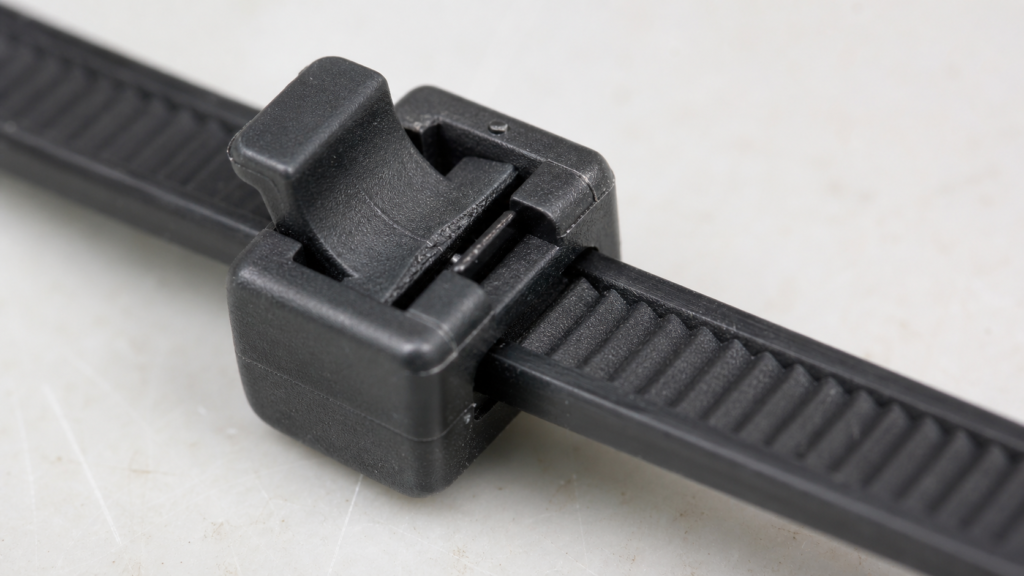
Reusable cable ties use a locking mechanism that can be released without cutting the strap. Most designs include a small release tab on or near the locking head. Pressing this tab disengages the pawl from the strap teeth, allowing the loop to be loosened or opened.
The tie can then be repositioned and tightened again, provided it has not been damaged or excessively worn.
This design is useful when:
- Cables are regularly added or removed
- Equipment requires frequent servicing
- A wiring layout is still being tested
- Temporary cable routing is needed
- The installer may need to correct the bundle
- Cutting a tie could risk damaging nearby wires
SMK releasable cable ties are available in Nylon 66 material options, natural and black colors, and several sizes. Standard product options have a stated working temperature range of approximately -40°C to 85°C, subject to the selected material and application conditions.
When Should You Choose Reusable Cable Ties?
1. Control Panel Assembly
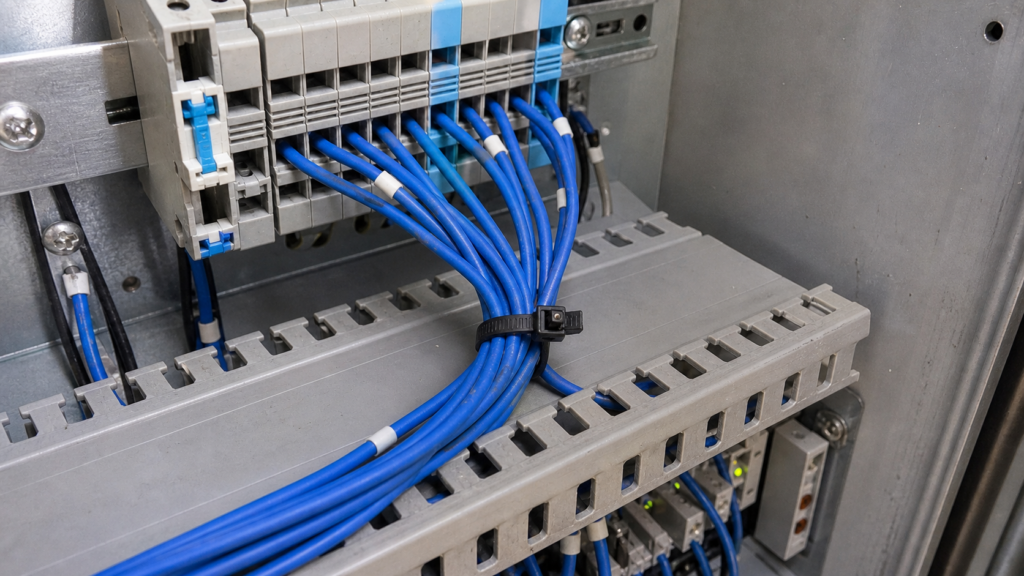
Panel wiring often changes during assembly, testing, commissioning, and future upgrades. A technician may need to add a sensor cable, reroute a wire, replace a component, or inspect a terminal connection.
Reusable ties allow cable groups to be opened and reorganized without repeatedly cutting and replacing standard ties. They can be used alongside insulated wiring duct to support clean and accessible panel wiring.
They should not be overtightened, especially around small signal wires or delicate cable insulation.
2. Equipment Maintenance
Industrial machines require periodic inspection and repair. Maintenance technicians may need access to motors, sensors, control cables, pneumatic lines, or replaceable components.
A releasable tie can make this work faster because the cable bundle can be opened without cutting the fastener. After maintenance, the same tie may be closed again if it remains in good condition.
3. Prototype Development
Cable routing frequently changes during prototype construction and product testing. Engineers may test several layouts before approving the final design.
Reusable cable ties make these changes easier and reduce unnecessary material waste. Once the design is finalized, the manufacturer can decide whether reusable or permanent ties are more appropriate for production.
4. Temporary Cable Routing
Exhibitions, test equipment, temporary electrical work, event installations, and short-term construction projects may require cables to remain organized for a limited period.
Reusable ties provide a cleaner alternative to repeatedly cutting standard ties when the installation is dismantled.
5. Frequently Modified Cable Bundles
Some installations change throughout their service life. Network cables, laboratory equipment, repair workshops, development benches, and automation systems may need frequent cable additions.
In these applications, convenient access may be more important than achieving the lowest possible initial fastener cost.
When Are Single-Use Cable Ties the Better Choice?
Reusable ties are convenient, but standard single-use ties remain the better option for many projects.
Permanent Electrical Installation
When cable routing has been finalized and future changes are unlikely, a standard nylon tie provides fast and economical fastening.
High-Volume Production
Manufacturers that install thousands of ties may prioritize unit cost, consistent tool installation, and production speed. Standard ties are widely available in different lengths, widths, colors, and tensile strengths.
Construction Projects
Building wiring, conduit organization, temporary site bundling, and general construction work often consume large quantities of cable ties. Standard ties are usually the practical option unless later adjustment is specifically required.
Packaging and Logistics
Single-use ties can secure bags, bundles, products, labels, and packaging components. Their one-way locking mechanism can also provide a visible indication that a bundle has been opened, although normal cable ties should not be treated as certified security seals.
Outdoor or Harsh Environments
For permanent outdoor installation, material performance may matter more than reusability. Depending on sunlight, temperature, corrosion, chemicals, vibration, and expected service life, buyers may need UV-stabilized nylon or stainless steel cable ties.
Are Reusable Cable Ties More Cost-Effective?
A reusable cable tie normally has a higher initial unit price than a standard single-use tie. However, unit price alone does not show the complete cost.
Consider the following factors:
- How often will the cable bundle be opened?
- How many replacement ties would otherwise be required?
- How much technician time is spent cutting and replacing ties?
- Is there a risk of damaging cables during removal?
- Does the installation produce unnecessary plastic waste?
- Is adjustment required during assembly or testing?
For permanent installations, a single-use tie is usually the more economical choice. For maintenance-intensive equipment or frequently changing cable layouts, reusable ties may reduce replacement material and simplify servicing.
Buyers should compare the total cost for the actual application instead of assuming that one design is always cheaper.
Strength and Size Selection
Reusability does not remove the need to choose the correct size and strength.
The following specifications should be confirmed before ordering:
Length
The tie must be long enough to wrap around the complete bundle while leaving sufficient tail length for easy insertion and tightening.
Width
Width is closely related to strength and contact area. Wider ties are commonly selected for larger bundles and higher fastening requirements.
Maximum Bundle Diameter
This indicates the largest recommended bundle that the tie can accommodate. Do not select a tie based only on its total length.
Minimum Tensile Strength
Tensile strength helps buyers compare the loop strength of different models under test conditions. The required strength should be evaluated together with vibration, cable weight, installation direction, temperature, and environmental exposure.
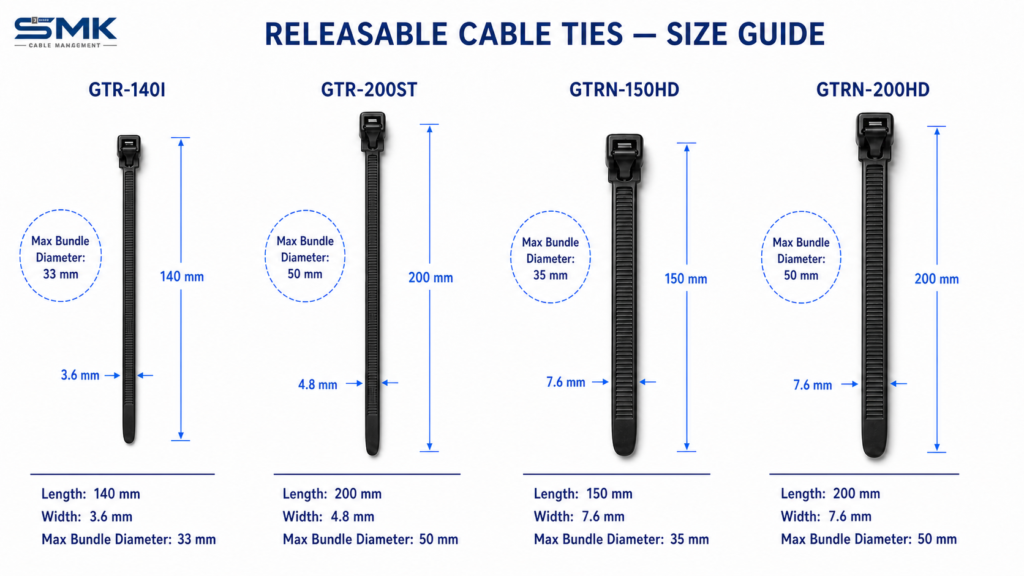
SMK releasable cable tie options include:
| Model | Length | Width | Maximum Bundle Diameter | Minimum Tensile Strength |
|---|---|---|---|---|
| GTR-140I | 140 mm | 3.6 mm | 33 mm | 40 lb |
| GTR-200ST | 200 mm | 4.8 mm | 50 mm | 50 lb |
| GTRN-150HD | 150 mm | 7.6 mm | 35 mm | 50 lb |
| GTRN-200HD | 200 mm | 7.6 mm | 50 mm | 50 lb |
Specifications should be confirmed before placing an order because material, packaging, and model availability may vary.
For more information about dimensions and strength, read our Cable Tie Size Chart.
Installation Tips for Reusable Cable Ties
- Select a tie that comfortably fits the bundle.
- Inspect the tie and locking head before installation.
- Insert the tail in the correct direction.
- Tighten it until the bundle is secure, but do not crush the cables.
- Leave enough access to operate the release tab.
- Keep the locking head away from sharp edges and moving components.
- To release the tie, press the tab before pulling the strap backward.
- Inspect the teeth and locking head before reusing it.
Replace a reusable tie if it shows cracking, deformation, damaged teeth, a weakened locking head, chemical damage, or excessive wear.
Cable ties should not be used as structural lifting devices or as the only support for safety-critical loads.
B2B Purchasing Checklist
Importers, distributors, contractors, and OEM buyers should provide the following information when requesting a quotation:
- Required cable tie type
- Length and width
- Maximum bundle diameter
- Minimum tensile strength
- Material requirement
- Working temperature
- Indoor or outdoor application
- Required color
- Order quantity
- Quantity per bag
- Carton and labeling requirements
- OEM branding or private-label packaging
- Required technical or compliance documents
- Target market and shipping destination
Samples should be tested on the actual cable bundle before bulk production. Check locking consistency, release operation, flexibility, dimensions, surface condition, packaging, and compatibility with the intended installation process.
Frequently Asked Questions
Are reusable cable ties as strong as single-use cable ties?
Strength depends on the product design, material, width, and locking mechanism. Compare the stated minimum tensile strength of the selected models instead of comparing the two categories in general.
Can reusable cable ties be used outdoors?
Some reusable ties may be suitable for limited outdoor applications when the correct UV-stabilized material is selected. Standard black color alone does not prove UV resistance. Buyers should confirm the material specification, expected exposure, temperature, and required service life.
How many times can a reusable cable tie be reused?
There is no universal number for every product or application. Service life depends on the material, locking design, installation tension, temperature, UV exposure, chemicals, and handling. Inspect the tie before every reuse and replace it if damaged.
Can releasable cable ties be used in electrical control panels?
Yes. They are useful for panel assembly, testing, maintenance, and cable groups that may require future adjustment. The selected tie must still meet the panel’s material, temperature, strength, and documentation requirements.
Can reusable ties replace wiring duct?
They perform different functions. Reusable ties bundle cables, while wiring duct creates organized routing paths and helps protect wires inside a cabinet. Many control panels use both products.
Does SMK offer OEM packaging?
Yes. SMK supports private-label packaging, custom labels, cartons, colors, and product combinations for distributors and OEM customers. Availability and minimum quantities should be confirmed for each order.
Conclusion
Choose reusable cable ties when adjustment, servicing, and repeated access are important. They are particularly useful for control panels, maintenance work, prototype development, temporary installation, and frequently modified cable bundles.
Choose single-use cable ties when the installation is permanent, large quantities are required, and fast installation with a low initial unit cost is the priority.
For many distributors and industrial customers, stocking both types provides the most complete solution: standard nylon ties for everyday fastening and releasable ties for maintenance-focused applications.
Need Help Choosing the Right Cable Ties?
SMK Cable Management supplies standard nylon, releasable, UV resistant, heavy duty, and stainless steel cable ties for global B2B customers.
Send us your required size, application, quantity, packaging, and target market. Our team can provide product recommendations, samples, specification information, OEM packaging support, and a factory quotation.
Related Products
Products for This Guide
Review specifications or request pricing for the products most relevant to this article.
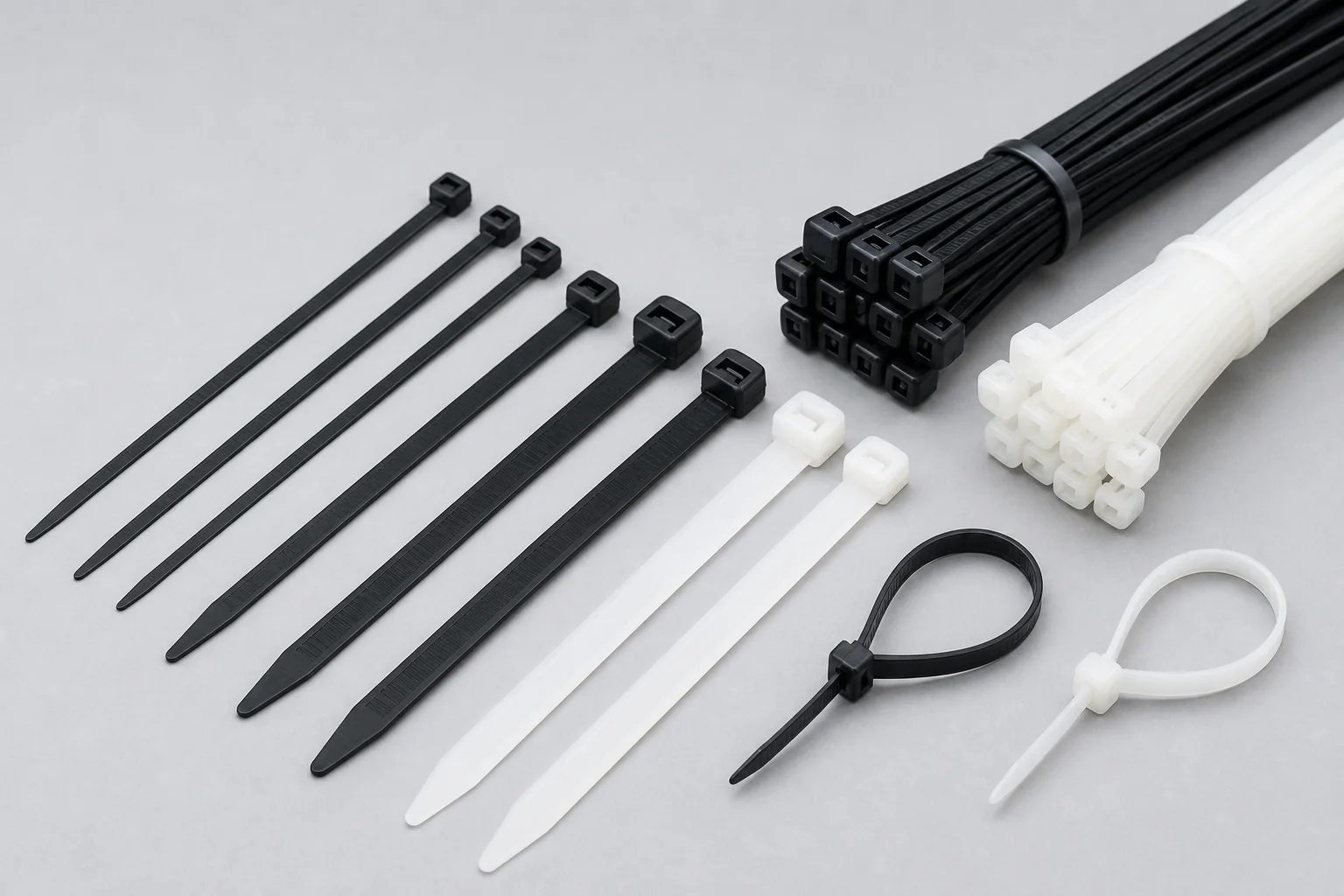
Standard Nylon Cable Ties
The most widely used cable fastening solution for electrical, factory, construction, electronics, and wholesale markets.
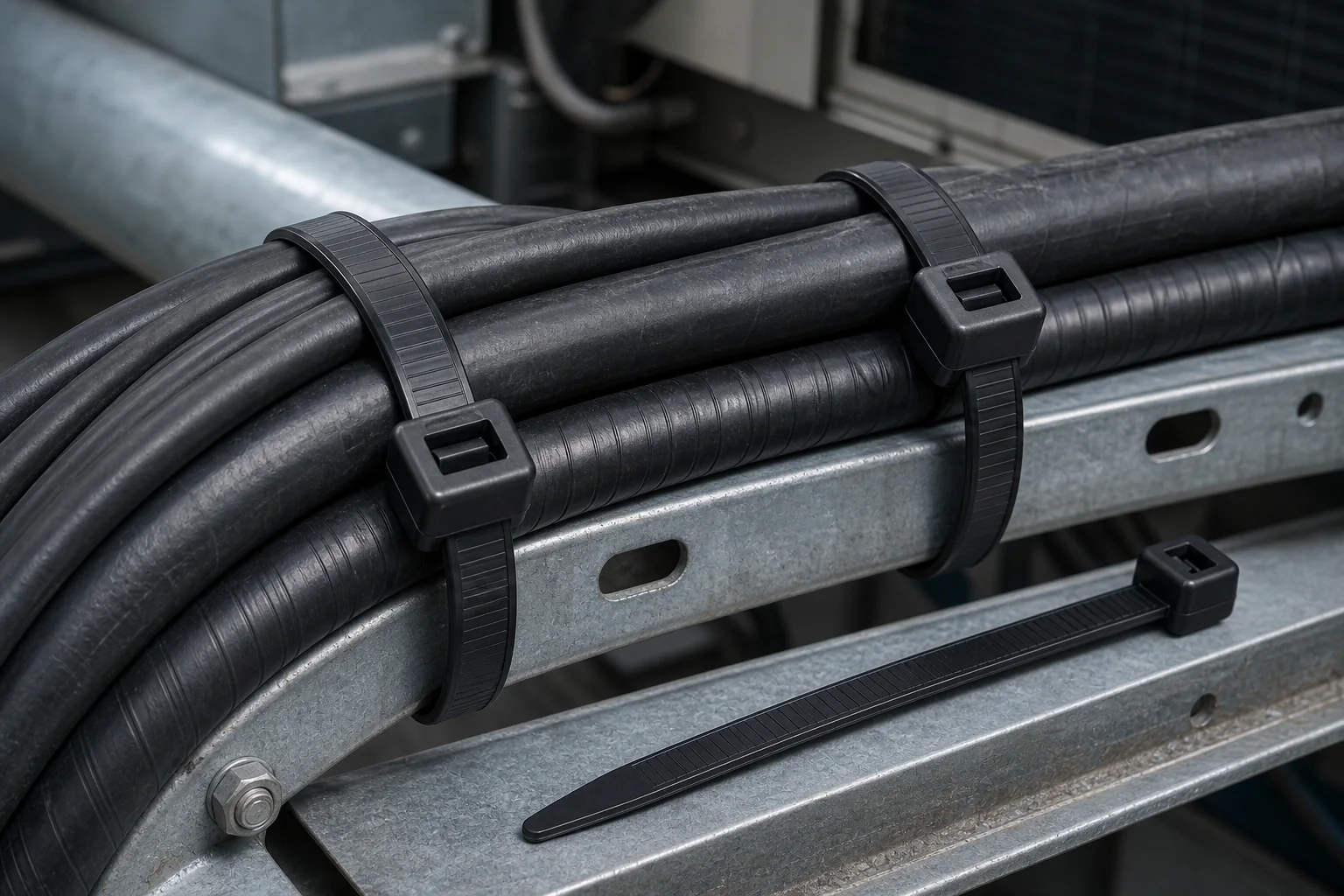
Heavy Duty Cable Ties
Wide, high-strength cable ties for engineering, pipelines, automotive, machinery, and HVAC applications.
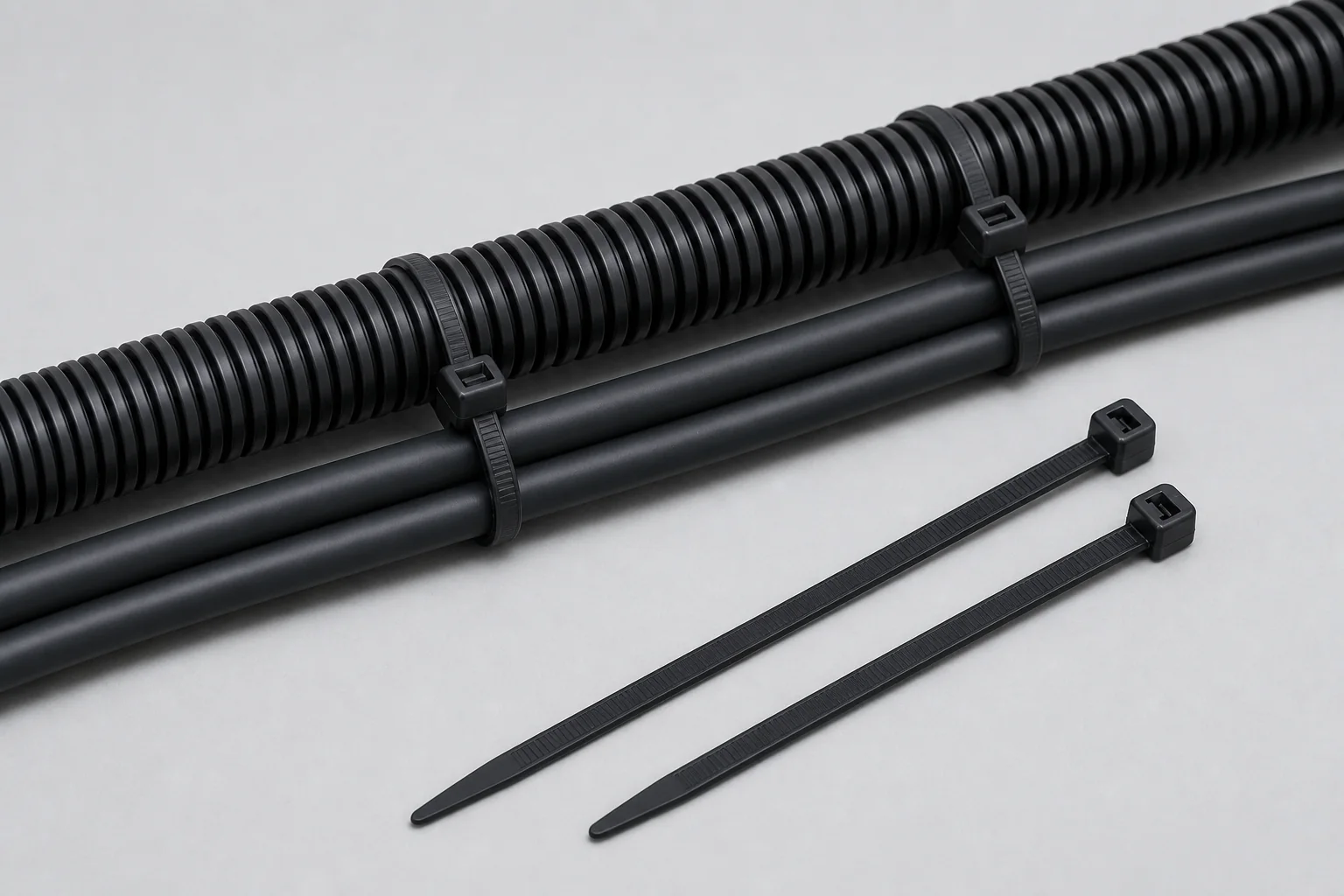
UV Resistant Cable Ties
Weather-resistant black cable ties for solar, telecom, outdoor engineering, and power installations.