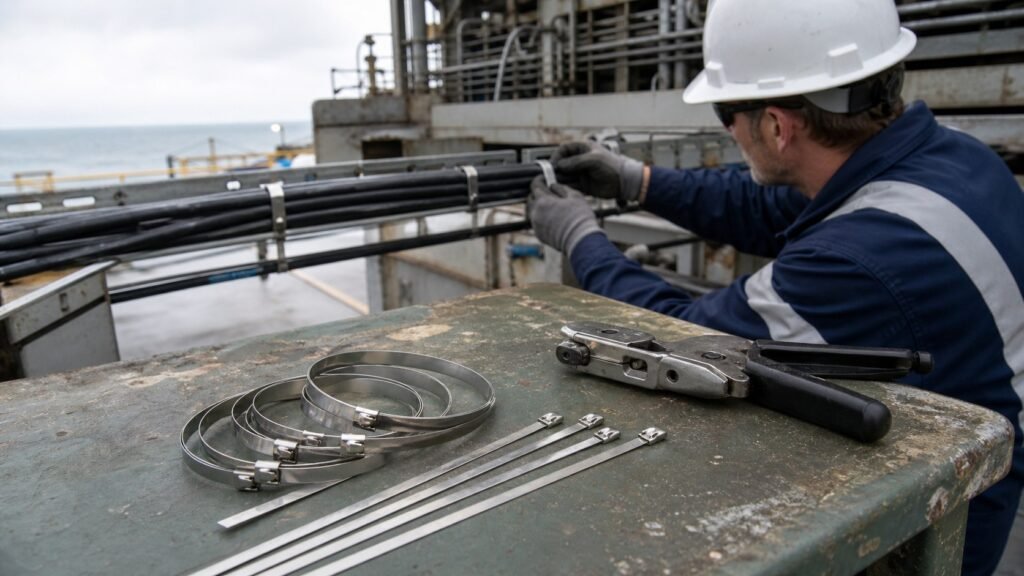
Specifying stainless steel cable ties for corrosive environments requires more than adding “metal ties” to a bill of materials. Grade, coating, width, strength, locking design, and installation method can all affect suitability in coastal, marine, chemical, and harsh industrial projects. This guide shows engineers and buyers how to turn the operating environment into a clear specification and comparable supplier quotation.
Start With the Exposure, Not the Product Name
“Corrosive environment” is not a complete specification. A supplier needs to understand what will contact the tie, how often, at what temperature, and for how long.
Prepare an exposure profile before choosing a material. Record:
- Indoor, outdoor, sheltered, coastal, marine, or offshore location
- Salt-laden air, direct splash, washdown, condensation, or continuous moisture
- Chemical names and concentrations, rather than only “chemical area”
- Normal and maximum operating temperature
- Cleaning agents and cleaning frequency
- Vibration, shock, or movement at the fastening point
- Cable-jacket material and bundle diameter
- Supporting surface, including aluminum or other dissimilar metals
- Expected inspection interval and access for replacement
- Project service-life target and consequence of failure
An outdoor installation far from the coast does not create the same challenge as equipment exposed to salt spray. Keep the exposure profile with the project record so engineering, purchasing, suppliers, and maintenance teams use the same selection basis.
SS304 vs SS316: Choose the Grade Deliberately
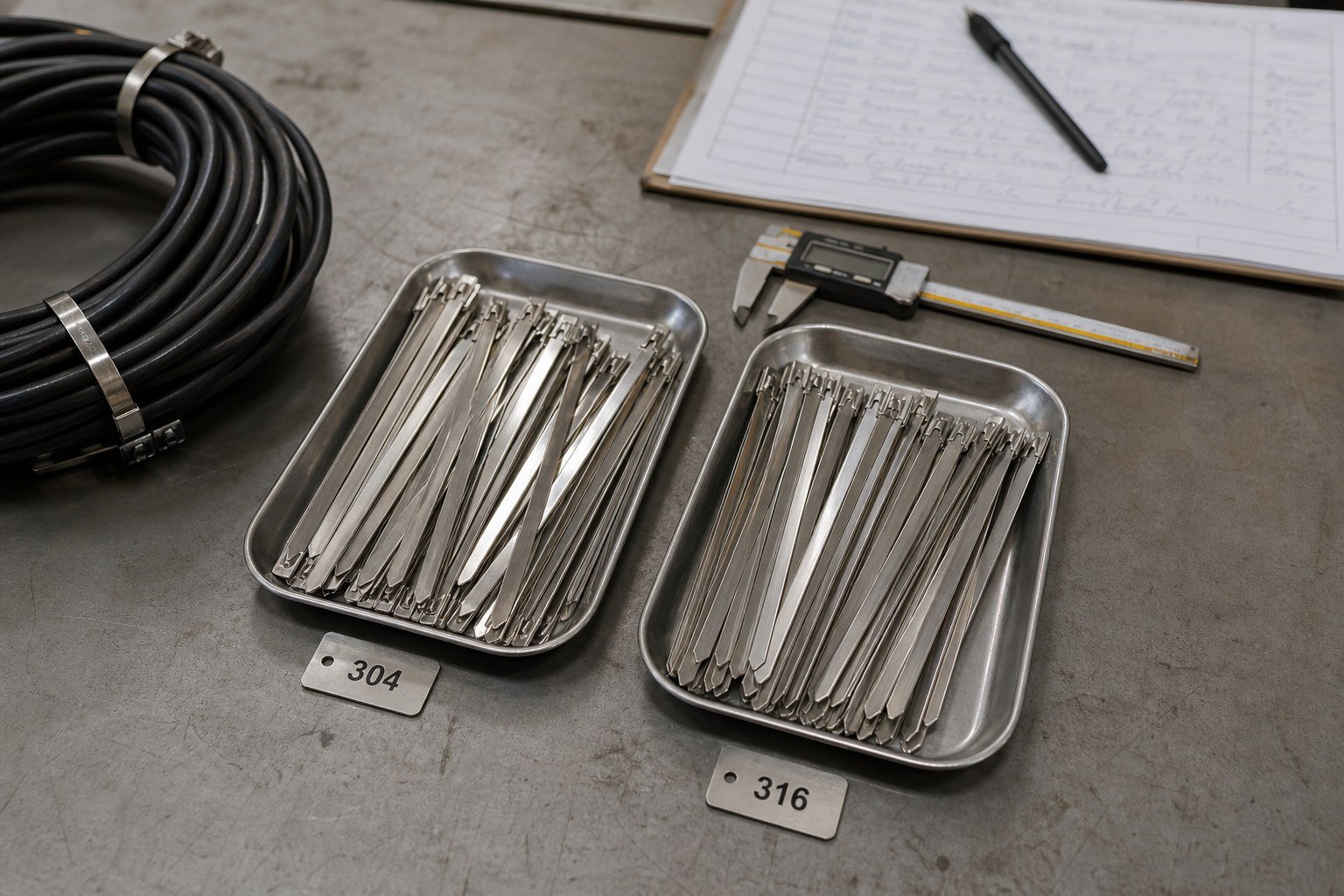
Both 304 and 316 are widely used stainless steel grades, but they are not interchangeable. Type 316 contains molybdenum, which generally improves resistance to chloride pitting. Type 304 can be practical for general industrial and less aggressive atmospheric exposure, while 316 is often considered for coastal, marine, and more demanding chemical conditions. Neither is universally immune to corrosion; concentration, temperature, deposits, crevices, and cleaning practices can change performance.
Use the following comparison as an RFQ starting point, not as a substitute for project engineering:
| Selection factor | SS304 | SS316 |
|---|---|---|
| General industrial atmosphere | Common option | Also suitable where added corrosion resistance is required |
| Coastal or salt-laden air | Requires careful project review | Often preferred, subject to exposure review |
| Chloride-containing environment | More vulnerable to chloride pitting | Generally better pitting resistance |
| Chemical processing | Check exact chemical and conditions | Often considered, but compatibility still requires confirmation |
| Purchase cost | Usually lower | Usually higher |
Avoid writing only “marine grade” in a specification. State SS316 if that is the required material, then ask the supplier to identify the exact quoted grade and provide the available material documentation for that model and order.
SMK lists both SS304 and SS316 material options for its stainless steel cable ties. Grade availability should be reconfirmed for the selected model before ordering.
Decide Between Coated and Uncoated Ties
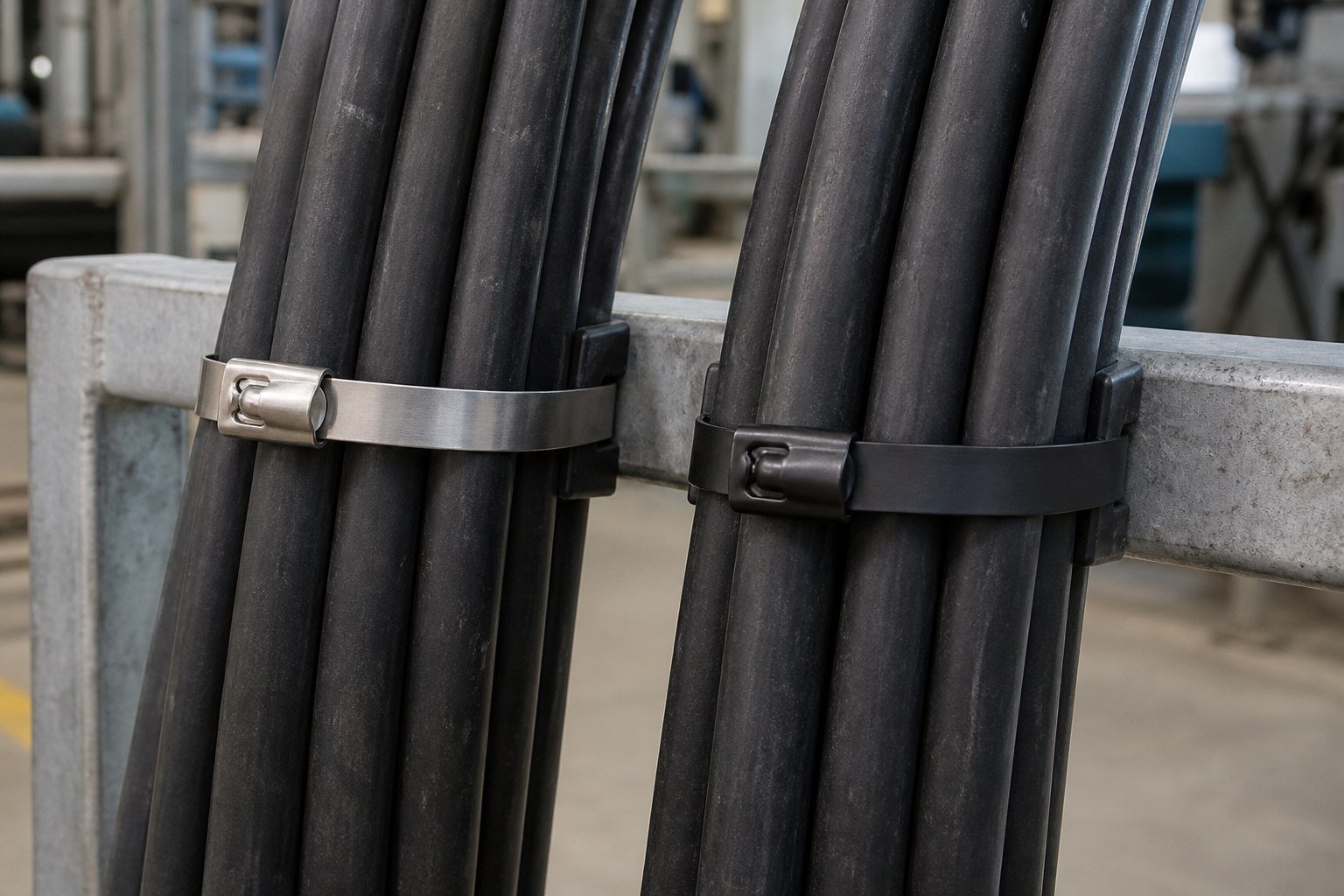
Material grade answers only part of the question. Contact with the cable jacket and supporting surface also matters.
When uncoated ties may fit
Uncoated stainless steel cable ties offer an all-metal fastening option and are commonly considered for demanding heat, fire, weather, and mechanical conditions. They can be appropriate when the cable or object can tolerate direct metal contact and the installation specification accepts an uncoated strap.
When a coating deserves attention
A coated tie can buffer a sensitive cable jacket and, depending on the system, improve handling, edge protection, identification, or separation from a dissimilar metal. It does not guarantee suitability for every chemical or temperature. Ask for coating material, coverage, operating limits, adhesion information, and relevant chemical compatibility.
SMK's published range includes uncoated, plastic-sprayed, and PVC-coated configurations. Buyers should quote the exact configuration rather than using “coated” as a generic description.
Size the Tie Around the Real Bundle
Select length, width, maximum bundle diameter, strap thickness when controlled, and space for the tail and tool. Measure the real bundle at its largest point, including protective sleeves. A wider tie may offer more contact area or a higher strength class, but it can be harder to route through small mounting points.
The current SMK product page lists these representative configurations:
| Published configuration | Width | Listed length range | Listed tensile strength |
|---|---|---|---|
| Uncoated standard | 4.6 mm | 130–500 mm | 101 lb |
| Uncoated heavy duty | 7.9 mm | 200–800 mm | 250 lb |
| Plastic-sprayed standard | 4.6 mm | 150–500 mm | 135 lb |
| Plastic-sprayed heavy duty | 7.9 mm | 200–800 mm | 180 lb |
| PVC-coated standard | 5.6 mm | 150–600 mm | 79 lb |
| PVC-coated heavy duty | 9.0 mm | 200–500 mm | 101 lb |
These values are catalogue selection references, not permission to substitute one configuration for another. Confirm the exact model, grade, length, width, maximum bundle diameter, tensile value, and current availability in the final quotation.
Treat Tensile Strength as a Test Rating, Not a Working Load
Minimum loop tensile strength helps buyers compare cable tie models under defined test conditions. It should not be treated automatically as the allowable load in the field.
Real installations add vibration, thermal cycling, chemicals, uneven loading, sharp contact points, and installation variation. The project engineer should set any required design margin. Never use ordinary cable ties for lifting or assume primary-support approval unless the exact product is classified for that function and installed accordingly.
If a project references IEC 62275, UL 62275, or another standard, request evidence for the exact model being quoted. A general supplier statement or an unrelated report is not enough.
Match the Locking Design and Installation Tool
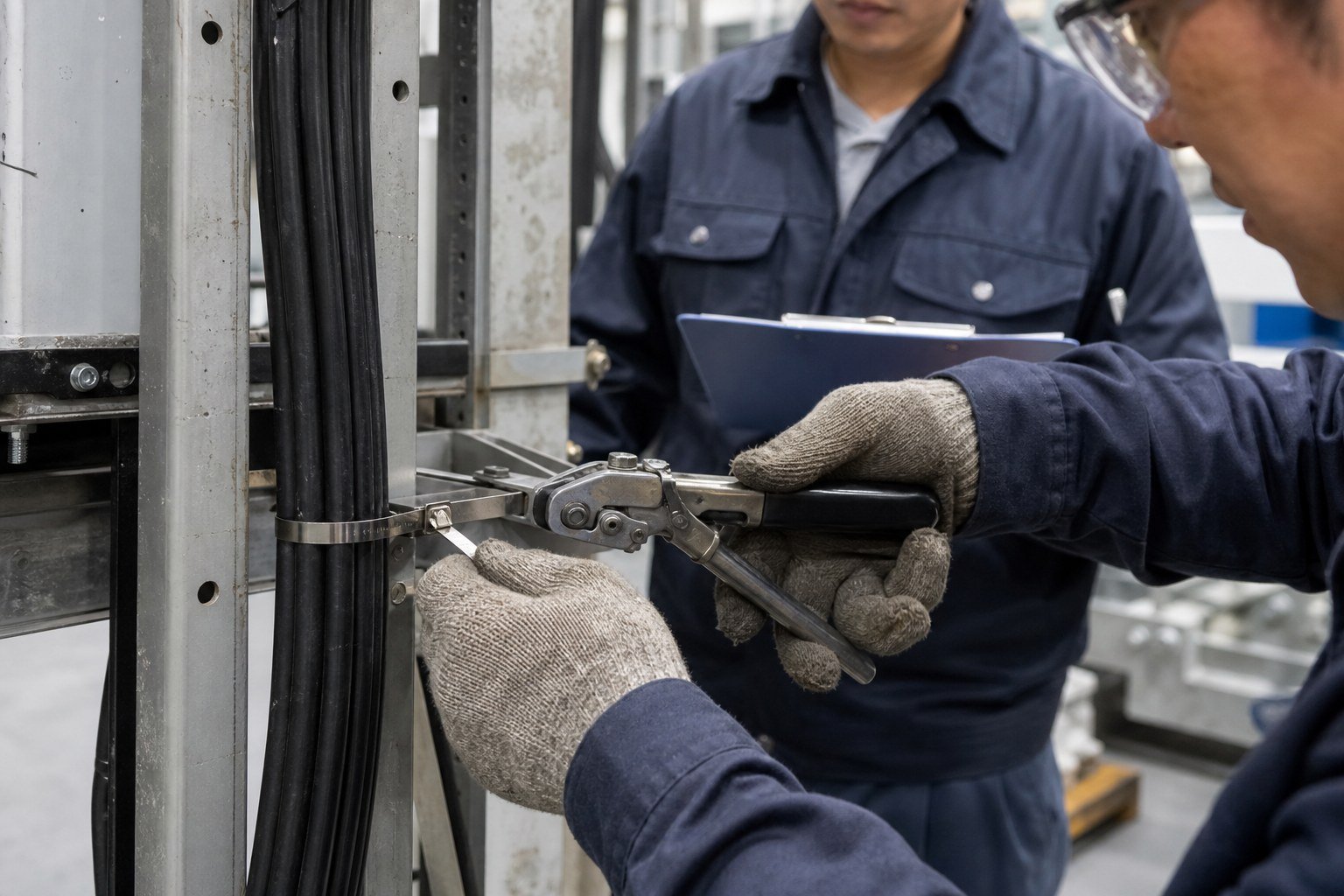
SMK describes its stainless steel range as using heavy-duty ball-lock fastening. The strap passes through the head and is locked by the internal mechanism; the installed tie is normally treated as permanent. A compatible tensioning and cut-off tool can improve tension control and tail finish in repetitive work.
Before approval, verify:
- The tool matches the tie width, thickness, and locking design
- The tension setting secures the bundle without damaging the cable jacket
- The head can be positioned away from service access and contact hazards
- The cut tail is flush and does not leave a hazardous sharp projection
- Coating remains intact after tensioning and cut-off
- Installers have a defined inspection and removal method
Run the trial on the actual cable, pipe, frame, or protective channel. A sample tested only in the purchasing office may not reveal tool-access problems, cable deformation, slipping, or contact with adjacent equipment.
Check Dissimilar-Metal and Cable-Jacket Contact
Stainless steel tied directly around aluminum or another metal can create a contact condition that needs engineering review, particularly when moisture or an electrolyte is present. The solution may involve a suitable coating, protective channel, isolation layer, different mounting method, or another approved design.
Excess tension or a narrow metal contact area can damage a sensitive cable jacket. Where vibration is expected, check for rubbing and edge contact during the sample installation. A coating helps only when its material, coverage, condition, and compatibility match the environment.
Build a Comparable Stainless Steel Cable Tie RFQ
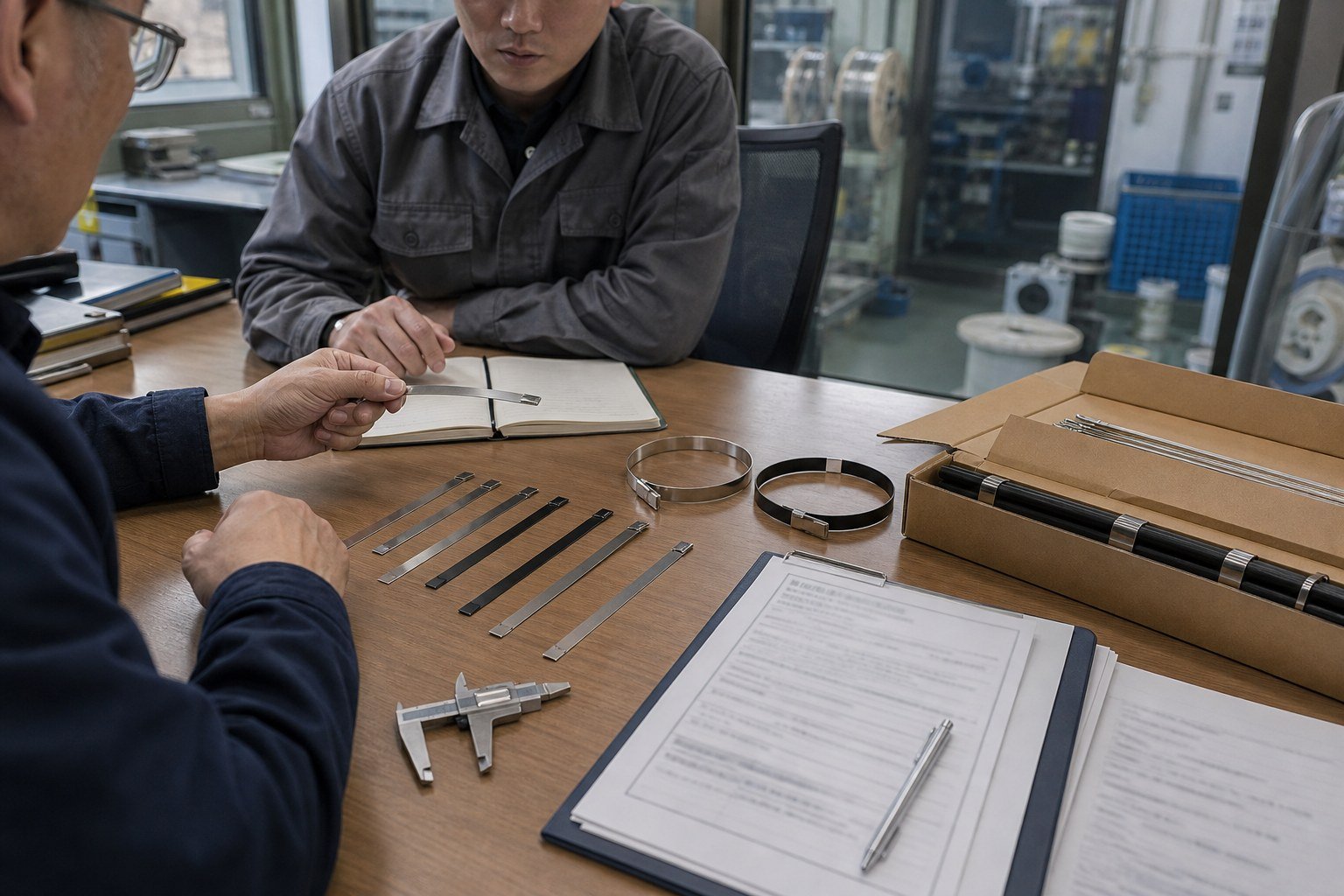
A strong RFQ allows suppliers to quote the same scope and identify exceptions. Include:
- Application and installation location
- Full environmental and chemical exposure profile
- Required stainless steel grade: SS304 or SS316
- Uncoated, plastic-sprayed, PVC-coated, or other specified finish
- Length, width, maximum bundle diameter, and thickness if controlled
- Required minimum loop tensile strength or project performance requirement
- Ball-lock or other approved locking design
- Cable-jacket and supporting-surface materials
- Installation and operating temperature requirements
- Compatible tensioning and cut-off tool
- Sample and installation-trial requirements
- Required standards, classifications, declarations, or test reports by exact model
- Inspection criteria, lot identification, and traceability requirements
- Quantity, pack size, labeling, private-label, and carton requirements
- Destination, delivery schedule, and requested trade terms
Ask each supplier to state deviations clearly. If a grade, coating, tensile value, certificate, or tool is different from the RFQ, the quotation should identify the proposed alternative rather than silently substituting it.
Approve the Product Before the Bulk Order
Approve a physical sample and its documentation together. Check markings, dimensions, locking, edges, coating coverage, packaging, and tool compatibility on the real bundle. Agree on any chemical, salt-spray, temperature, vibration, or aging test and its acceptance criteria before ordering. At receipt, compare deliveries with the approved sample and keep visually similar grades and finishes separated.
Request a Project-Based Recommendation
SMK Cable Management supplies ball-lock stainless steel cable ties in SS304 or SS316 options, with uncoated, plastic-sprayed, and PVC-coated configurations listed for different size and strength requirements.
For a useful quotation, send the application, exposure conditions, required grade, coating, size, tensile requirement, quantity, packaging, target market, and document needs. Review the wider industrial and outdoor cable-management applications, compare nylon and stainless steel cable ties, or contact SMK for a project quotation.
Frequently Asked Questions
Can SS304 stainless steel cable ties be used outdoors?
SS304 may suit general outdoor or industrial conditions, but “outdoor” covers many different exposures. Coastal salt, chlorides, chemicals, temperature, moisture retention, and maintenance access should be reviewed. SS316 is often considered when chloride or more demanding corrosion exposure is present.
Are SS316 cable ties corrosion-proof?
No stainless steel grade should be described as universally corrosion-proof. SS316 generally offers better resistance to chloride pitting than SS304, but concentration, temperature, deposits, crevices, surface condition, and other chemicals can still affect performance. Confirm compatibility for the actual environment.
Should I choose coated or uncoated stainless steel cable ties?
Choose based on cable-jacket contact, handling, dissimilar-metal contact, temperature, chemicals, and project requirements. Coating can provide useful separation or edge protection, but its material and limits must be verified. Uncoated ties may be preferred where an all-metal solution is required and direct contact is acceptable.
Do stainless steel cable ties need a special installation tool?
Many stainless steel ties benefit from a compatible tensioning and cut-off tool. The tool should match the tie design and width. Test the proposed setting on the actual bundle so the tie is secure, the cable jacket is not crushed, and the cut tail is finished safely.
Is tensile strength the same as allowable working load?
No. Minimum loop tensile strength is a product test rating used for comparison. Field loading, vibration, temperature, corrosion, installation quality, and safety factors must be considered separately. Do not use ordinary cable ties for lifting or assume primary-support approval without model-specific evidence.
Related Products
Products for This Guide
Review specifications or request pricing for the products most relevant to this article.
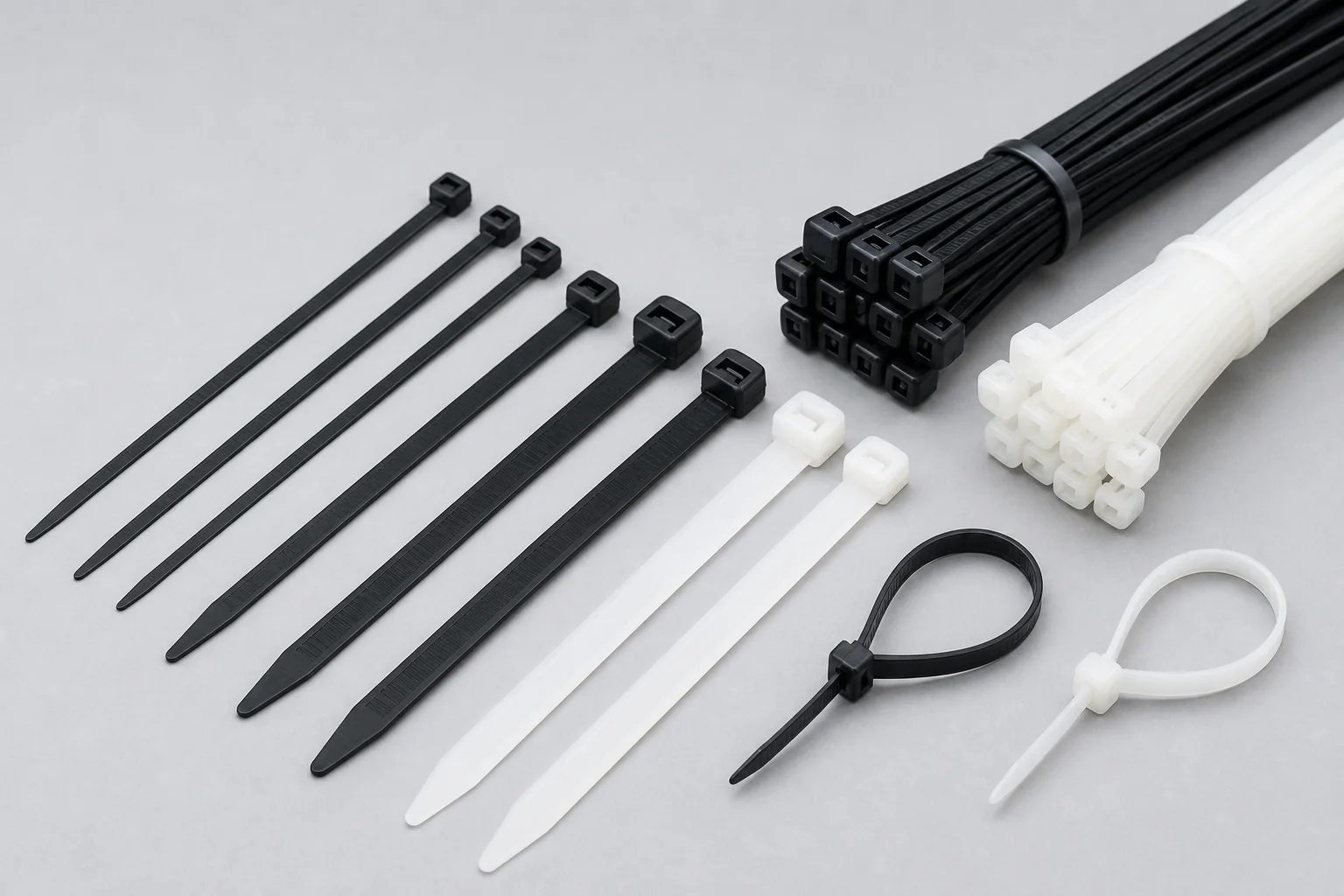
Standard Nylon Cable Ties
The most widely used cable fastening solution for electrical, factory, construction, electronics, and wholesale markets.
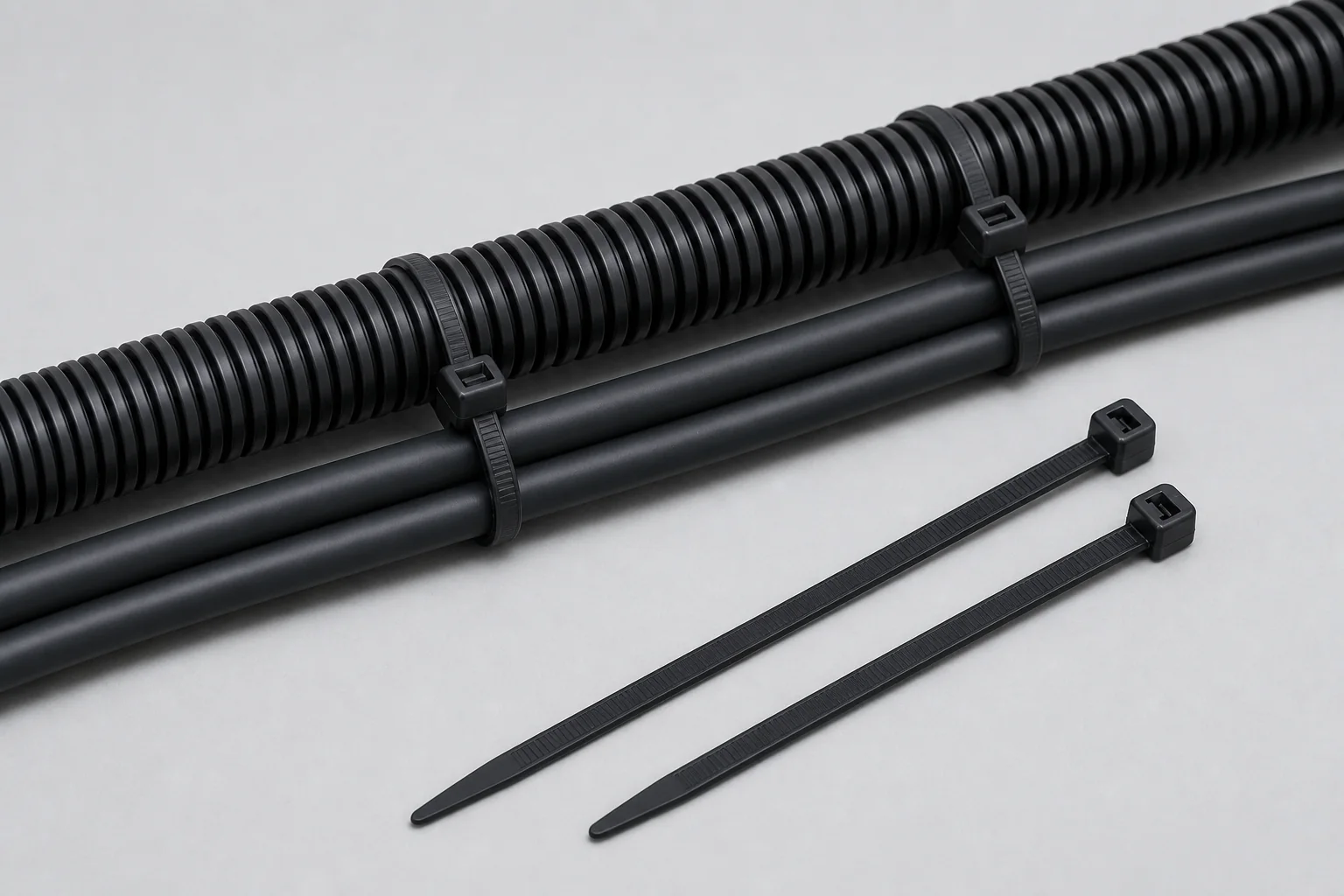
UV Resistant Cable Ties
Weather-resistant black cable ties for solar, telecom, outdoor engineering, and power installations.
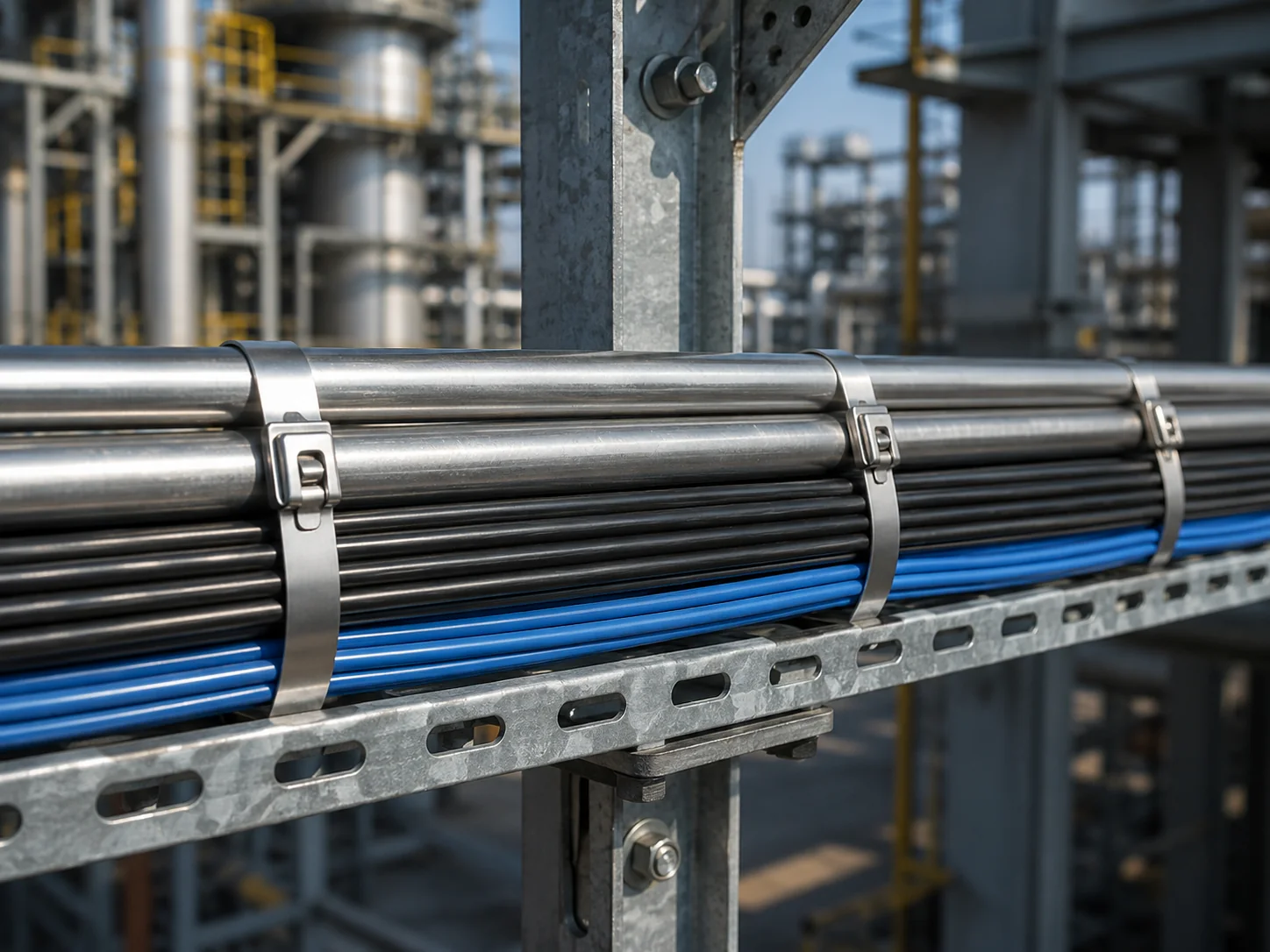
Stainless Steel Cable Ties
High-value fastening for marine, oil and gas, chemical, railway, and extreme outdoor environments.