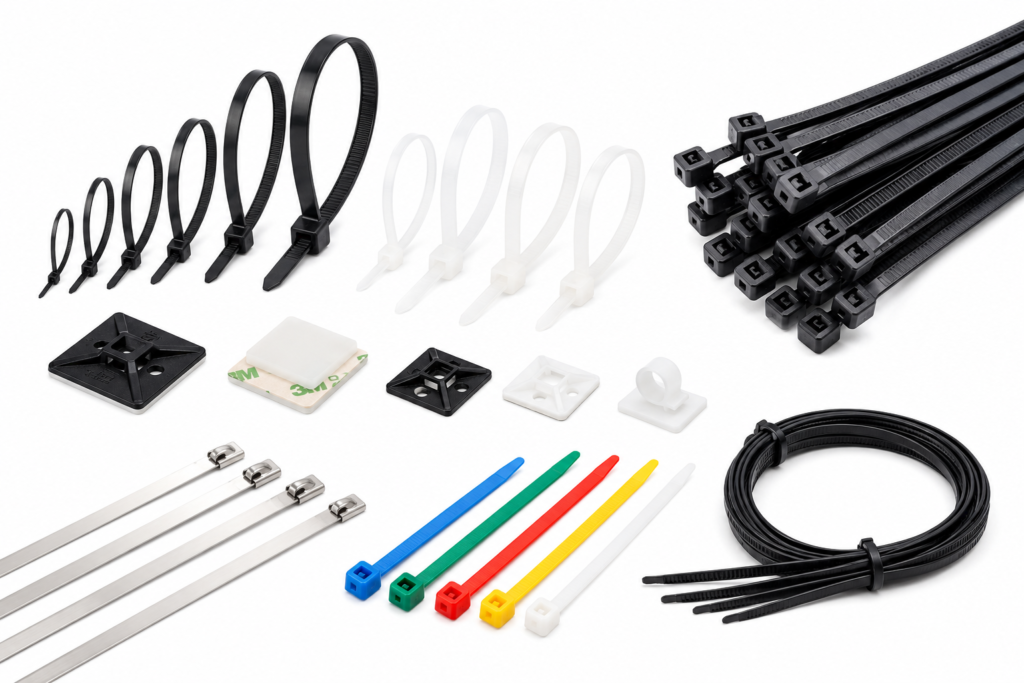
A cable tie temperature rating defines the thermal conditions in which a tie can be installed and used without unacceptable loss of performance. For most general-purpose Nylon 66 ties, the declared operating range is commonly around −40°C to +85°C. However, the correct choice also depends on installation temperature, continuous load, ultraviolet exposure, chemicals, vibration and the temperature of the bundled cables themselves.
This guide explains how heat and cold affect nylon and stainless steel cable ties, how to read a supplier specification, and what industrial buyers should include in an RFQ. The objective is not simply to find the highest temperature number. It is to select a material whose documented performance matches the complete application.
What Does a Cable Tie Temperature Rating Actually Mean?
A single temperature number can be misleading unless the test condition is clear. A professional specification should distinguish at least three conditions:
- Minimum installation temperature: the lowest temperature at which the tie can be tensioned and locked without cracking or damaging the strap.
- Continuous operating temperature: the range in which the installed tie is intended to remain in service for an extended period.
- Short-term peak temperature: a temporary limit that must not be treated as a continuous-use rating.
These values are not interchangeable. A tie may tolerate a low service temperature after installation but be more vulnerable to impact during installation at that same temperature. Similarly, a material may survive a brief heat peak yet lose stiffness or holding force during continuous exposure.
Engineering rule: specify both the coldest installation condition and the highest continuous service temperature. Do not approve a product from a single “temperature resistant” claim.
UL’s cable-tie guidance also treats installation temperature and operating temperature as separate manufacturer-declared characteristics. It further notes that heat from conductors or nearby equipment must be considered, not only the room or outdoor ambient temperature. Buyers working to a regulated project should review the applicable product standard, such as UL 62275 or the corresponding IEC/CSA requirements, and confirm the exact certification scope with the supplier.
Quick Cable Tie Temperature Comparison
| Material / Product Type | Typical Declared Range | Best-Fit Environment | Buyer Check |
|---|---|---|---|
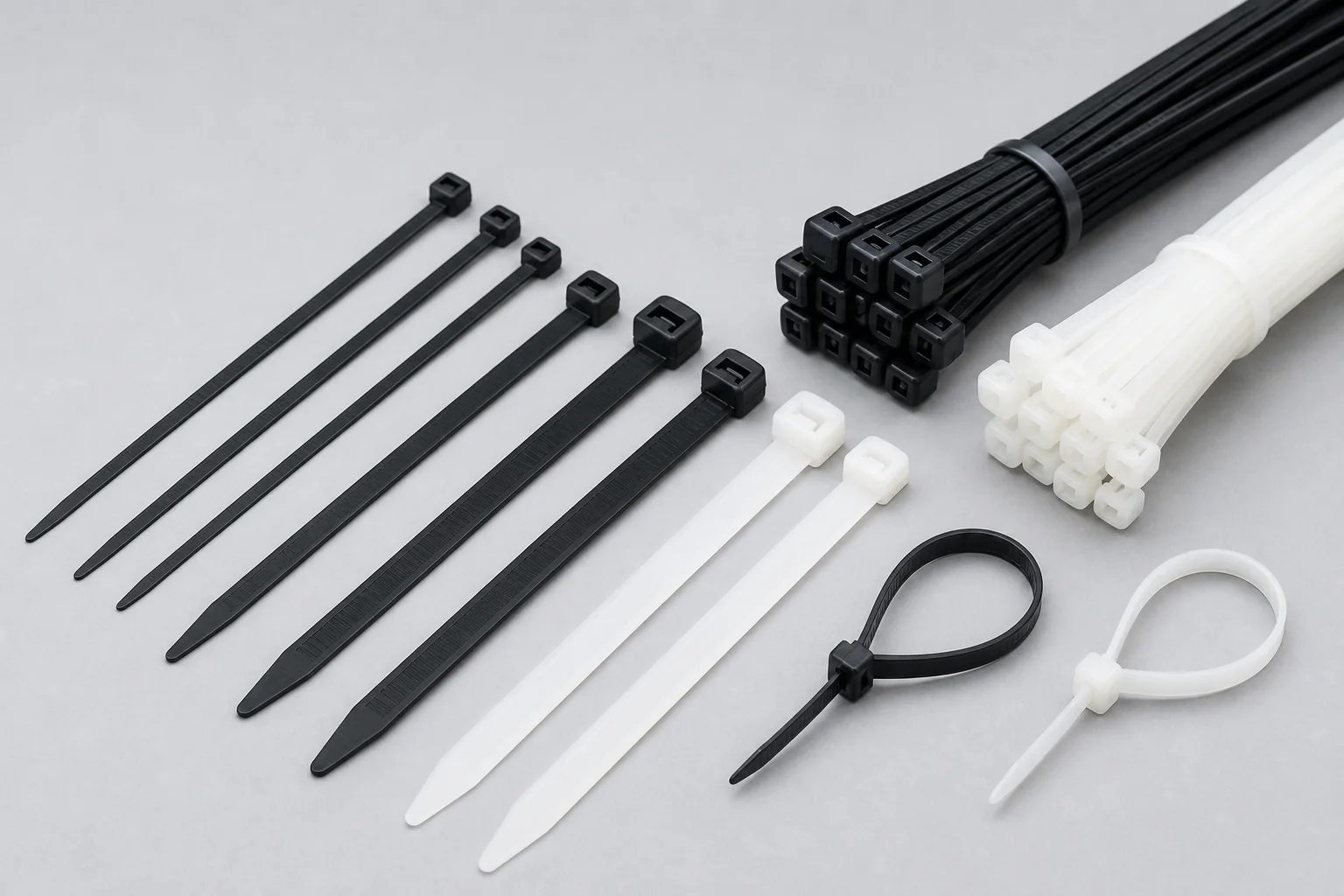
| Standard Nylon 66 cable ties | SMK product range: −40°C to +85°C | Control panels, indoor electrical work, machinery and general bundling | Confirm size, tensile strength, moisture condition and installation temperature |
| UV-stabilized Nylon 66 cable ties | SMK product range: −40°C to +85°C | Solar, telecom and exposed outdoor cable routing | Verify UV stabilization; black color alone is not proof of outdoor performance |
| Heat-stabilized nylon | Often specified around +105°C to +115°C maximum, depending on grade and supplier | Warm machinery zones, HVAC equipment and selected automotive applications | Request the exact resin grade, continuous-use rating and test documentation |
| Specialty polymers such as PA46, E/TFE or PEEK | Material-dependent; may cover substantially higher temperatures | Specialized transport, processing equipment, chemical or high-temperature assemblies | Do not transfer one manufacturer’s rating to another product; approve the exact part number |
| SS304 / SS316 stainless steel cable ties | Suitable for much higher-temperature service than nylon; exact assembly rating must be confirmed | Marine, chemical, railway, oil and gas, fire-sensitive or severe industrial areas | Confirm steel grade, coating, locking design, cable-jacket protection and installation tool |
How Heat Affects Nylon Cable Ties
Nylon does not have to melt before a fastening problem appears. As temperature rises, the material becomes more flexible and its resistance to long-term deformation can decrease. A highly loaded tie may gradually relax, allowing a bundle to move even though the strap still looks intact. Heat can also accelerate material ageing, especially when it is combined with ultraviolet light, chemicals or repeated thermal cycling.
For this reason, the cable surface temperature is often more important than the air temperature. Power cables, busbars, motors, exhaust components and process pipes may transfer heat directly to the tie. A cabinet measured at 45°C ambient does not automatically mean every fastening point is operating at 45°C.
A sound selection process uses the highest expected temperature at the actual tie location, then allows a suitable design margin. If the application approaches the continuous rating of standard Nylon 66, consider a documented heat-stabilized grade or move to a metal solution instead of relying on an unverified safety assumption.
Why Cold-Weather Installation Needs Separate Attention
At low temperatures, nylon becomes less flexible and more sensitive to sharp bending or impact. Pulling a cold, dry tie rapidly through the head can create stress at the pawl or strap serrations. Installation tools set too aggressively can add another shock load.
Storage condition matters as well. Nylon 66 is hygroscopic, which means it exchanges moisture with the surrounding air. Proper moisture conditioning helps preserve flexibility. Bags should therefore remain sealed until use, particularly in dry warehouses or heated winter environments. If stock has been stored in severe cold, allow it to reach an appropriate installation temperature in its sealed packaging before opening.
For a winter project, ask the supplier for the minimum installation temperature—not only the minimum operating temperature. Approve samples using the same tool, tension setting and cable bundle that will be used on site.
Outdoor Use: UV Resistance and Temperature Are Different Requirements
Outdoor cable ties experience heat, cold, sunlight, moisture and weather cycles at the same time. UV stabilization helps slow damage from solar radiation, but it does not automatically increase the maximum operating temperature. In the same way, a high-temperature nylon grade is not necessarily suitable for continuous sunlight.
Specify UV-resistant cable ties for solar arrays, rooftop wiring, telecom equipment and other exposed installations. The RFQ should state outdoor service, expected lifetime, climate, color, dimensions and minimum tensile strength. Do not accept black color as the only evidence of UV performance; request the material description and relevant test information.
When Stainless Steel Cable Ties Are the Better Choice
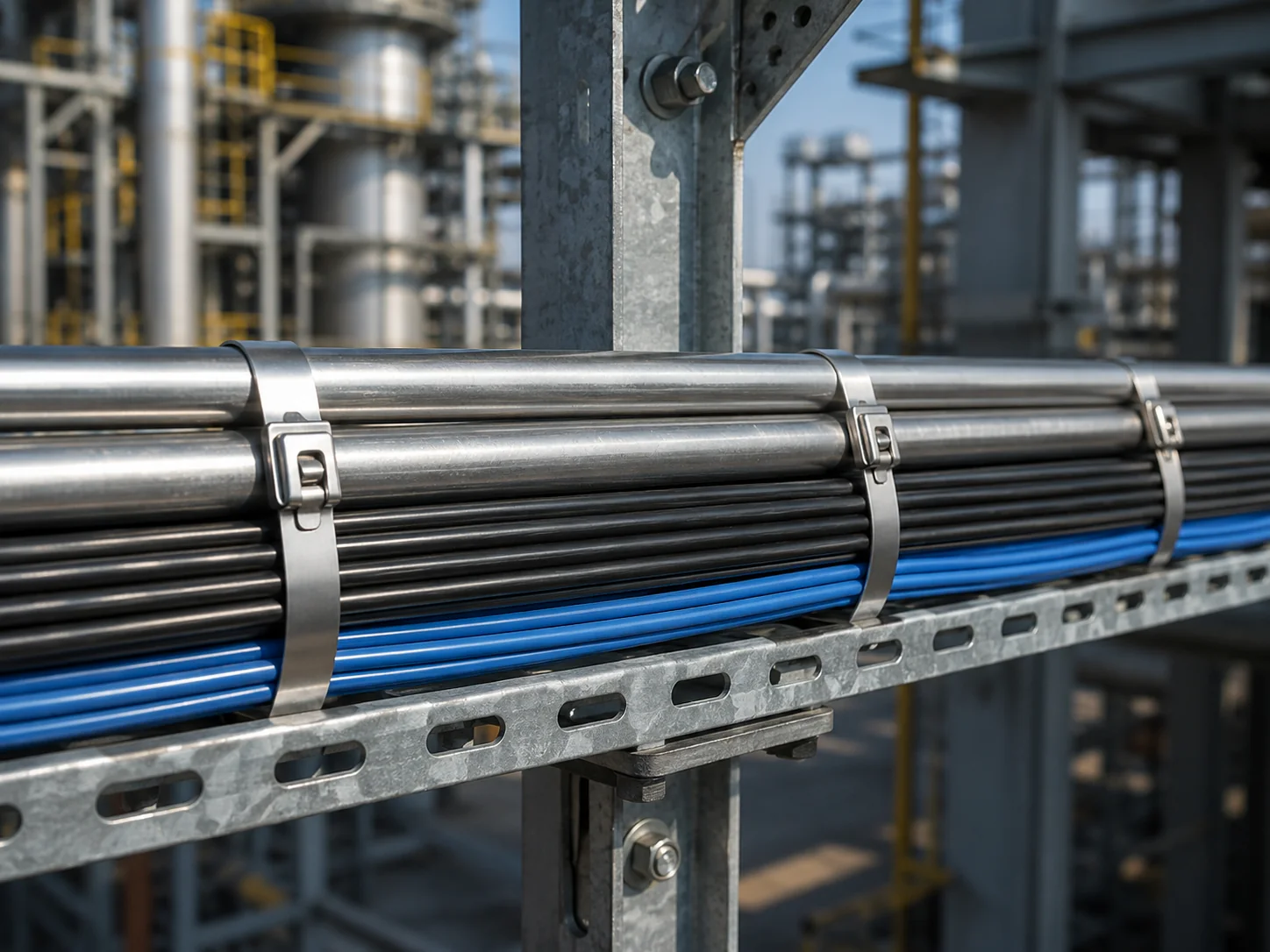
Stainless steel is appropriate when the design conditions extend beyond the practical limits of nylon or when failure has serious consequences. Typical applications include process plants, tunnels, railway equipment, offshore installations, chemical facilities and equipment near high-temperature components.
Material grade is important. SS304 is widely used for general industrial and outdoor fastening, while SS316 provides better resistance in marine and chloride-rich environments. Buyers should also decide between uncoated and coated ties. A coating can reduce direct metal contact with cable insulation and improve handling, while an uncoated tie may be preferred for certain high-temperature or fire-performance requirements.
Metal ties introduce different installation considerations. Sharp cut ends, overtensioning and direct contact between dissimilar metals can create abrasion or corrosion risks. Use the correct tensioning and cut-off tool, protect vulnerable cable jackets, and confirm whether edge protection or protective channel is required.
For a broader material comparison, see Nylon Cable Ties vs Stainless Steel Cable Ties.
A Practical Seven-Step Selection Method
- Measure the real hot spot. Use the expected cable, pipe or equipment surface temperature at the fastening location—not only the general ambient value.
- Record the coldest installation temperature. Include transport, outdoor storage and installation before the equipment is operating.
- Separate continuous and short-term exposure. State how long any peak temperature lasts and how often it occurs.
- List environmental stresses. UV, water, salt spray, oil, cleaning agents, acids, vibration and flame requirements can change the material choice.
- Calculate the mechanical requirement. Bundle weight, movement and mounting direction affect the required tensile strength. Use the cable tie size chart to compare dimensions and strength classes.
- Apply a design margin. Do not operate continuously at an assumed material limit when a higher-grade product is available.
- Validate the exact part. Review the current data sheet, certificates, sample performance, packaging and production consistency before bulk approval.
Application Examples
Electrical control cabinets
Standard Nylon 66 ties are usually suitable when the panel temperature is controlled and the fastening point is away from high-heat components. Avoid overtightening around signal cables, and check the conductor temperature near power devices.
Solar and rooftop wiring
Specify UV-stabilized Nylon 66 for general exposed routing, subject to the project’s service-life and temperature requirements. In severe climates or critical locations, coated stainless steel may provide a more robust option.
HVAC, machinery and engine compartments
Measure heat near motors, compressors, heaters and exhaust zones. Standard Nylon 66 may be adequate in cooler areas; hot zones may require heat-stabilized nylon, a specialty polymer or stainless steel.
Marine and chemical environments
Temperature is only one selection factor. Salt, chlorides and chemicals can dominate the material decision. SS316, a suitable coating and correct isolation from dissimilar metals should be evaluated together.
RFQ Checklist for OEM and Project Buyers
A clear RFQ reduces the risk of receiving a cable tie that matches the dimensions but not the environment. Include the following information for every required model:
- Continuous operating temperature and short-term peak temperature
- Minimum installation and storage temperature
- Material grade, color and UV requirement
- Length, width and maximum bundle diameter
- Minimum tensile strength and applicable test method
- Exposure to water, salt, chemicals, oil, flame or vibration
- Required certification, inspection documents and target-market standard
- Installation tool, tension setting and cut-off requirement
- Bag quantity, carton marking, private label artwork and annual demand
For critical projects, request conditioned samples and test them in the real assembly. Keep the approved data sheet and reference sample with the purchasing specification so repeat orders can be checked against the same requirements.
Frequently Asked Questions
What is the normal temperature range for Nylon 66 cable ties?
SMK’s standard and UV-stabilized Nylon 66 product ranges are declared for −40°C to +85°C operation. The exact installation condition and test scope should still be confirmed for the selected part number.
Can a standard nylon cable tie be used above 85°C?
It should not be specified for continuous service beyond its declared rating. Use a documented heat-stabilized nylon, specialty polymer or stainless steel product appropriate to the actual environment.
Are all black cable ties heat- and UV-resistant?
No. Color alone does not establish UV stabilization or a higher temperature rating. Check the material formulation and supplier data.
Can cable ties be installed at the minimum operating temperature?
Not necessarily. The minimum installation temperature can differ from the operating rating. Ask for both values and validate cold-weather installation with samples.
Should I choose SS304 or SS316 stainless steel ties?
SS304 suits many industrial and outdoor applications. SS316 is generally preferred for marine, chloride-rich and more corrosive conditions. Final selection should follow the project’s corrosion assessment.
Request a Temperature-Specific Cable Tie Recommendation
Send SMK your operating temperature, installation condition, environment, cable bundle size and tensile-strength requirement. We can help compare standard Nylon 66, UV-resistant, heavy-duty and stainless steel cable ties, then prepare samples and a factory quotation for your project.
Technical reference: UL Solutions — Cable Ties and Cable Management. Product approval must use the current supplier documentation for the exact part number.
Related Products
Products for This Guide
Review specifications or request pricing for the products most relevant to this article.
Standard Nylon Cable Ties
The most widely used cable fastening solution for electrical, factory, construction, electronics, and wholesale markets.
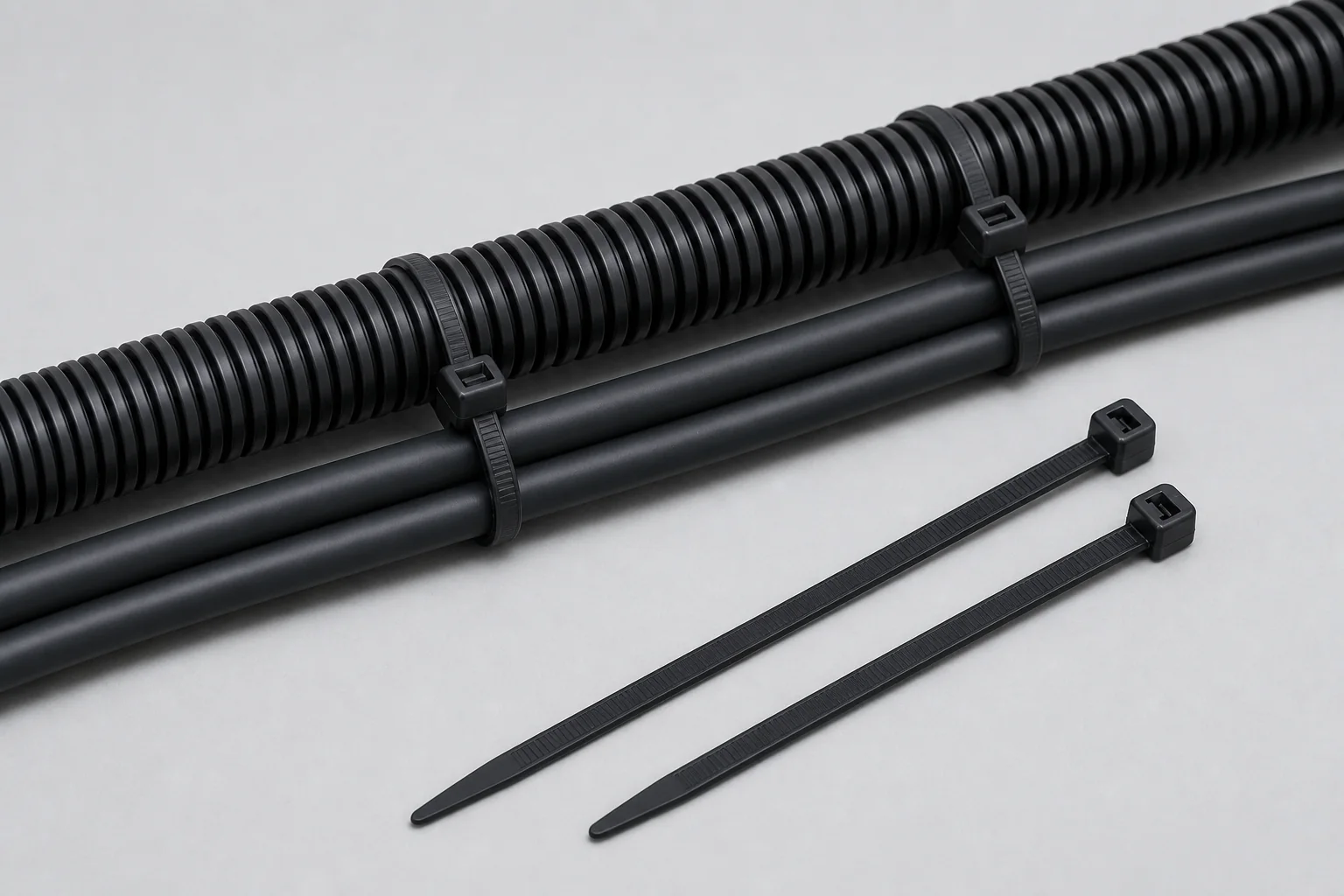
UV Resistant Cable Ties
Weather-resistant black cable ties for solar, telecom, outdoor engineering, and power installations.
Stainless Steel Cable Ties
High-value fastening for marine, oil and gas, chemical, railway, and extreme outdoor environments.